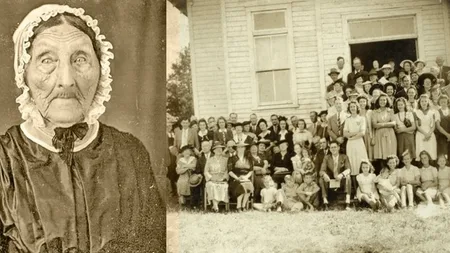
According to historical records, a Russian peasant woman in the 1700s reportedly gave birth to 69 children over 27 pregnancies: 16 sets of twins, 7 sets of triplets, and 4 sets of quadruplets. While the Guinness World Records lists this claim, no birth certificates exist to verify it.
The Woman Who Allegedly Birthed 69 Children
In the annals of reproductive history, one name stands alone at the top of an almost unbelievable list. A peasant woman from Shuya, Russia, married to Feodor Vassilyev, allegedly gave birth to 69 children between 1725 and 1765. Not a typo. Sixty-nine.
The math breaks down like this:
- 16 sets of twins
- 7 sets of triplets
- 4 sets of quadruplets
That's 27 pregnancies producing 69 babies, with reportedly only two dying in infancy—an almost miraculous survival rate for 18th-century Russia.
A Name Lost to History
Here's the strange part: we don't even know her first name. Historical records refer to her only as the "wife of Feodor Vassilyev." Some sources call her Valentina, but this appears to be a modern addition with no historical basis. The woman who supposedly broke every childbirth record remains anonymous.
The claim comes from a report sent to Moscow by the Monastery of Nikolsk in 1782, which was later forwarded to the Imperial government. The report noted that Feodor Vassilyev had 87 children total—his first wife's 69, plus 18 more from a second marriage.
Could This Actually Be True?
Modern fertility experts are skeptical. The human body has limits, and 27 pregnancies with zero single births strains credulity. A few problems stand out:
- No single births. The odds of 27 consecutive multiple pregnancies are astronomically low without fertility treatments.
- Age constraints. To birth 69 children over 40 years of fertility, she'd need to be pregnant almost constantly.
- Survival rates. 18th-century infant mortality was brutal—67 of 69 surviving is nearly impossible for that era.
Yet Guinness World Records still lists the claim. Their reasoning? The report came from official monastery records and was accepted by the Imperial government. Not exactly peer-reviewed science, but not fabricated either.
The Real Story Might Be Stranger
Some historians suggest the numbers may have been exaggerated for tax purposes, social status, or simple record-keeping errors. Others propose that "children" may have included adopted orphans or children from the broader household.
But here's what makes the story endure: it's not physically impossible. Women can and do have hyperovulation conditions that increase multiple births. With the right genetics, extreme fertility, and remarkable luck, someone could approach these numbers. Just not very likely.
Whether Madame Vassilyev actually birthed 69 children or the number was inflated through centuries of retelling, she represents something universal: our fascination with the absolute limits of human capability. Even if we can't verify her record, we can't quite dismiss it either.
And somewhere in the Russian archives, her true story—whatever it was—remains waiting to be discovered.
Frequently Asked Questions
Who had the most children in history?
Is it possible to have 69 children?
What was the name of the woman who had 69 children?
How many pregnancies did the Vassilyev mother have?
Does Guinness World Records recognize 69 children as a record?
Verified Fact
Verified by modern standards
Show verification details
The claim is historically documented but unverified by modern standards. Updated fact_text to reflect the uncertainty while preserving the fascinating story.