
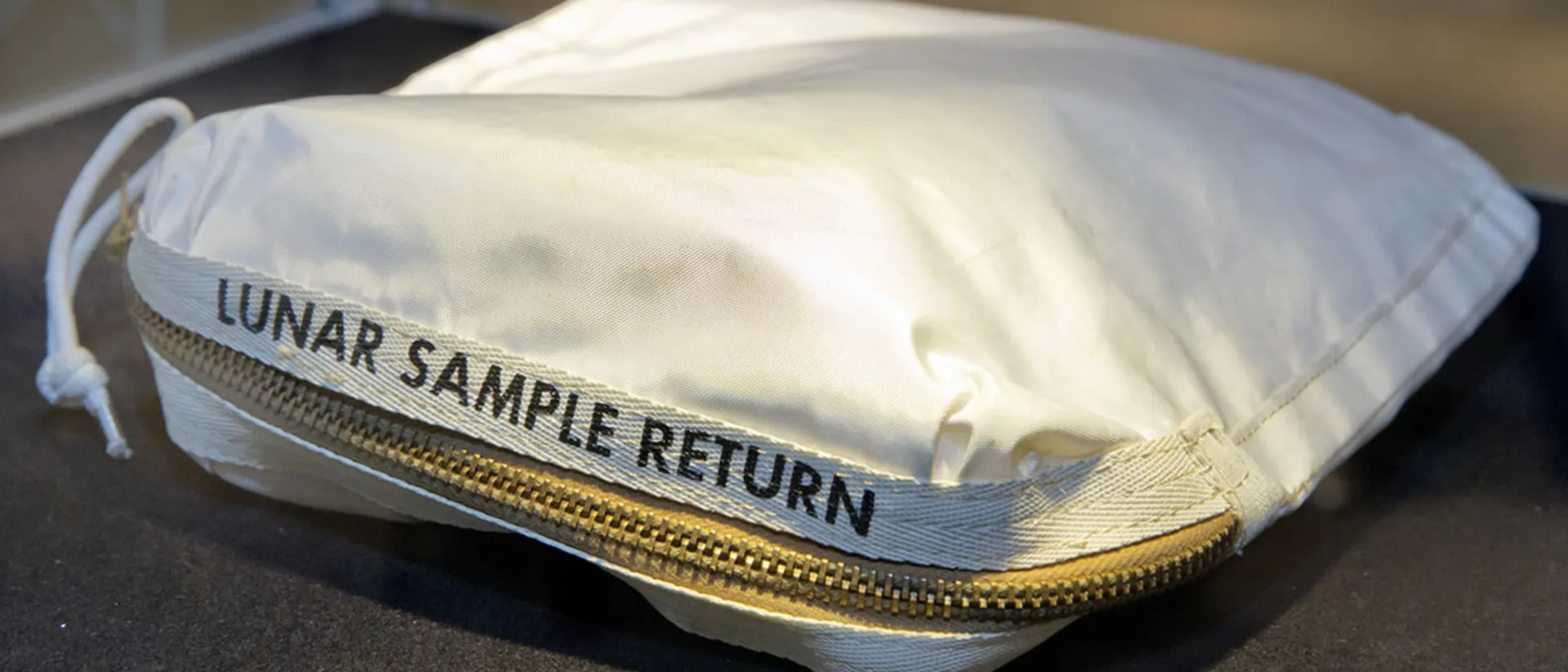
Nancy Carlson bought a plain bag at a government surplus auction for $995. It turned out to be Neil Armstrong's Apollo 11 lunar sample bag - still containing actual moon dust from the first landing. NASA demanded it back. A federal judge ruled Carlson was the legal owner. She sold it at Sotheby's for $1.8 million. The moon was in the clearance bin.
She Bought a Dusty Bag for $995. It Was From the Moon.
Most government surplus auctions are full of old office furniture and decommissioned vehicles. Nancy Carlson found something different - Neil Armstrong's Apollo 11 lunar sample bag, still containing traces of the first moon dust ever collected by a human being, listed with no fanfare and sold for $995.
How NASA Lost the Moon
The bag was one of the most significant artifacts in space history. Armstrong used it on July 20, 1969, to collect the very first lunar samples during the Apollo 11 mission. After the mission, NASA stored it along with other Apollo artifacts.
At some point, NASA loaned the bag to the Cosmosphere space museum in Hutchinson, Kansas. The museum's director, Max Ary, was later convicted of theft and fraud involving museum artifacts. When federal authorities seized property connected to the case, the lunar bag ended up in a US Marshals forfeiture auction - mislabeled and unidentified.
The $995 Discovery
Carlson bought the bag in 2015 and, suspecting it might be something special, sent it to NASA's Johnson Space Center for testing. Scientists confirmed the bag contained lunar dust and matched it to Apollo 11. Then NASA dropped the bombshell: they were keeping it.
The agency argued the bag was a national treasure that "belongs to the American people." Carlson disagreed. She sued.
The Court Fight
A federal judge ruled that while the bag should never have been auctioned in the first place, the sale was legally binding. The government had conducted the auction, accepted payment, and transferred ownership. NASA was ordered to return the bag to Carlson.
$1.8 Million and a Place in History
On July 20, 2017 - the 48th anniversary of the Apollo 11 landing - Carlson sold the bag at Sotheby's in New York. It fetched $1.8 million including the buyer's premium. The sale made it one of the most expensive pieces of space memorabilia ever auctioned, and a cautionary tale about what happens when the government accidentally puts the moon in the clearance bin.
Frequently Asked Questions
How did NASA lose Neil Armstrong's lunar sample bag?
How much did Nancy Carlson pay for the Apollo 11 moon bag?
Why did NASA try to take the moon bag back from Carlson?
How much did the Apollo 11 lunar sample bag sell for at Sotheby's?
Verified Fact
Verified Jul 20, 2017 · 5 sources checked
Source: CNN MoneyShow verification details
Claims checked
- Bag bought at surplus auction for $995
- Bag used by Armstrong to collect first lunar samples
- NASA refused return, judge ruled Carlson legal owner
- Sold at Sotheby’s for $1.8 million
Sources: CNN, NPR, NBC News, Smithsonian Magazine, VOA News