There are two golf balls sitting on the moon.
Two Golf Balls Are Still Sitting on the Moon
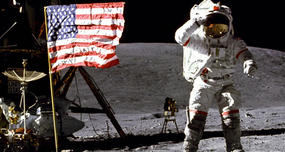
Forget earthly golf courses—the moon has its own, courtesy of astronaut Alan Shepard. On February 6, 1971, during the Apollo 14 mission, Shepard became the first (and so far only) person to play golf on another celestial body. Two golf balls are still sitting exactly where they landed, making them the most exclusive golf balls in existence.
Shepard didn't exactly pack his golf bag for the mission. He smuggled a makeshift club onto the spacecraft—a Wilson six-iron head that he'd modified to attach to a lunar sample collection tool. He tucked a couple of golf balls into a sock and brought them along for what would become one of the most memorable moments in space exploration history.
The Most Difficult Golf Shot Ever
Try swinging a golf club in a bulky spacesuit that restricts your movement to the point where you can only use one hand. That's exactly what Shepard faced. His first attempt mostly kicked up moon dust, and the ball shanked into a nearby crater about 24 yards away. Not his best work, but given the circumstances, who's counting?
The second shot was better. Shepard famously claimed it went "miles and miles," which was a bit of an exaggeration. When imaging specialist Andy Saunders analyzed enhanced photos in 2021—fifty years after the fact—he determined the ball traveled about 40 yards. Still, that's impressive for a one-handed bunker shot in one-sixth Earth gravity while wearing what's essentially a personal spacecraft.
Why They'll Be There Forever
Those golf balls aren't going anywhere. The moon has no atmosphere, no weather, and no groundskeepers to collect stray balls. Without wind, rain, or erosion, those two golf balls will remain in pristine condition for millions of years. They're arguably the most well-preserved golf balls ever hit.
The stunt wasn't just showboating—though it was definitely that too. Shepard wanted to demonstrate that despite the harsh lunar environment and restrictive spacesuits, astronauts could still perform delicate tasks and maintain their humanity. Plus, it made for incredible television back on Earth during a time when public interest in moon missions was starting to wane.
Space Golf Hall of Fame
Shepard's lunar golf club is now in the USGA Museum in New Jersey, but the real artifacts—those two golf balls—remain on the moon's Fra Mauro highlands. They're joined by other Apollo 14 equipment, footprints, and the lunar module descent stage.
No one has played golf on the moon since, making Shepard's 40-yard drive the standing distance record for extraterrestrial golf. It's a record that's held for over five decades and will likely continue until humanity returns to the lunar surface. When that happens, someone's definitely bringing a proper golf club.
Frequently Asked Questions
Who hit golf balls on the moon?
How far did the golf ball go on the moon?
Are the golf balls still on the moon?
Why did Alan Shepard play golf on the moon?
What happened to the moon golf club?
Verified Fact
This fact has been reviewed and verified against original sources.
Show verification details
Astronaut Alan Shepard hit two golf balls on the moon during Apollo 14 mission on February 6, 1971. Both balls remain on the lunar surface.