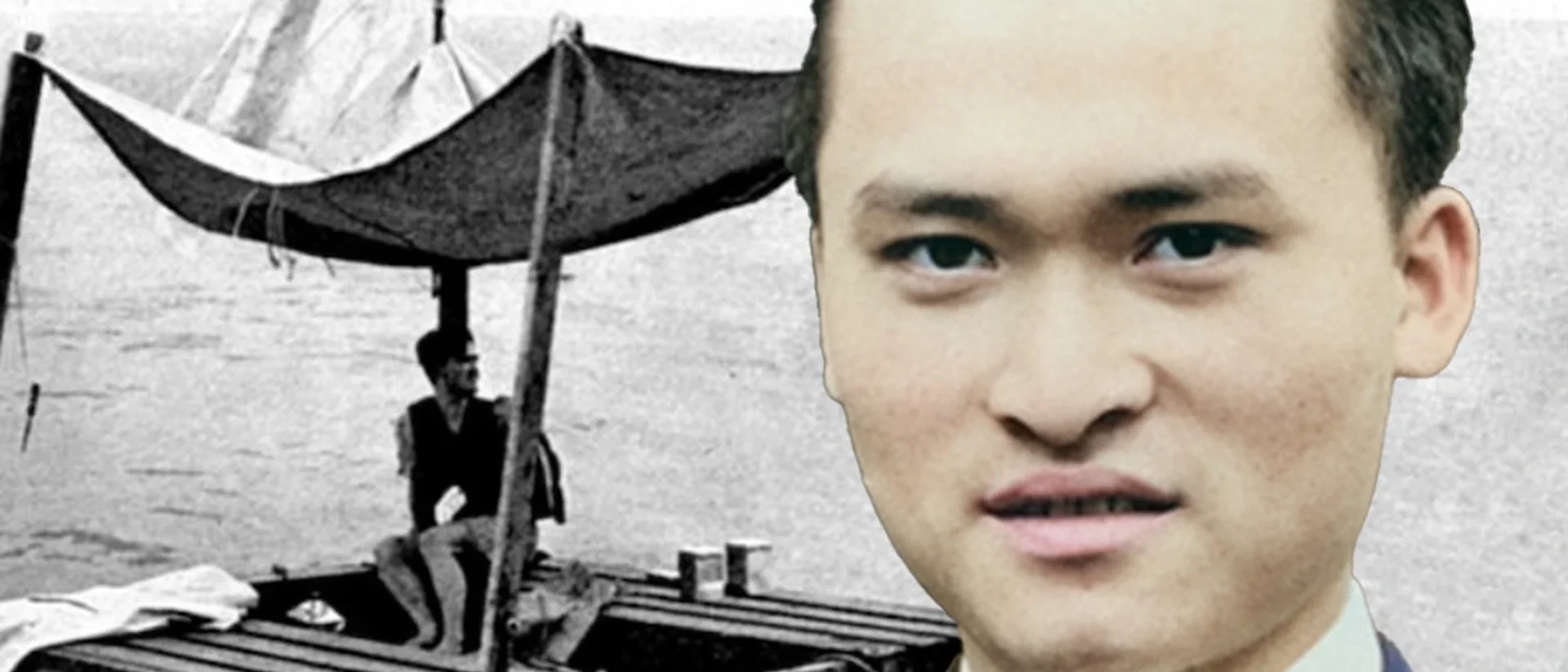
Poon Lim was a 25-year-old steward on a British merchant ship when a German U-boat torpedoed it in the South Atlantic. He grabbed a wooden life raft and drifted alone for 133 days. He fished. He drank bird blood. He killed a passing shark with an empty water jug. His record for longest solo survival on a raft has never been broken.
A Will to Survive: Poon Lim's 133 Days Adrift
Imagine being the sole survivor of a torpedoed ship, adrift in the vast, unforgiving ocean. For Poon Lim, a Chinese second steward on the British merchant ship SS Benlomond, this nightmare became a harrowing reality during World War II. On November 23, 1942, his vessel was sunk by a German U-boat in the South Atlantic, plunging him into an ordeal that would redefine the limits of human endurance.
Lim managed to grab a life jacket and, after two hours in the churning water, found himself on a small wooden raft. This wasn't a luxury vessel; it was a basic, 8x8 foot platform, never intended for a four-month odyssey. His initial supplies were critically meager: a few tins of biscuits, some chocolate, pemmican, a small amount of evaporated milk, lime juice, and a jug of fresh water. These provisions were a temporary reprieve, a rapidly dwindling lifeline against the immensity of the ocean.
A Swift Decline, A Sharper Mind
As the days bled into weeks, Lim's meager rations inevitably ran out. The stark reality of starvation and dehydration loomed large, threatening to claim him just as the war had claimed his shipmates. However, instead of succumbing to despair, he tapped into an extraordinary wellspring of ingenuity and an iron will to survive.
His immediate challenge was sourcing food. With nothing but his wits, he meticulously unwound strands from a discarded hemp rope, patiently twisting them into a crude but functional fishing line. A flattened biscuit tin, hammered and shaped, became his makeshift hook. This primitive gear, combined with immense patience, soon began to yield results, providing a crucial, if inconsistent, source of protein.
But fishing alone wasn't enough to combat the constant thirst under the relentless equatorial sun. When precious rainwater became scarce, Lim devised a gruesome yet effective solution. He would use fish guts as bait, patiently waiting to lure curious seabirds onto his raft. With incredible stealth, he would then seize them, wringing their necks and draining their blood to drink – a grim but vital source of hydration when fresh water was unattainable.
The Jug and the Jaws: Battling a Shark
Perhaps the most astonishing and visceral tale from Lim's incredible journey involves a confrontation with a shark. One day, a large shark began relentlessly circling his tiny raft, a terrifying symbol of the ocean's untamed power. Lim, ever the pragmatist, saw not just a predator, but a desperate opportunity for sustenance.
He first managed to catch a smaller shark, using its flesh and blood as bait to draw the larger beast closer. When the formidable predator ventured within reach, Lim launched his attack. His weapon? A partially filled jug of water. Swinging it with all his might, he repeatedly bludgeoned the shark's head. It was a brutal, desperate fight against a formidable foe, a testament to his fierce will to live.
After conquering the beast, Lim dragged it onto his raft. In a moment of extreme necessity, he cut it open and drank blood directly from its liver, a shocking act that provided both hydration and nutrients. He then meticulously cut strips of its meat and fins, drying them in the sun to create a precious emergency food source, further extending his improbable survival.
Mastering the Miniature World
Poon Lim transformed his small raft into a functional, if precarious, floating home. He improvised repairs with any salvageable materials, constantly battling the wear and tear of the open sea. He fashioned a rudimentary canopy from canvas, offering vital protection from the scorching sun and, crucially, serving as a catchment for precious rainwater.
His days were a grueling cycle of maintenance, fishing, food preservation, and constantly scanning the horizon. He spotted numerous ships during his 133 days adrift, but his tiny raft was invariably overlooked. Each failed sighting was a crushing blow, yet he steadfastly refused to surrender to despair. His mental fortitude, the ability to maintain hope and purpose against overwhelming odds, was as remarkable as his physical endurance.
A Rescued Hero, A Lasting Legacy
Finally, on April 5, 1943, his ordeal came to an end. After an astonishing 133 days – equivalent to over four months – Poon Lim was spotted by three Brazilian fishermen off the coast of Brazil. They brought him to safety, utterly stunned by the incredible saga of his solitary survival.
Though he had lost 20 pounds, Lim was able to walk ashore unaided, a testament to his incredible resilience. His harrowing feat did not go unnoticed; it earned him the prestigious British Empire Medal from King George VI. Furthermore, his meticulous and detailed accounts of survival at sea were deemed so valuable that they were later incorporated into Royal Navy survival manuals, teaching future generations how to endure the seemingly unthinkable.
Poon Lim’s story is far more than just a tale of survival; it’s a profound testament to the indomitable human spirit. Faced with unimaginable adversity and the vast indifference of the ocean, he proved that with unparalleled ingenuity, unwavering resilience, and an unyielding will to live, one can conquer even the most formidable challenges the world throws their way.
Enjoyed this? Get a new fact every morning.
A fascinating fact in your inbox every morning. Free. Unsubscribe anytime.
Frequently Asked Questions
How long did Poon Lim survive at sea?
How did Poon Lim find food and water?
What was Poon Lim's most incredible survival feat?
When and where was Poon Lim rescued?
What happened to Poon Lim after his rescue?
Verified Fact
This fact has been reviewed and verified against original sources.
Show verification details
The fact is entirely accurate. Poon Lim's survival story, including fishing, drinking bird blood, and killing a shark with a water jug, is well-documented.
Related Topics
More from History & Culture
View all History & Culture →