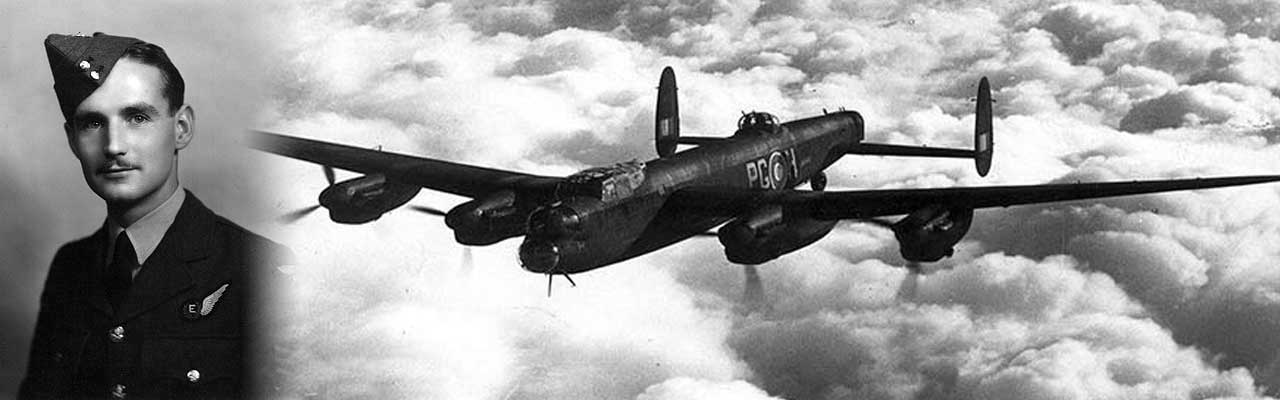
Nicholas Alkemade, a pilot during World War 2, survived falling 18,000 feet after jumping from a burning Lancaster bomber.
The Gunner Who Fell 18,000 Feet and Lived to Tell
Picture this: You're trapped in a burning bomber at 18,000 feet. Your parachute is on fire. Your only choices are burn alive or jump to certain death. What would you do?
Nicholas Alkemade chose to jump. And somehow, impossibly, he lived to tell the tale.
The Night Everything Went Wrong
On March 24, 1944, Alkemade was the rear gunner on an Avro Lancaster bomber during a raid over Germany. At 18,000 feet, a German fighter ripped through their aircraft with cannon fire. Flames erupted through the fuselage.
Alkemade turned to grab his parachute—and watched in horror as it burned before his eyes. The fire was spreading fast. He had seconds to decide.
He jumped without it.
The Fall
For the next three and a half miles, Alkemade plummeted through freezing night air at terminal velocity—roughly 120 mph. He expected to be dead before he hit the ground, hoping only that it would be quick.
Then he blacked out.
Waking Up Alive
When Alkemade regained consciousness, he was lying in snow. Thick, soft snow in a dense pine forest. He wiggled his toes. Moved his fingers. Took inventory:
- Twisted knee
- Burns on his legs and face
- Splinters in his thigh
- Minor cuts and bruises
That was it. From 18,000 feet. Without a parachute.
The pine trees had slowed his fall. Their branches broke and bent, each one shaving off a bit more velocity. The final cushion came from a snow-covered slope—several feet of powder that compressed under his impact like a giant airbag.
Proving the Impossible
German authorities who captured him thought he was lying. No one survives an 18,000-foot fall. They accused him of being a spy who parachuted in and destroyed his chute to avoid detection.
The Gestapo interrogated him for days. But when they searched the crash site, they found the wreckage of Alkemade's turret—and inside it, the charred remains of his parachute, still in its pack.
The Germans were so impressed they gave him a certificate documenting his survival. The RAF later confirmed every detail of his story.
The Luckiest Unlucky Man
Alkemade wasn't done with close calls. Later in the war, after returning to duty, he survived another aircraft incident. Then, working in a chemical plant after the war, he was nearly killed when a large quantity of chlorine gas was accidentally released.
Each time, he walked away.
He lived until 1987, dying peacefully at age 64—proving that once you've survived the impossible, everything else is just Tuesday.
His story remains one of the most extraordinary survivals in aviation history, a reminder that sometimes the universe has other plans—even when you're falling from the sky at terminal velocity.
Frequently Asked Questions
Did Nicholas Alkemade really survive a 18000 foot fall in WWII?
Why did Nicholas Alkemade jump without a parachute?
How did Nicholas Alkemade survive falling from a plane?
What happened to Nicholas Alkemade after his fall?
When did Nicholas Alkemade's plane crash?
Verified Fact
This fact has been reviewed and verified against original sources.
Show verification details
Nicholas Alkemade's survival from an 18,000-foot fall on March 24, 1944, is well-documented. He was a rear gunner (not a pilot) on an Avro Lancaster bomber during WWII.
Related Topics
More from History & Culture
View all History & Culture →