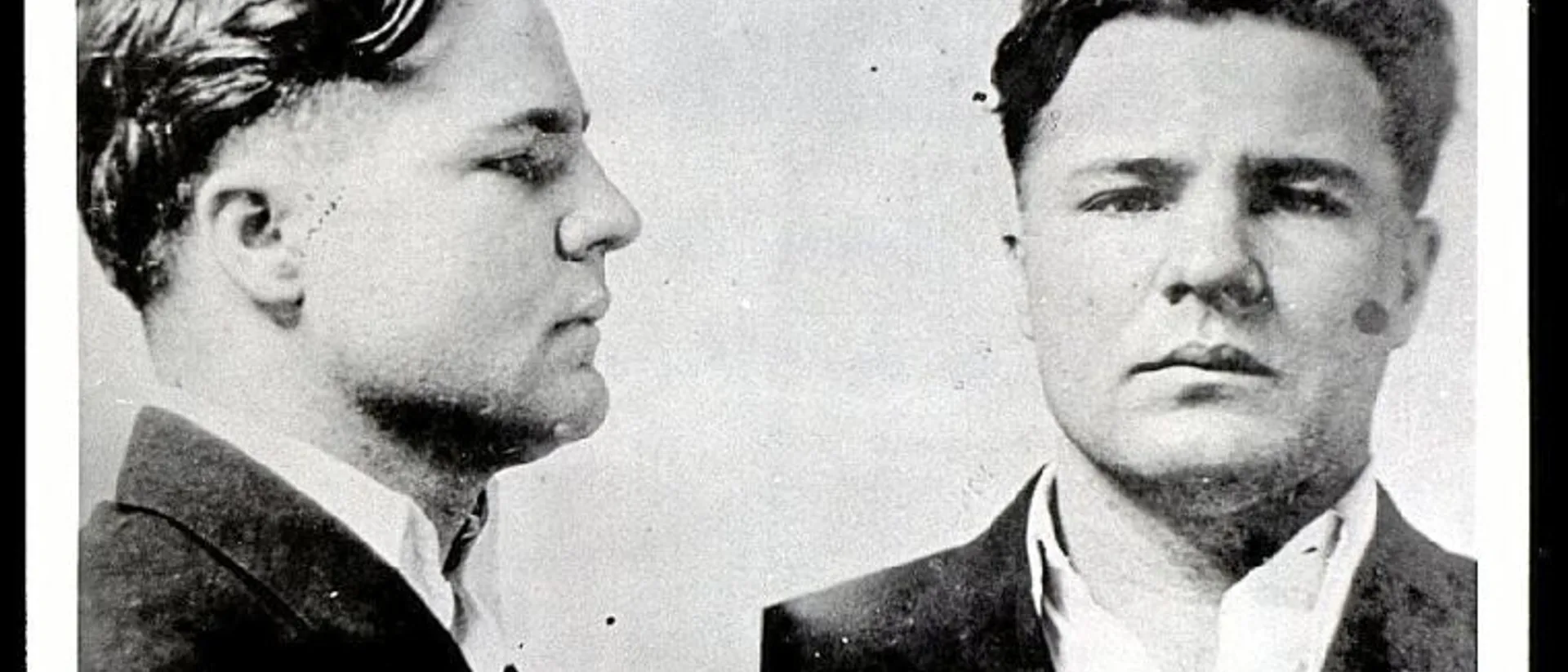
Depression-era bank robber "Pretty Boy" Charles Floyd reportedly destroyed mortgage documents during at least one or two heists. While the legend claims he freed hundreds from debt, FBI historians note this was likely occasional rather than routine—but the rumors helped cement his Robin Hood reputation among struggling Oklahoma farmers.
Pretty Boy Floyd's Robin Hood Legend
Charles "Pretty Boy" Floyd robbed banks with a Tommy gun during the Great Depression. But according to popular legend, he wasn't just taking money—he was burning the paperwork that kept struggling farmers chained to their debts.
The story goes like this: Floyd would storm into small-town banks, take the cash, then deliberately destroy mortgage documents. With those papers gone, banks couldn't prove who owed what. Instant debt relief.
It's a compelling tale. There's just one problem—it's mostly myth.
What the FBI Actually Says
Even the FBI, who hunted Floyd as Public Enemy Number One after Dillinger's death, acknowledges something happened. Their historical records suggest Floyd destroyed mortgage notes in "one or two" robberies. Maybe a handful of farmers really did get their debts wiped clean.
But hundreds of people freed from debt? A systematic Robin Hood campaign? That part appears to be folklore that grew with each retelling.
Why the Legend Stuck
The 1930s were brutal for Oklahoma farmers:
- The Dust Bowl was destroying crops
- Banks were foreclosing on family farms
- People watched their neighbors lose everything
Floyd came from that world. Born in 1904 to a tenant farming family, he understood the struggle. When rumors spread that he was burning mortgage papers, people wanted to believe it. The banks were villains. Floyd became an unlikely hero.
The Robin Hood of Cookson Hills
What we know for certain: Floyd cultivated his image carefully. Locals in the rugged Cookson Hills of eastern Oklahoma protected him from the law. In return, he reportedly shared money with families who might otherwise go hungry.
Was this generosity or strategy? Probably both. A folk hero's reputation kept mouths shut. When the FBI came asking questions, nobody had seen a thing.
Folk singer Woody Guthrie immortalized the legend in his ballad "Pretty Boy Floyd," singing that Floyd saved "many a starving farmer" from losing their homes. The song cemented the mythology for generations.
The Complicated Truth
Floyd killed at least ten people during his criminal career. He wasn't a humanitarian with a gun—he was a ruthless bank robber who happened to become a symbol of something larger than himself.
When federal agents shot Floyd dead in an Ohio cornfield in 1934, between 20,000 and 40,000 people attended his funeral—the largest in Oklahoma history. They weren't mourning a killer. They were mourning the idea of someone who fought back against the forces crushing ordinary people.
Did he really burn those mortgage papers? Once or twice, maybe. But the legend mattered more than the facts ever could.
Frequently Asked Questions
Did Pretty Boy Floyd really destroy mortgage documents?
Why was Pretty Boy Floyd considered a Robin Hood?
How did Pretty Boy Floyd die?
How many people attended Pretty Boy Floyd's funeral?
Was Pretty Boy Floyd a good person?
Verified Fact
This fact has been reviewed and verified against original sources.
Show verification details
Corrected to reflect historical nuance. FBI records suggest this happened 'once or twice' but wasn't a consistent practice.
Related Topics
More from History & Culture
View all History & Culture →