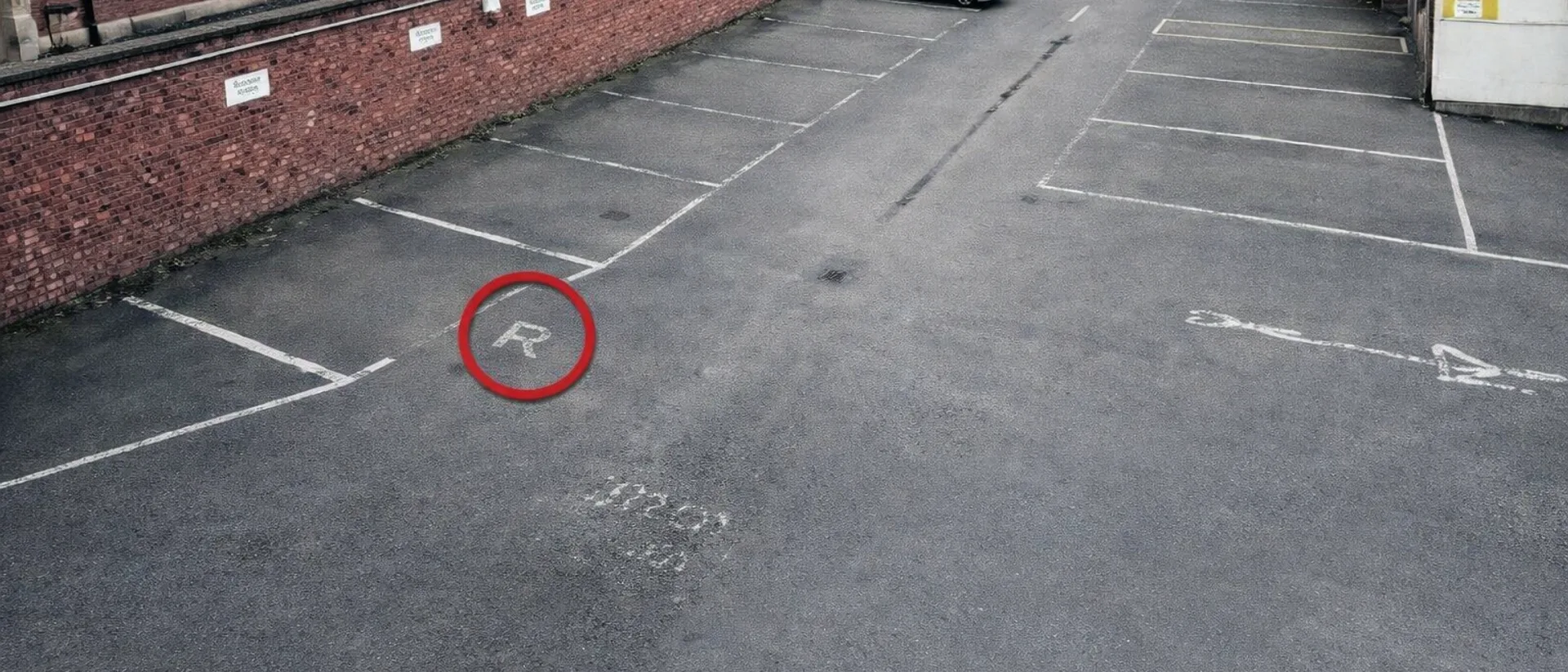
In 2012, archaeologists dug up a parking lot in Leicester and found the skeleton of King Richard III - lost for 527 years. An amateur historian convinced a university to dig on a hunch. They found him in the first trench, six hours into a two-week dig. The parking space above his grave was marked with the letter R.
A King Lost for 527 Years Was Found Under a Parking Lot — Beneath a Space Marked "R"
King Richard III ruled England for just two years before he was killed at the Battle of Bosworth Field on August 22, 1485. He was 32 years old and the last English monarch to die in combat. His defeat by Henry Tudor ended the Plantagenet dynasty and launched the Tudor era.
After the battle, Richard's body was stripped naked, strapped across a horse, and paraded through Leicester for public display. He was buried in a crude grave at the Greyfriars friary — no coffin, no funeral ceremony, his body forced into a hole too small for it. His hands may have still been bound.
When Henry VII dissolved the monasteries in the 1530s, the friary was demolished. Richard's grave was lost. For over five centuries, nobody knew exactly where England's last warrior king was buried.
The Woman Who Found a King
Philippa Langley wasn't an archaeologist. She was a screenwriter and member of the Richard III Society who became obsessed with finding the lost king. In 2004, she visited a Leicester Social Services car park and felt what she described as a strange, visceral sensation standing in one particular spot. She later noticed the parking space nearest to that spot was marked with a painted letter “R.”
Most people dismissed her. But Langley spent years building a case, raising funds, and convincing the University of Leicester's archaeology department to dig. The project was called “Looking for Richard.”
On August 25, 2012 — 527 years to the day after Richard's burial — they broke ground. The first trench struck the remains within six hours. The skeleton lay just beneath the surface of a parking lot that thousands of people had driven over for decades.
Proving It Was Him
The skeleton showed severe scoliosis (a curved spine), matching historical descriptions of Richard as having one shoulder higher than the other. There were 11 wounds — nine to the skull, including a devastating blow from a halberd that sliced off the back of his head, and a sword thrust that penetrated through the brain. Two wounds to the body were likely “humiliation injuries” inflicted after death.
DNA analysis matched the skeleton to two living female-line descendants of Richard's sister: Michael Ibsen (a 16th-generation great-nephew) and Wendy Duldig (an 18th-generation great-niece). The identification was confirmed with 99.999% accuracy.
A King Reburied
In March 2015, Richard III was reburied at Leicester Cathedral in a ceremony attended by thousands. The Archbishop of Canterbury presided. Actor Benedict Cumberbatch — himself a distant relative of Richard — read a poem written by poet laureate Carol Ann Duffy. Over 20,000 people queued for up to four hours just to view the coffin.
The former car park is now the King Richard III Visitor Centre, with a glass floor panel marking the exact spot where his skeleton was found.
A king who was stripped, paraded, and dumped in an unmarked grave spent 527 years under a parking lot before an amateur historian — going on nothing but a feeling and a painted letter — brought him home.
Frequently Asked Questions
Where was Richard III found?
How did they know it was Richard III?
What does the R on the parking space mean?
Who found Richard III?
How did Richard III die?
Verified Fact
This fact has been reviewed and verified against original sources.
Source: View sourceShow verification details
Well-documented archaeological discovery. University of Leicester led the excavation in August 2012. DNA confirmed by matching with two living female-line descendants. Widely covered by BBC, CNN, National Geographic, Scientific American.
Related Topics
More from History & Culture
View all History & Culture →