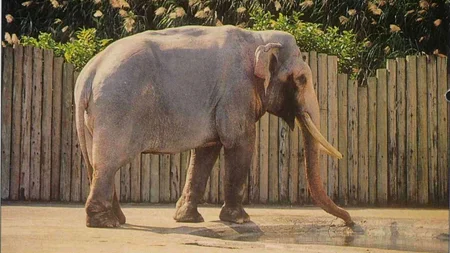
The first bomb dropped on Berlin in WWII killed an elephant in the Berlin Zoo - but it wasn't the only one. The zoo had nine elephants when the war began.
The First Bomb on Berlin Killed a Zoo Elephant
On the night of August 25-26, 1940, the Royal Air Force launched its first bombing raid on Berlin. About 81 British bombers reached the German capital, aiming for strategic targets like the Tempelhof Airport and industrial facilities. Dense clouds obscured the city, and most bombs fell harmlessly in surrounding areas.
But one bomb found an unlikely victim: an elephant at the Berlin Zoo.
Retaliation for an Accident
The raid itself was hastily ordered as retaliation. The night before, German bombers had accidentally dropped bombs on London - likely a navigation error during the Battle of Britain. Prime Minister Winston Churchill immediately ordered a strike on Berlin to send a political message: Your capital is not safe.
The military results were disastrous. Six British bombers crashed, mostly running out of fuel on the return flight due to headwinds. Only minor damage occurred in Berlin - a woodshed destroyed, two Germans slightly injured, and one elephant killed.
The "Only Elephant" Myth
Internet legend claims the bomb killed "the only elephant in the Berlin Zoo," but this is false. The zoo actually had nine elephants when the war began. The 1940 raid killed one of them, leaving eight survivors.
The real tragedy came later. Allied bombing raids in November 1943 and 1944 killed seven more elephants, leaving just one survivor: an Asian bull named Siam. He endured the rest of the war exhibiting clear signs of psychological trauma, dying of natural causes in 1947.
A Zoo's Devastation
By May 31, 1945, only 91 of the zoo's original 3,715 animals had survived the war. The survivors included:
- Siam the traumatized elephant
- Knautschke the hippo
- Two lion cubs and two hyenas
- Ten hamadryas baboons and one chimpanzee
- A single black stork
The first bomb on Berlin may have killed an elephant, but it was just the beginning of a much larger tragedy - for the zoo, the city, and millions of people across Europe.
Frequently Asked Questions
Did the first bomb on Berlin in WWII kill the only elephant?
How many elephants survived WWII at Berlin Zoo?
Why did the RAF bomb Berlin in August 1940?
What happened to Siam the elephant after WWII?
How many animals survived at Berlin Zoo after WWII?
Verified Fact
This fact has been reviewed and verified against original sources.
Show verification details
Corrected the 'only elephant' claim - Berlin Zoo had 9 elephants at the start of WWII. The first RAF raid on August 25-26, 1940 killed one elephant, but eight more survived until later raids.