
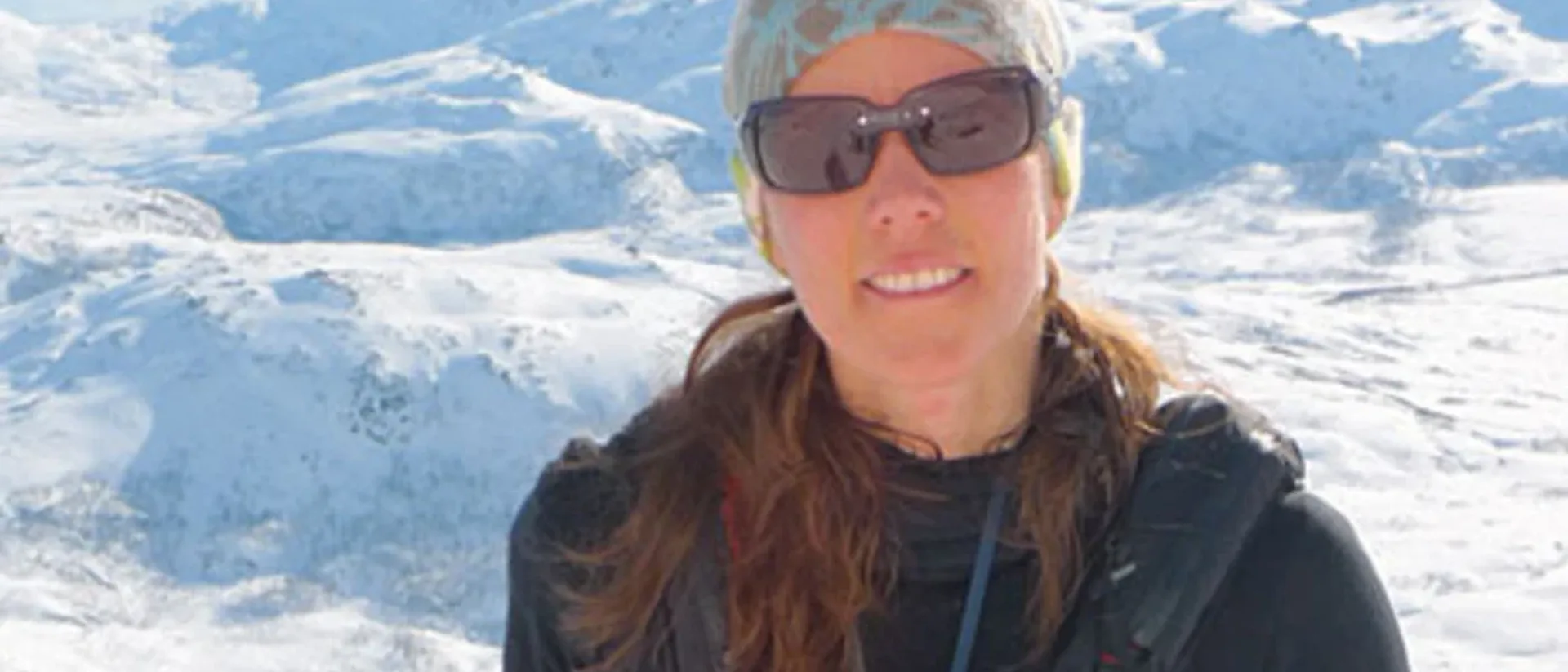
In 1999, a Swedish doctor fell through ice while skiing and spent 80 minutes trapped underwater. Her body temperature dropped to 56.7°F - the lowest ever recorded in a surviving patient. She had no heartbeat. Doctors spent 9 hours reviving her. She later became a radiologist at the very hospital that saved her life.
She Was Clinically Dead for Hours. Then She Woke Up.
On May 20, 1999, a 29-year-old Swedish radiologist named Anna Bågenholm was skiing with two colleagues near Narvik, Norway, when she lost control and slid headfirst into a frozen stream. The ice cracked beneath her. Within seconds, she was trapped underneath, pinned against a rock ledge with only a thin pocket of air between her face and the water's surface. Her friends grabbed her skis and her legs, but they couldn't pull her free.
80 Minutes Under the Ice
For 40 minutes, Bågenholm kept her mouth pressed against a small air pocket while her colleagues called for help. Then the air ran out. Her heart stopped. By the time a rescue team cut through the ice and pulled her body free, she had been submerged for 80 minutes. Her core body temperature had plummeted to 13.7°C (56.7°F) — the lowest ever recorded in a surviving hypothermia patient. She was, by every clinical measure, dead: no pulse, no breathing, fixed and dilated pupils.
The 9-Hour Resurrection
A helicopter rushed her to Tromsø University Hospital, where a team of more than 100 doctors, nurses, and technicians went to work. Lead physician Dr. Mads Gilbert later recalled his reasoning: "She's not dead until she's warm and dead." The team connected her to a cardiopulmonary bypass machine, slowly warming her blood outside her body and pumping it back in. After 9 grueling hours, her heart started beating on its own again. It was the kind of outcome that doesn't happen — except this time it did.
The Comeback
Bågenholm spent months in intensive care and rehabilitation. She suffered nerve damage that initially left her paralyzed from the neck down, but she gradually regained movement and function. The very cold that nearly destroyed her had also saved her — extreme hypothermia had slowed her metabolism so dramatically that her brain survived without oxygen far longer than normally possible. It was a phenomenon doctors knew about in theory but had rarely seen play out so spectacularly.
Full Circle
Anna Bågenholm made a near-complete recovery. She returned to medicine and specialized in — of all things — radiology at Tromsø University Hospital, the same hospital where a hundred people had fought for 9 hours to restart her heart. Her case was published in The Lancet and became one of the most cited examples in hypothermia research, fundamentally changing how emergency teams treat cold-water drowning victims. The lesson her case taught the world: don't give up on the cold ones.
Frequently Asked Questions
How long was Anna Bågenholm trapped under the ice?
What was the lowest body temperature ever survived?
How did doctors save Anna Bågenholm?
What happened to Anna Bågenholm after her recovery?
Verified Fact
Verified across multiple independent sources
Source: The LancetShow verification details
Published in The Lancet (2000) by Dr. Mads Gilbert and Dr. Per Aslak Marsteen, who treated her at Tromsø University Hospital. Widely documented in BBC, The Guardian, and medical textbooks. Core temperature of 13.