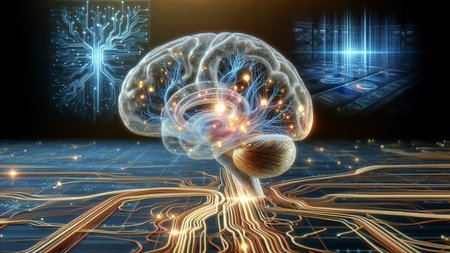
Brain scans show that people who view photos of a beloved experience activation of the caudate - a dopamine-rich part of the brain's reward system involving motivation and desire.
Love Lights Up Your Brain's Reward Center
When you look at a photo of someone you love, something remarkable happens in your brain. Functional MRI studies have shown that viewing images of a beloved person triggers intense activation in the caudate nucleus, a dopamine-rich region deep within the brain's reward circuitry.
This isn't just romantic poetry translated into neuroscience. Researchers led by Helen Fisher in 2005 conducted groundbreaking fMRI scans of people intensely in love, showing them photos of their romantic partners. The results were striking: the right ventral tegmental area and the caudate nucleus lit up with activity, the same regions associated with reward-seeking behaviors and motivation.
The Brain's Reward Highway
The caudate nucleus isn't just any brain region - it's a critical hub in what neuroscientists call the reward system. This almond-shaped structure is packed with dopamine receptors and plays a central role in detecting rewards, anticipating pleasure, and driving motivated behavior.
Think of the caudate as your brain's reward calculator. It processes information about potential gains and losses, helps you learn from rewarding experiences, and motivates you to pursue what brings satisfaction. When it activates while viewing your partner's face, your brain is essentially registering them as a powerful reward.
More Than Just Warm Feelings
What makes these findings particularly fascinating is the intensity of the activation. Follow-up studies found that the strength of caudate activation directly correlated with how passionately in love participants reported feeling. The more intense the romantic feelings, the brighter the caudate glowed on the brain scan.
This same neural machinery activates when:
- You anticipate winning money or receiving a reward
- You're motivated to achieve a goal
- You experience the rush of addictive substances
- You crave something intensely
That last point explains why early-stage romantic love can feel so consuming, almost addictive. You're literally using the same brain circuitry that drives cravings and compulsive seeking behaviors.
The caudate doesn't work alone, either. Love activates an entire network including the ventral tegmental area (VTA), nucleus accumbens, anterior cingulate cortex, and other regions that together create the complex experience of romantic attachment. But the caudate remains one of the most consistently activated regions across multiple studies.
Love as a Natural High
These brain imaging studies help explain why love can feel so euphoric, why you can't stop thinking about your partner, and why their absence feels so acutely painful. Your reward system has essentially tagged this person as critical to your well-being, creating powerful neural associations that drive you to seek their presence.
Interestingly, the pattern differs from simple sexual attraction. While lust activates the hypothalamus and amygdala more strongly, romantic love shows this distinctive caudate signature. Your brain treats your beloved not just as sexually attractive, but as a reward worth pursuing.
Frequently Asked Questions
What part of the brain is activated when you see someone you love?
Why does love feel addictive?
What is the caudate nucleus responsible for?
How do neuroscientists study love in the brain?
Is romantic love different from attraction in the brain?
Verified Fact
This fact has been reviewed and verified against original sources.
Show verification details
Corrected to more accurately describe the caudate as part of the reward/motivation system rather than specifically 'cravings'
Related Topics
More from People & Mind
View all People & Mind →