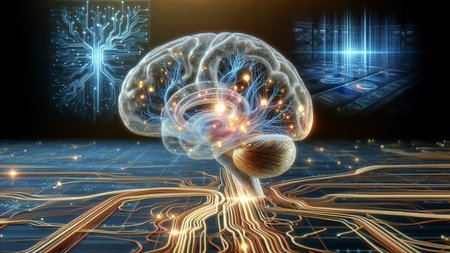
Déjà vu may occur when your brain's familiarity and recollection systems momentarily fall out of sync, creating a false sense that you've experienced something before.
Why Your Brain Plays the Déjà Vu Trick on You
You're walking into a coffee shop you've never visited, and suddenly everything feels hauntingly familiar—the layout, the barista's voice, even the song playing overhead. You know you've never been here, yet your brain insists otherwise. Welcome to déjà vu, one of the strangest glitches in human consciousness.
The term comes from French, meaning "already seen," and about two-thirds of people experience it at least once in their lives. It typically lasts only 10 to 30 seconds, but those few moments can feel genuinely unsettling.
Your Brain's Dual Memory Systems
To understand déjà vu, you need to know that your brain doesn't store memories like files on a computer. Instead, it runs two parallel systems: familiarity (a quick gut feeling that something is known) and recollection (the slower process of retrieving specific details).
Normally these systems work in harmony. You see your neighbor's face, feel familiarity, then recall their name and where they live. But sometimes the familiarity signal fires without any recollection to back it up.
The result? Your brain screams "I know this!" while offering zero evidence for why.
Leading Theories
Neuroscientists have proposed several explanations:
- Split perception: Your brain processes a scene twice in rapid succession, making the second perception feel like a memory
- Memory matching errors: A new experience shares enough features with old memories that your brain misfires a recognition signal
- Temporal lobe activity: Brief, spontaneous electrical activity in the brain's memory centers triggers false familiarity
Research on epilepsy patients has been particularly revealing. People with temporal lobe epilepsy often experience intense déjà vu right before seizures, suggesting the phenomenon originates in the brain regions responsible for memory formation.
Who Gets It Most?
Déjà vu peaks in frequency during your teens and twenties, then gradually declines. This might seem counterintuitive—shouldn't more memories mean more chances for confusion? But younger brains appear more prone to these misfires, possibly because they're still fine-tuning their memory systems.
Interestingly, people who travel frequently, watch more films, and have vivid dream recall report déjà vu more often. Fatigue and stress also seem to increase episodes, perhaps because a tired brain is more likely to make recognition errors.
Not a Glitch—A Feature?
Some researchers suggest déjà vu might actually be your brain's fact-checking system in action. When there's a conflict between familiarity and recollection, that eerie feeling could be your brain flagging the mismatch rather than blindly accepting a false memory.
In other words, déjà vu might be proof your memory is working correctly—catching errors instead of letting them slide.
So next time that uncanny sensation washes over you, don't worry. Your brain isn't broken. It's just momentarily arguing with itself about what it knows—and for a few strange seconds, you get to witness the debate.
Frequently Asked Questions
What causes déjà vu?
Is déjà vu a sign of a brain problem?
Why do young people experience more déjà vu?
Can stress trigger déjà vu?
How long does déjà vu last?
Verified Fact
This fact has been reviewed and verified against original sources.
Show verification details
The original oversimplified one theory as the definitive explanation. Corrected to reflect that déjà vu's cause remains debated among neuroscientists, with the memory-matching theory being one leading hypothesis.
Related Topics
More from People & Mind
View all People & Mind →