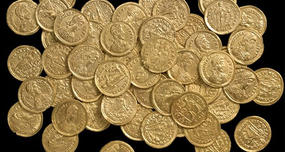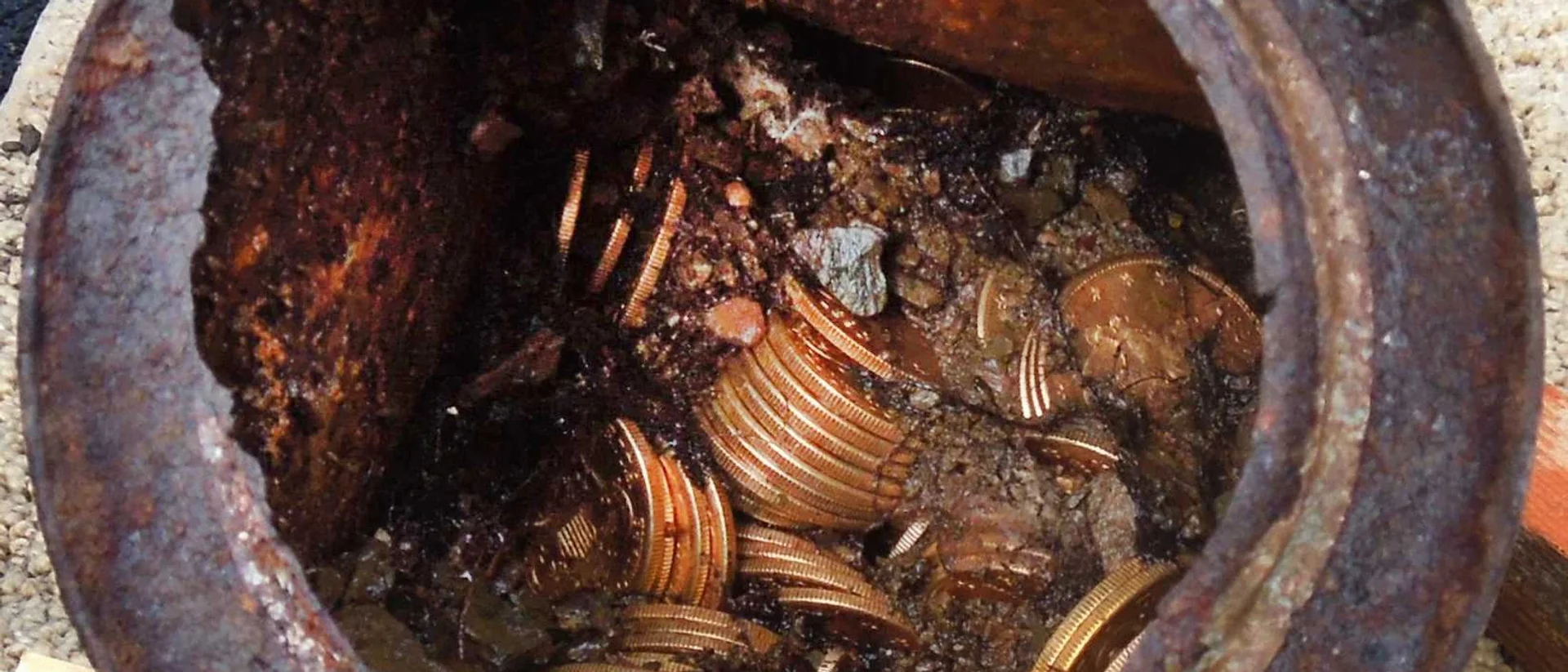
A California couple were walking their dog in February 2013 when the woman spotted a rusty tin can sticking out of the soil on their property. They dug it out - and found it packed with 19th-century gold coins. Eight canisters total, containing 1,427 Gold Rush-era coins dated 1847-1894. Face value: $27,980. Market value: $10 million.
They Found $10 Million in Gold Coins While Walking the Dog
Most people walk their dog hoping for a quiet stroll. A California couple walked theirs and came home with the largest buried gold coin discovery in American history.
A Tin Can That Changed Everything
In February 2013, a woman known only as "Mary" was walking her dog on their rural Northern California property when she noticed a rusty tin can poking out of the soil. She and her husband "John" dug it out carefully - and immediately noticed it was far too heavy. When they opened it, they found it packed solid with 19th-century gold coins.
The couple returned to the spot with a metal detector and searched methodically. By the time they were done, they had uncovered eight tin canisters in total, all buried on their property. Together, they held 1,427 gold coins.
Gold Rush Fortune Hidden in the Ground
The coins were sent to David J. McCarthy of Kagin's, a respected numismatics firm in Tiburon, California, who performed the initial evaluation. The Professional Coin Grading Service (PCGS) independently authenticated them all. The coins dated from 1847 to 1894 - spanning the entire California Gold Rush era and beyond - and included $20 Double Eagles, $10 Eagles, and $5 Half Eagles.
The total face value of all 1,427 coins: $27,980. But many were in near-perfect, uncirculated condition. Over a dozen were graded as the finest known examples of their type in existence. A single 1866-S Double Eagle in the collection was estimated at approximately $1 million on its own.
$27,980 on Paper. $10 Million in Reality.
The total market value of the Saddle Ridge Hoard was estimated at approximately $10 million - making it the largest known buried gold coin discovery ever recorded in the United States. The coins were sold through an exclusive arrangement with Amazon Collectibles and at auction. The couple - who chose to remain completely anonymous throughout - said they planned to use the proceeds to pay off personal debt and make charitable donations, while keeping a small number of coins as family heirlooms.
Who Buried It?
Nobody knows. The property sits within 200 miles of the original 1849 Gold Rush sites, and the coin dates span the most active period of California gold mining. John and Mary had lived on the property for several years without any idea the coins were there. The mystery of who buried them - and why - has never been solved.
Enjoyed this? Get a new fact every morning.
A fascinating fact in your inbox every morning. Free. Unsubscribe anytime.
Frequently Asked Questions
What is the Saddle Ridge Hoard?
How were the Saddle Ridge gold coins found?
How much are the Saddle Ridge Hoard coins worth?
Who authenticated the Saddle Ridge Hoard coins?
What happened to the Saddle Ridge Hoard coins?
Verified Fact
Verified Aug 26, 2026 · 2 sources checked
Source: Wikipedia / Kagin's NumismaticsShow verification details
Claims checked
- 1,427 Gold Rush-era coins found in 8 canisters
- Coins dated 1847-1894, face value $27,980
- Market value about $10 million
- Discovery in February 2013 during a dog walk
- Couple remained anonymous as John and Mary
Sources: Wikipedia, Kellyco Metal Detectors
Related Topics
More from People & Mind
View all People & Mind →