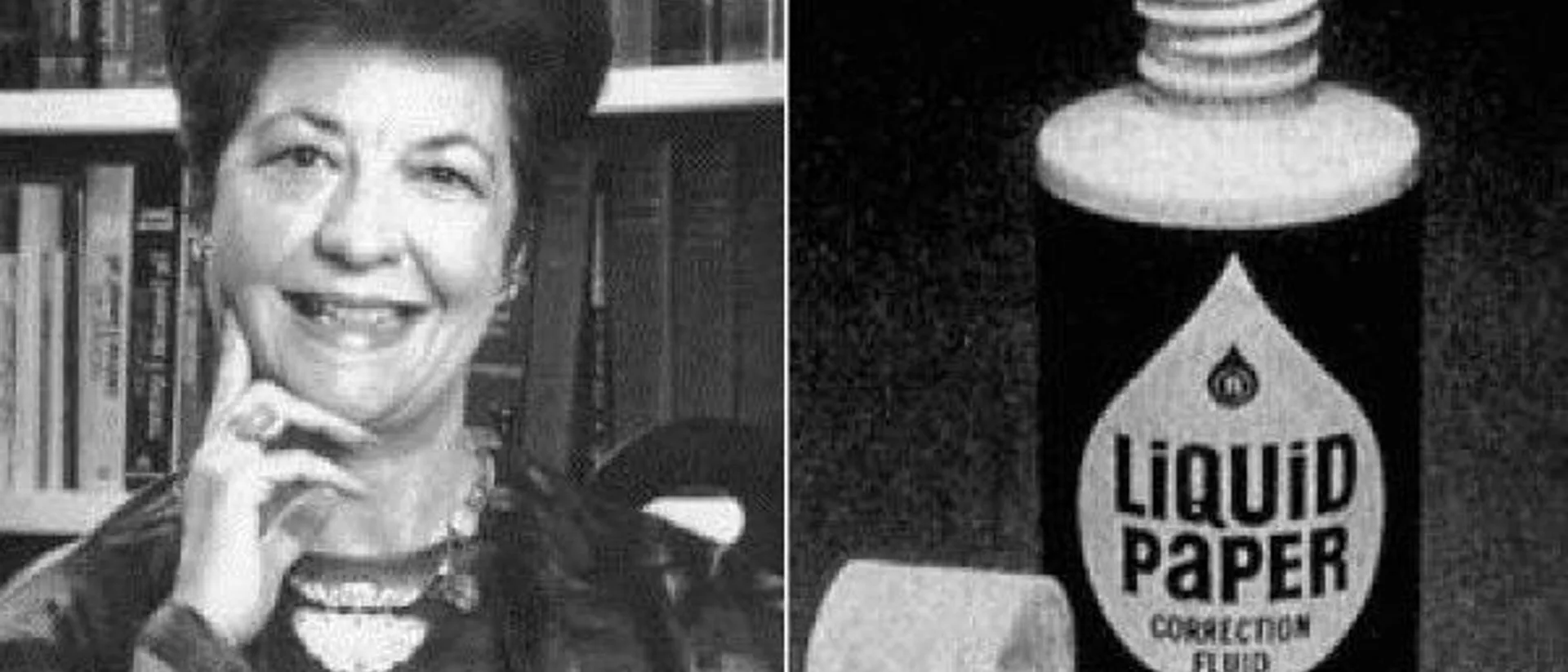
A secretary in Dallas kept making typing errors, so she started painting over them with white tempera paint. She offered the idea to IBM - they said no. She built Liquid Paper into a company doing $38 million a year. Gillette bought it for $47.5 million. Her son was in The Monkees.
IBM Said No to a Secretary. She Built a $47.5 Million Company Anyway.
Bette Nesmith Graham was a single mother working as an executive secretary at Texas Bank & Trust in Dallas during the 1950s. Electric typewriters were just becoming standard, and their carbon film ribbons made errors nearly impossible to erase cleanly. Every mistake meant retyping an entire page.
A Kitchen Chemistry Experiment
Graham had studied art, and she knew that painters fixed mistakes by painting over them. In 1956, she started bringing a small bottle of white tempera paint and a watercolor brush to the office, quietly dabbing over her errors. The other secretaries noticed immediately - and wanted bottles of their own.
She began mixing batches in her kitchen using a blender, originally calling the product "Mistake Out." She later renamed it Liquid Paper. She sold bottles at $1.50 each, and demand grew by word of mouth through secretary networks across Texas.
IBM Says No
In 1958, Graham approached IBM with her product. The company declined. It was a decision that would look spectacularly wrong within two decades. Rather than give up, Graham kept running the business from her house, filling orders in her garage and kitchen while working full-time at the bank.
In 1962, her employer fired her when they found out she had been working on Liquid Paper during office hours. It turned out to be the best thing that ever happened to the company - she went full-time on the business.
From Garage to Global
By the mid-1970s, Liquid Paper had grown into a serious operation. Graham built a 35,000-square-foot manufacturing plant in Dallas. The company employed over 200 people and was selling the product in 31 countries. Annual revenue hit $38 million.
In 1979, the Gillette Corporation bought Liquid Paper for $47.5 million plus royalties. Graham had built the entire company from a single bottle of white paint.
The Monkees Connection
Graham's son, Michael Nesmith, grew up watching his mother mix correction fluid in the kitchen. He went on to pursue music and became one of the four members of The Monkees, the hugely popular 1960s TV band. Nesmith was also a pioneer of the music video format and is sometimes credited with helping inspire the creation of MTV.
Bette Nesmith Graham died in 1980, just six months after selling the company. She left half her estate to her son and the other half to philanthropic foundations supporting women in business and the arts.
Frequently Asked Questions
Who invented Liquid Paper?
How much did Gillette pay for Liquid Paper?
Was Mike Nesmith from The Monkees really related to the Liquid Paper inventor?
Did IBM really turn down Liquid Paper?
Verified Fact
Verified via Snopes
Source: SnopesShow verification details
Bette Nesmith Graham invented Liquid Paper in 1956. IBM declined the product. Gillette acquired the company in 1979 for $47.5 million plus royalties. Her son Michael Nesmith was a guitarist/vocalist in The Monkees (1966-1971).
Related Topics
More from People & Mind
View all People & Mind →