
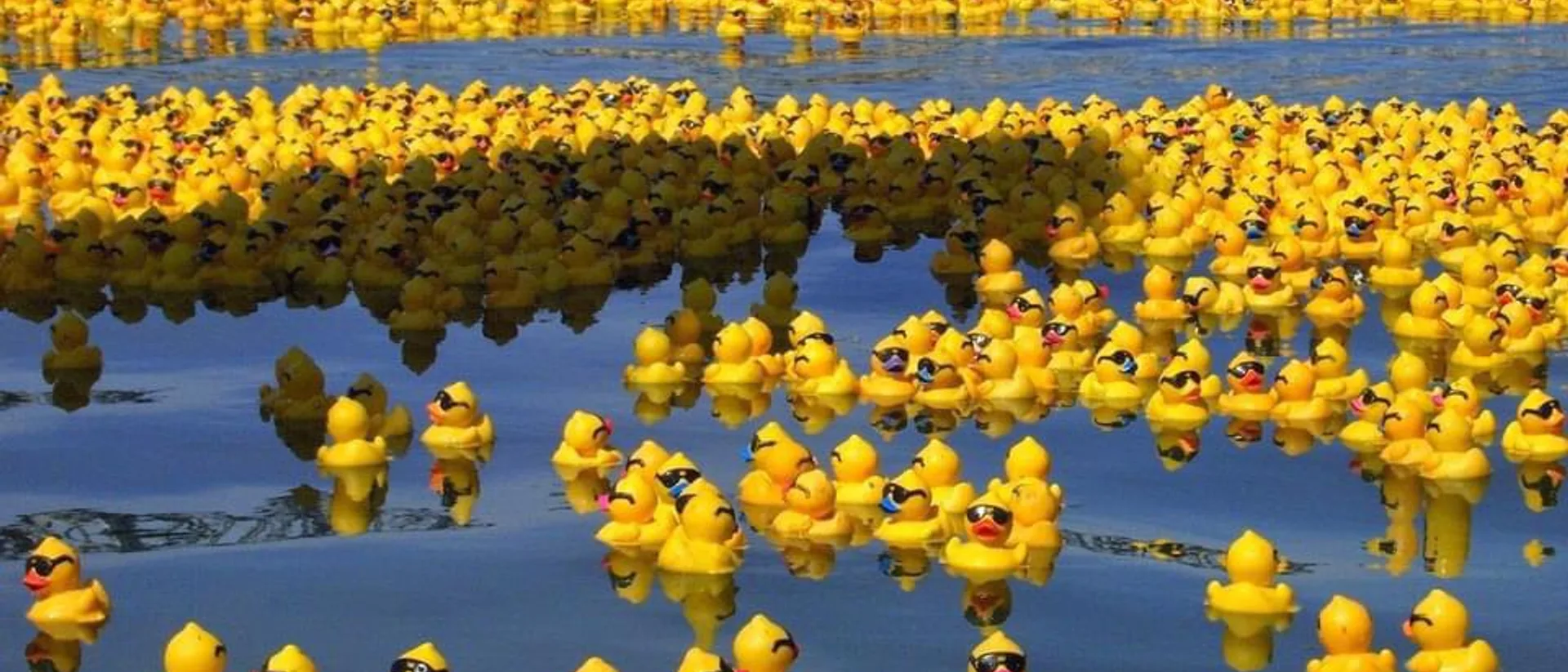
In 1992, a cargo ship spilled 28,800 rubber bath toys into the Pacific Ocean. Some were found in Alaska 10 months later, while others traveled over 17,000 miles and washed up on Atlantic shores 15 years later, helping scientists study ocean currents.
28,800 Rubber Ducks Spilled at Sea Became Ocean Scientists
On January 10, 1992, a container ship battling a North Pacific storm lost twelve cargo containers overboard. One of them held 28,800 plastic bath toys—yellow ducks, red beavers, blue turtles, and green frogs—headed from Hong Kong to Tacoma, Washington. What happened next turned a shipping disaster into one of oceanography's most fascinating accidental experiments.
The "Friendly Floatees," as they were called, didn't sink. They bobbed to the surface and began an epic journey across the world's oceans that would last decades and cover tens of thousands of miles.
The Great Bath Toy Migration
Ten months after the spill, beachcombers in Sitka, Alaska discovered the first arrivals—ten toys that had traveled roughly 2,000 miles from the spill site. But this was just the beginning.
- Some floated south to Hawaii and Australia
- Others rode the currents north, becoming trapped in Arctic ice
- A lucky few completed the Northwest Passage, emerging years later on the shores of Scotland, Ireland, and Newfoundland
- The most well-traveled toys logged over 17,000 miles
The last confirmed Friendly Floatee sighting came in August 2013—21 years after the spill. Some may still be out there, slowly circling ocean gyres.
Accidental Ocean Scientists
Seattle oceanographer Curtis Ebbesmeyer saw opportunity in the chaos. He began tracking the toys' progress, turning them into drift markers for studying ocean surface currents. The data was remarkably valuable—these weren't expensive scientific instruments, but they worked just as well.
The ducks revealed it takes about three years to complete a full circuit of the North Pacific Gyre, the massive rotating current system that dominates the ocean. They traced pathways through the Bering Strait and helped refine computer models of ocean circulation.
Ebbesmeyer even offered a $100 reward for recovered toys, turning beachcombers worldwide into citizen scientists.
A Colorful Legacy
The story captured imaginations far beyond oceanography. Books were written, including "Moby-Duck" by journalist Donovan Hohn, who traveled the globe following the toys' paths. Museums acquired specimens. Beachside communities celebrated when the toys arrived on their shores.
What started as a shipping accident became a decades-long lesson in ocean connectivity, showing how currents link distant shores and how long plastic persists in marine environments. Those cheerful yellow ducks weren't just toys anymore—they were tiny ambassadors revealing the ocean's hidden highways.
And somewhere out there, a faded rubber duck might still be bobbing along, three decades into an unplanned voyage around the world.
Frequently Asked Questions
How many rubber ducks fell off the ship in 1992?
Where did the 1992 rubber ducks end up?
How did rubber ducks help scientists?
Are the 1992 rubber ducks still floating?
What ship lost the rubber ducks in 1992?
Verified Fact
This fact has been reviewed and verified against original sources.
Source: View sourceShow verification details
Corrected the number from 29,000 to 28,800 (actual number) and clarified these were bath toys including ducks, not just ducks.
Related Topics
More from Places & Culture
View all Places & Culture →