📝Updated for accuracy
Some details in this fact have been corrected based on our review of primary sources.
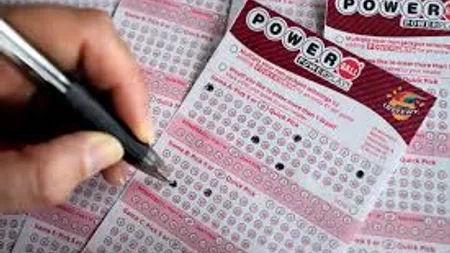
In 1992, an Australian gambling syndicate purchased the majority of combinations in a Virginia lottery. They won, turning their $5m investment into $27m winnings.
The Mastermind Who 'Bought' a Lottery: Virginia's $27M Heist
Imagine turning a substantial investment into an even more colossal fortune, not through the stock market, but by systematically 'buying' a lottery. In 1992, an Australian gambling syndicate achieved just that, orchestrating a mind-boggling coup on the Virginia State Lottery that netted them a staggering $27 million jackpot from a $5 million outlay.
This wasn't a stroke of pure luck; it was a meticulously planned operation led by Stefan Mandel, a Romanian-Australian economist and mathematician. Mandel was no stranger to beating the odds, having successfully exploited loopholes in various lotteries around the world for decades. His strategy was audacious: wait for a jackpot to swell to a sum greater than the total cost of purchasing every possible combination of numbers, and then buy them all.
The Audacious Plan Takes Root
The Virginia Lottery presented the perfect opportunity. To win, players needed to pick six numbers from 1 to 44. This meant there were exactly 7,059,052 possible combinations. Mandel and his International Lotto Fund (ILF) syndicate, comprised of thousands of investors, saw the potential. When the jackpot reached a critical mass - $27 million, far exceeding the cost to cover all tickets - they sprang into action.
Their plan was deceptively simple on paper, but incredibly complex in execution. They needed to print millions of lottery tickets, fill them out with every single combination, and then purchase them all before the draw. This was not a small-scale operation carried out by a few individuals.
A Race Against Time and Logistics
The syndicate faced immense logistical challenges. They had to print computer-generated tickets with each unique combination, then ship them to Virginia. Once there, an army of couriers was enlisted to purchase the tickets from various retail outlets across the state. This wasn't just buying a handful of tickets; it was a coordinated, large-scale purchasing spree.
Imagine the scene: long lines of people, each clutching stacks of pre-filled tickets, waiting to feed them into lottery machines. It was a race against the clock, with millions of dollars on the line and millions of tickets to process.
Victory and Investigation
Despite some initial hurdles and falling slightly short of buying every single combination (they managed over 5 million), their efforts paid off. On February 15, 1992, one of their tickets hit the $27 million jackpot. In addition to the grand prize, the syndicate also scooped up around $900,000 in smaller winnings from tickets that matched fewer numbers.
Such an unusual victory naturally raised eyebrows. The Virginia Lottery officials launched an investigation, joined by state, federal, and even international agencies like the FBI and CIA. However, after extensive review, it was concluded that no laws had been broken. Mandel's syndicate had simply played within the existing rules, albeit on a scale no one had anticipated.
The Aftermath: Rules Changed, Legend Lives On
While legal, the event certainly highlighted a glaring vulnerability in the lottery system. In the wake of Mandel's victory, Virginia, and many other states, implemented new regulations to prevent similar bulk purchases in the future. These changes often included restrictions on the number of tickets one person could purchase or prohibitions against using automated systems to print tickets for mass buying.
Stefan Mandel's story remains a testament to unconventional thinking and the power of mathematics. He proved that with enough capital, strategic planning, and meticulous execution, even the seemingly random nature of a lottery could be tamed. His legacy is not just about winning money, but about revealing the fascinating cracks in systems we often perceive as impenetrable.