Bill Bader's family ran Missouri's largest peach farm. Then Monsanto's herbicide drifted from neighboring fields and killed 30,000 of his trees. He sued. During discovery, 180 internal documents revealed Monsanto had warned it would drift. They sold it anyway. A jury awarded Bader $265 million. Monsanto's dicamba is still on the market.
A Peach Farmer Took on Monsanto. A Jury Gave Him $265 Million.
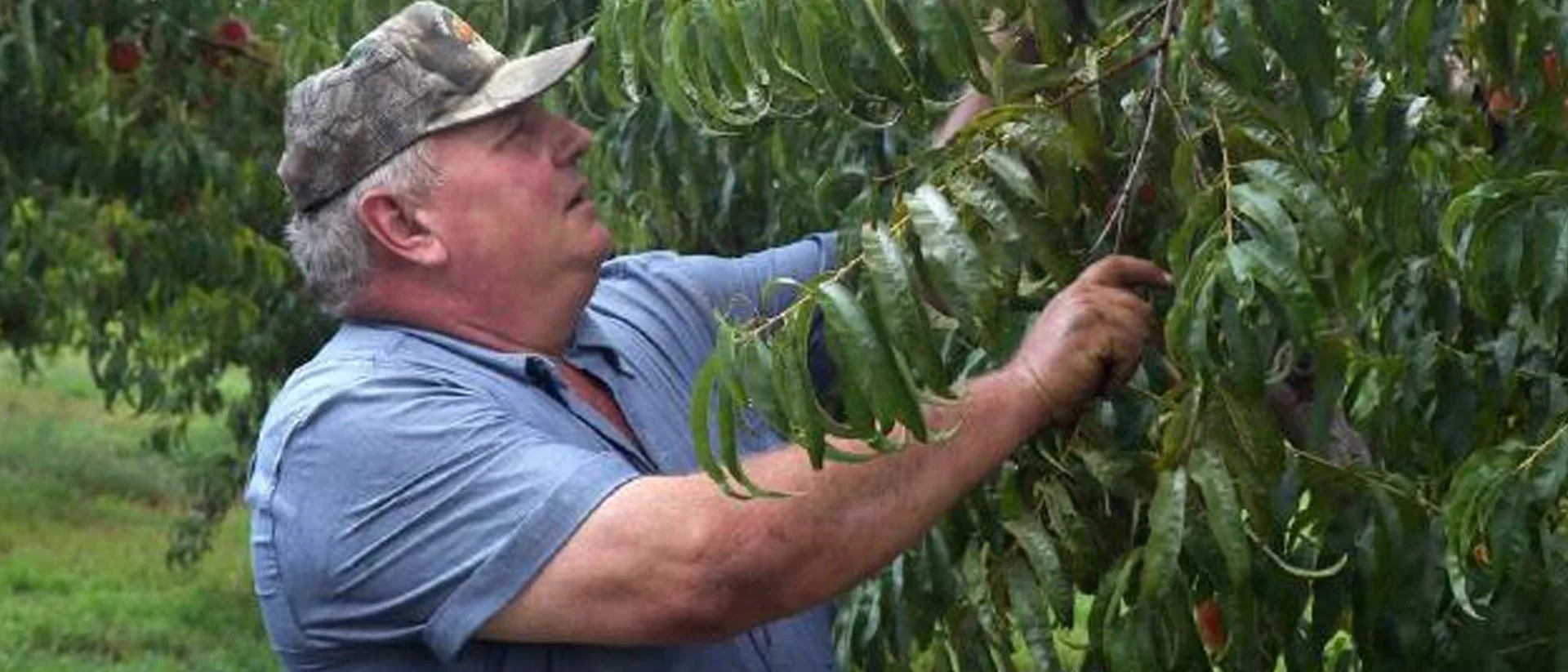
Bill Bader ran Bader Farms in Campbell, southeastern Missouri. It was the largest peach farm in the state, spanning roughly 1,000 acres. Then the dicamba started drifting.
The Drift
Dicamba is a herbicide sold by Monsanto (now Bayer) and BASF, designed to be used with genetically modified dicamba-tolerant crops. The problem: dicamba is volatile. It evaporates from treated fields and drifts onto neighboring land, destroying crops that are not engineered to resist it.
Bader's peach trees were not dicamba-tolerant. When neighboring soybean farmers began spraying, the herbicide drifted onto his orchards and destroyed approximately 30,000 peach trees, effectively wiping out his operation.
The Documents
During the trial, over 180 internal company documents were presented. These included projections showing that Monsanto anticipated thousands of farmers would file damage complaints about dicamba drift. The evidence suggested the companies had pushed the product to market knowing the drift problem existed.
The Verdict
In February 2020, a jury found both Monsanto/Bayer and BASF liable. The award was staggering: $15 million in compensatory damages and $250 million in punitive damages, totaling $265 million.
It was one of the largest agricultural verdicts in American history.
The Appeal
The verdict did not survive intact. The trial judge first reduced the punitive damages to $60 million. The 8th Circuit Court of Appeals then vacated even that reduced amount and ordered a new trial on punitive damages only. The $15 million in compensatory damages stands. As of 2024, the final punitive amount remains unresolved.
Regardless of the final number, the case established a precedent: a family farmer with 30,000 dead trees and a stack of internal corporate emails can take on one of the world's largest chemical companies and win in front of a jury.
Enjoyed this? Get a new fact every morning.
A fascinating fact in your inbox every morning. Free. Unsubscribe anytime.
Frequently Asked Questions
What happened to Bader Farms?
What did the jury award?
Did the verdict survive appeal?
What were the internal documents?
Verified Fact
This fact has been reviewed and verified against original sources.
Source: NPRShow verification details
Key corrections: Farm founded ~1986 (NOT 100+ years as initially claimed). BASF was co-defendant (not just Monsanto). Jury verdict $265M ($15M + $250M) confirmed for Feb 2020. Trial judge reduced punitive to $60M.