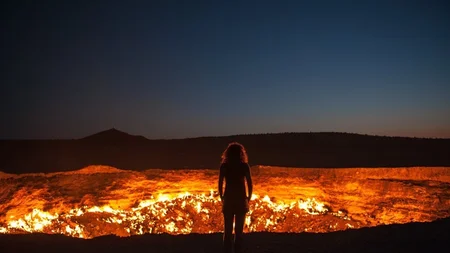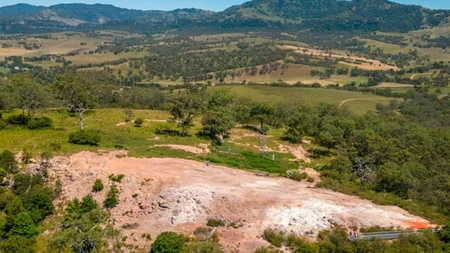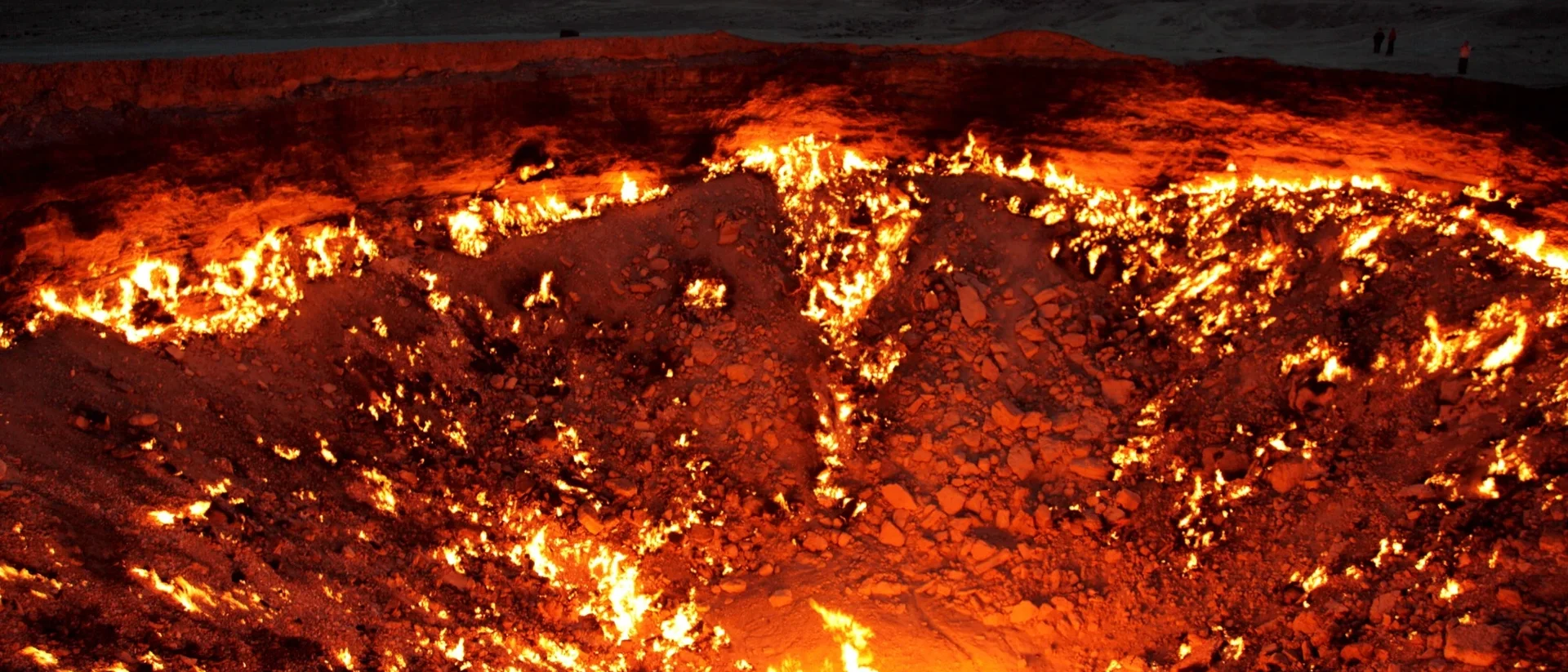
Soviet scientists drilling for natural gas in Turkmenistan accidentally collapsed a cavern in 1971. To prevent methane from spreading, they set it on fire expecting it to burn out in weeks—it's still burning over 50 years later. Locals call it "The Door to Hell."
The Door to Hell: A Fire That Won't Stop Burning
In the heart of Turkmenistan's Karakum Desert sits a flaming pit that looks like it belongs in a fantasy novel—or a nightmare. The Darvaza Gas Crater, better known as the "Door to Hell," has been burning continuously for over five decades, and it shows no signs of stopping.
A Soviet Drilling Disaster
The story begins in 1971 when Soviet geologists were prospecting for oil in the remote desert. What they found instead was a massive pocket of natural gas. Unfortunately, the ground beneath their drilling rig couldn't support the operation—the earth collapsed, swallowing equipment and creating a crater roughly 70 meters (230 feet) wide and 20 meters (65 feet) deep.
Fearing that poisonous methane gas would spread to nearby villages, engineers made a fateful decision: light it on fire. The thinking was simple enough—burn off the gas in a controlled way, and it should extinguish within a few weeks.
They were spectacularly wrong.
Why Won't It Stop?
The crater sits atop one of the world's largest natural gas reserves. The underground pocket feeding the flames is so vast that scientists still can't accurately estimate when—or if—the fire will ever burn itself out. Some estimates suggest the gas field could sustain the flames for centuries.
The crater burns around the clock, every day of the year. At night, its orange glow can be seen from miles away, creating an otherworldly beacon in the otherwise pitch-black desert.
A Bizarre Tourist Attraction
Despite its remote location—about 260 kilometers from Turkmenistan's capital, Ashgabat—the Door to Hell has become the country's most popular tourist destination. Visitors brave the journey to:
- Camp on the crater's edge and watch the flames dance at night
- Feel the intense heat radiating from the pit
- Capture photographs of one of Earth's most surreal landscapes
In 2013, explorer George Kourounis became the first person to descend into the crater. Wearing a heat-resistant suit and breathing apparatus, he collected soil samples that revealed bacteria living at the bottom—life thriving in conditions that would kill most organisms.
An Uncertain Future
Turkmenistan's government has had a complicated relationship with the crater. In 2010, President Gurbanguly Berdimuhamedow ordered it extinguished to tap the gas commercially. In 2022, his successor expressed similar intentions. Neither effort has succeeded.
The Door to Hell continues to burn, a monument to unintended consequences and nature's stubbornness. What was supposed to be a quick fix became a permanent scar on the landscape—and an accidental wonder of the world.
More than 50 years after Soviet scientists struck that first match, their "temporary" solution keeps blazing into the desert night.
Frequently Asked Questions
How long has the Door to Hell been burning?
Where is the Door to Hell located?
Can you visit the Door to Hell?
Why did scientists set the Door to Hell on fire?
Will the Door to Hell ever stop burning?
Verified Fact
This fact has been reviewed and verified against original sources.
Show verification details
Corrected the date - the crater was actually created in 1971 but wasn't intentionally lit on fire until later (accounts vary). Soviet geologists drilling caused the collapse.