
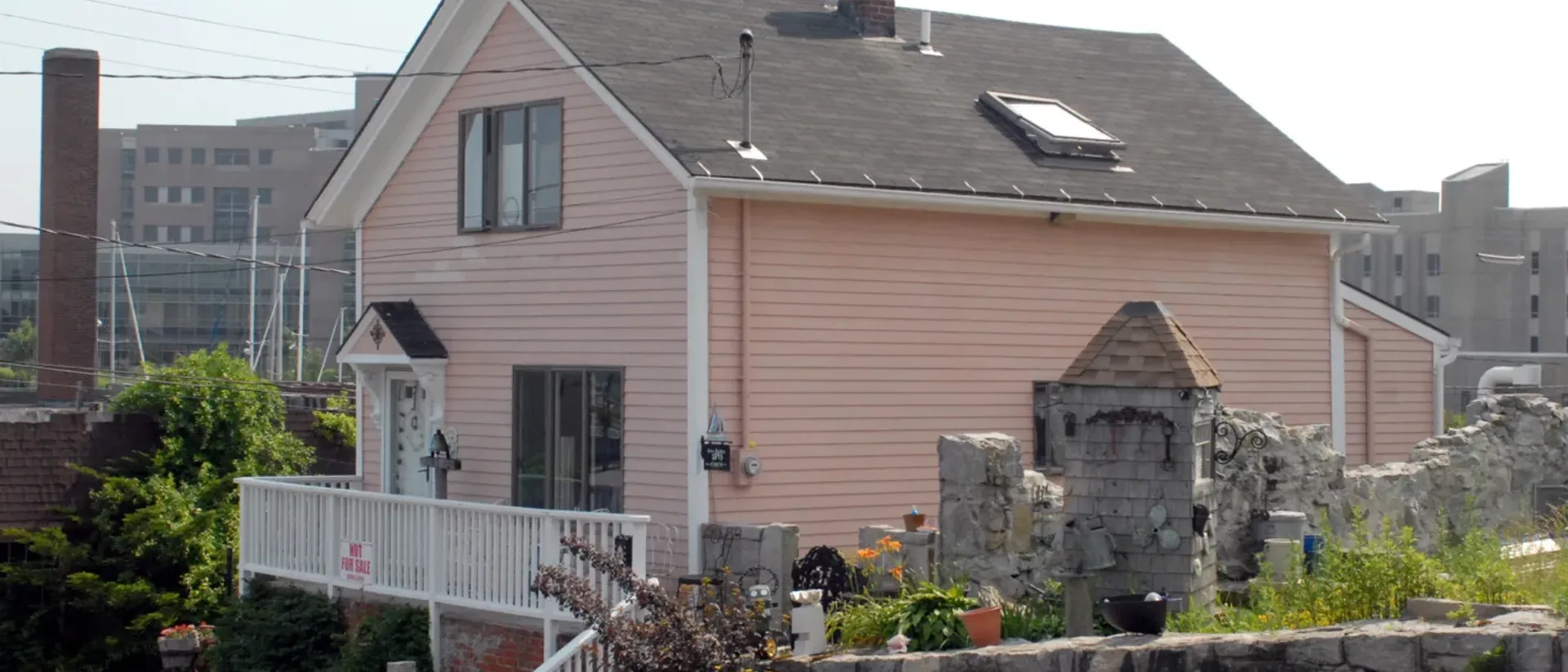
The Supreme Court ruled 5-4 that a city could seize Susette Kelo's home and give the land to a private developer. The city spent $78 million demolishing the neighborhood. Pfizer left town. The developer couldn't get financing. 20 years later, the land is an empty lot.
The Supreme Court Seized Her Home for a Project That Was Never Built
Susette Kelo bought a small pink cottage in the Fort Trumbull neighborhood of New London, Connecticut. She renovated it herself. She loved the view of the water.
In 1998, the city told her they were taking it.
The Plan
New London was struggling economically. Pfizer had announced plans to build a major research facility nearby, and the city saw an opportunity: condemn the Fort Trumbull neighborhood, hand the land to a private developer, and build a hotel, conference center, and upscale housing to complement the Pfizer campus.
Kelo and several neighbors refused to sell. The city invoked eminent domain, the government's power to seize private property for "public use" with compensation.
The Supreme Court
The case went all the way to the Supreme Court. In a 5-4 decision in 2005, the Court ruled that "economic development" qualified as "public use" under the Fifth Amendment. The city could take Kelo's home and give it to a private company.
Justice Sandra Day O'Connor dissented: "Nothing is to prevent the State from replacing any Motel 6 with a Ritz-Carlton, any home with a shopping mall, or any farm with a factory."
What Happened Next
The city spent $78 million acquiring and demolishing the neighborhood. Then Pfizer's tax breaks expired and the company left town, moving its operations to Groton. The private developer could not secure financing. The project collapsed.
More than 20 years after the Supreme Court ruled that Susette Kelo's home could be seized for economic development, the land where her house stood remains an empty lot. The only economic development was for the demolition company.
Frequently Asked Questions
What was Kelo v. City of New London about?
What happened to the land?
What did Justice O''Connor say?
Did this ruling change anything?
Verified Fact
Verified via Wikipedia, Institute for Justice
Source: Institute for JusticeShow verification details
Kelo v. City of New London, 545 U.S. 469 (2005). 5-4 decision confirmed. $78M spending confirmed. Pfizer departure confirmed. Land remains vacant as of 2025+. OConnor dissent quote verified. 40+ states passed reform laws after ruling.