
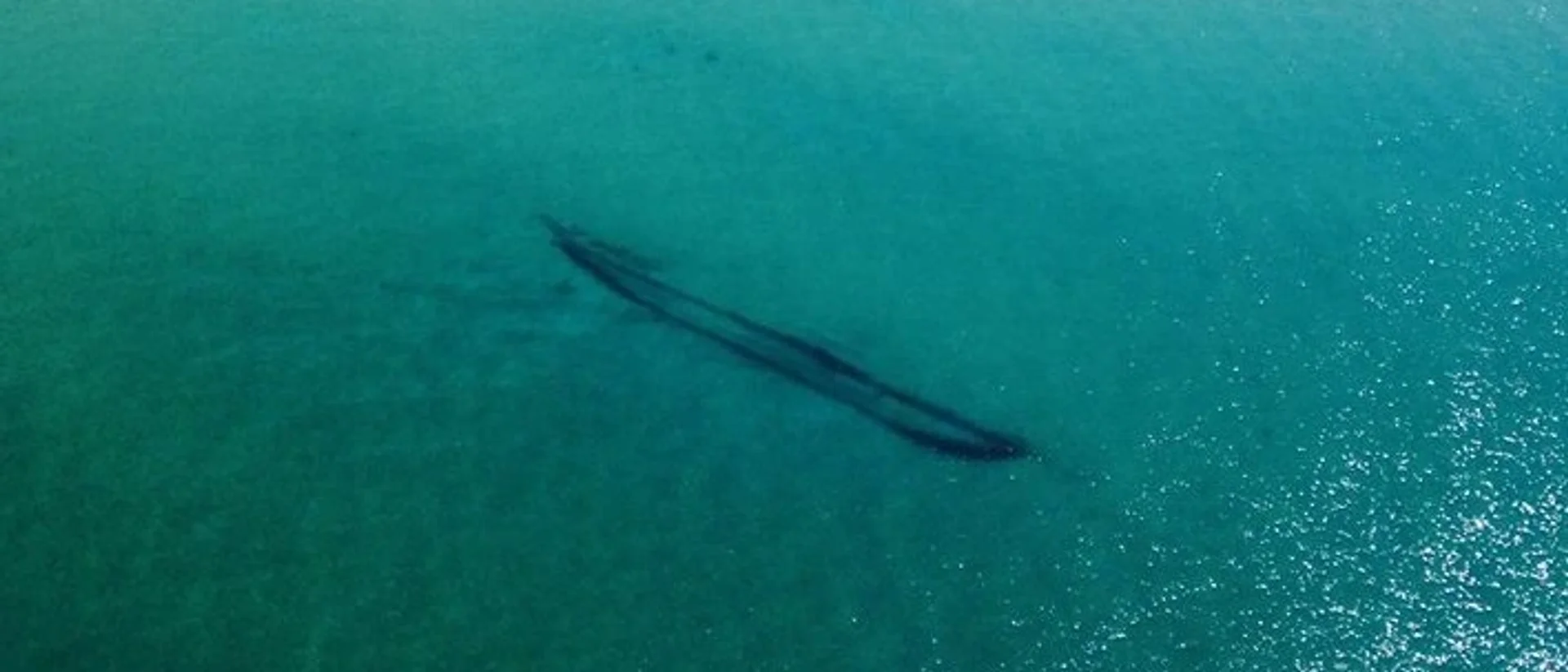
Lake Michigan turned crystal clear turquoise in April 2015. A Coast Guard helicopter crew spotted something incredible on patrol. Complete century-old shipwrecks sat visible on the lake floor below them. The James McBride was a 121-foot brig that sank in 1857. It rested in 5 to 15 feet of water. Nearby, the Rising Sun wrecked in 1917 with all 32 aboard rescued. The lake holds an estimated 1,500 shipwrecks, and several remain unidentified.

Lake Michigan Got So Clear You Could See Shipwrecks

2 viewsPosted 4 days agoUpdated 5 minutes ago

For a few weeks every spring, Lake Michigan turns a color nobody expects: turquoise, clear enough to see straight to the bottom. In April 2015, that rare window let a U.S. Coast Guard helicopter crew photograph something most people only picture in the Caribbean. Whole century-old shipwrecks were resting in the open, visible from hundreds of feet in the air.

A Once-a-Year Window of Clear Water

The crew, flying out of Coast Guard Air Station Traverse City, was on a routine patrol on April 17, 2015, when they noticed the water below near Sleeping Bear Point looked unusually clear. The lake had just shed its winter ice, and the water was still a cold 38 degrees Fahrenheit, too cold yet for the algae blooms that normally cloud the surface later in the season. Lt. Cmdr. Charlie Wilson, one of the pilots, said spotting old wrecks from the air is fairly common on patrols, but that day the crew saw an unusually high number of them at once.

The James McBride

Among the clearest images was the James McBride, a 121-foot brig that ran aground in a storm on October 19, 1857, while hauling wood back from Chicago. It now rests in just 5 to 15 feet of water, close enough to the surface that its outline is visible even to boaters passing overhead on a calm day.

The Rising Sun

Nearby lay the wreck of the Rising Sun, a 133-foot wooden steamer that ran aground on the Pyramid Point shoal during a snowstorm on October 29, 1917. The ship was carrying 32 passengers and crew home from a season of farm work on Summer Island when it went down. Every one of them made it off alive. The Rising Sun itself was never recovered and still sits in 6 to 12 feet of water.

How Many More Are Down There

The crew's photos, posted to the Air Station Traverse City Facebook page in an album nicknamed "Shipwreck Sunday," also showed several other wrecks that researchers have never been able to identify. Lake Michigan is estimated to hold around 1,500 shipwrecks in total, and only a few hundred have ever been located and confirmed. Most years, the window to see them from the air lasts only a few weeks before the water clouds over again.

Enjoyed this? Get a new fact every day.

Follow FunFactz for the best ones in your feed.

or get one in your inbox

Frequently Asked Questions

Why was Lake Michigan's water so clear in April 2015?
The lake had just lost its winter ice cover and the water was still around 38 degrees Fahrenheit, too cold for the algae blooms that usually cloud the surface later in the season. That rare combination let sunlight reach the bottom and made shipwrecks visible from the air.
What is the James McBride shipwreck?
The James McBride was a 121-foot wooden brig that ran aground near Sleeping Bear Point on October 19, 1857, while returning from a wood-hauling trip to Chicago. It now rests in just 5 to 15 feet of water in Lake Michigan's Manitou Passage.
What happened to the Rising Sun shipwreck?
The Rising Sun was a 133-foot wooden steamer that ran aground on the Pyramid Point shoal during a snowstorm on October 29, 1917. All 32 people aboard survived, though the ship itself was lost and still sits in 6 to 12 feet of water.
How many shipwrecks are in Lake Michigan?
Researchers estimate Lake Michigan holds around 1,500 shipwrecks, though only a few hundred have been located and identified. Several wrecks photographed by the Coast Guard in 2015 have still never been identified.
Who took the 2015 photos of the Lake Michigan shipwrecks?
A U.S. Coast Guard helicopter crew from Air Station Traverse City photographed the wrecks during a routine patrol on April 17, 2015, and posted the images to the air station's Facebook page.

Verified Fact

This fact has been reviewed and verified against original sources.

Source: NPR
Show verification details

Fact-verifier audit Jul 6 2026. Independent re-check of content-creator self-audit — CONFIRMED, no corrections needed. Primary source read in full (NPR, Bill Chappell, Apr 20 2015 — full text retrieved via curl after WebFetch timeout): confirms HELICOPTER crew (not plane) from Coast Guard Air Station Traverse City on a ROUTINE PATROL (not annual survey); Lt. Cmdr. Charlie Wilson quote ("fairly common... but not in the numbers we saw on that flight") matches article paraphrase; water 38F; James McBride 121-ft brig, ran aground 1857 near Sleeping Bear Point, rests 5-15ft (NPR cites Michigan Preserves); Rising Sun 133-ft wooden steamer, Pyramid Point, Oct 29 1917 (NPR embedded FB post). NPR quantifies Great Lakes total (6,000 lost, ~1,500 in Michigan STATE waters, all lakes) — separately corroborated (WebSearch) that Lake Michigan specifically is independently estimated at 600-1,500 wrecks with only ~300 located, so the article/text use of ~1,500 as an ESTIMATE for Lake Michigan is the high end of a real, separately-sourced range, not a misreading of the NPR Great-Lakes-wide figure. Rising Sun 32 aboard, all saved: CONFIRMED by Smithsonian Magazine (named figure, matches fact exactly) despite one low-authority local-radio blog giving a conflicting 17; NPS page confirms rescue assistance from the Sleeping Bear Point Life-Saving Service (supports "rescued" language, not reversed agency). April 17 2015 patrol date confirmed by Newsweek/Time-echoed WebSearch results (Friday patrol, Sunday Apr 19 FB post). Shipwreck Sunday album nickname CONFIRMED (WebSearch: natureworldreport, Leelanau.com). No reversed agency: 2015 discovery crew did not rescue the 1917 victims (separate 98-years-apart events); no ambiguity in current phrasing. Numeric coherence: all figures (121ft/133ft, 5-15ft/6-12ft, 38F, 32 saved, ~1,500 estimate) consistent across text, article, FAQs, caption, social_text — no reconciliation errors. Citation fidelity: source_url (NPR) directly supports the headline specifics (named pilot quote, exact ship dimensions/dates, helicopter detail) — not just the topic. One minor unresolved secondary FAQ detail: could not independently confirm direction of James McBride wood cargo (to vs from Chicago) beyond cargo-of-wood being confirmed by Great Lakes Ships archive; low-stakes, FAQ-only, does not affect core claim. engine=2 reviewed and CONFIRMED correct: Lake Michigan is a recognizable place that IS the story via a real proof-scene photo (aerial full-hull shot through turquoise water), consistent with the iconic-place carve-out in engine doctrine, not a famous-name-dropped-into-trivia case. category_code Q, mainstream_novelty=2, proof_photo_strength=2, beat_freshness=2 all confirmed reasonable (no recent shipwreck-beat fact in the last several weeks per DB query). Confidence: HIGH. No scheduled_posts existed for this fact (publish_at still 2099 placeholder) so no cascade/cancellation needed.

Related Topics

More from Places & Culture

View all Places & Culture