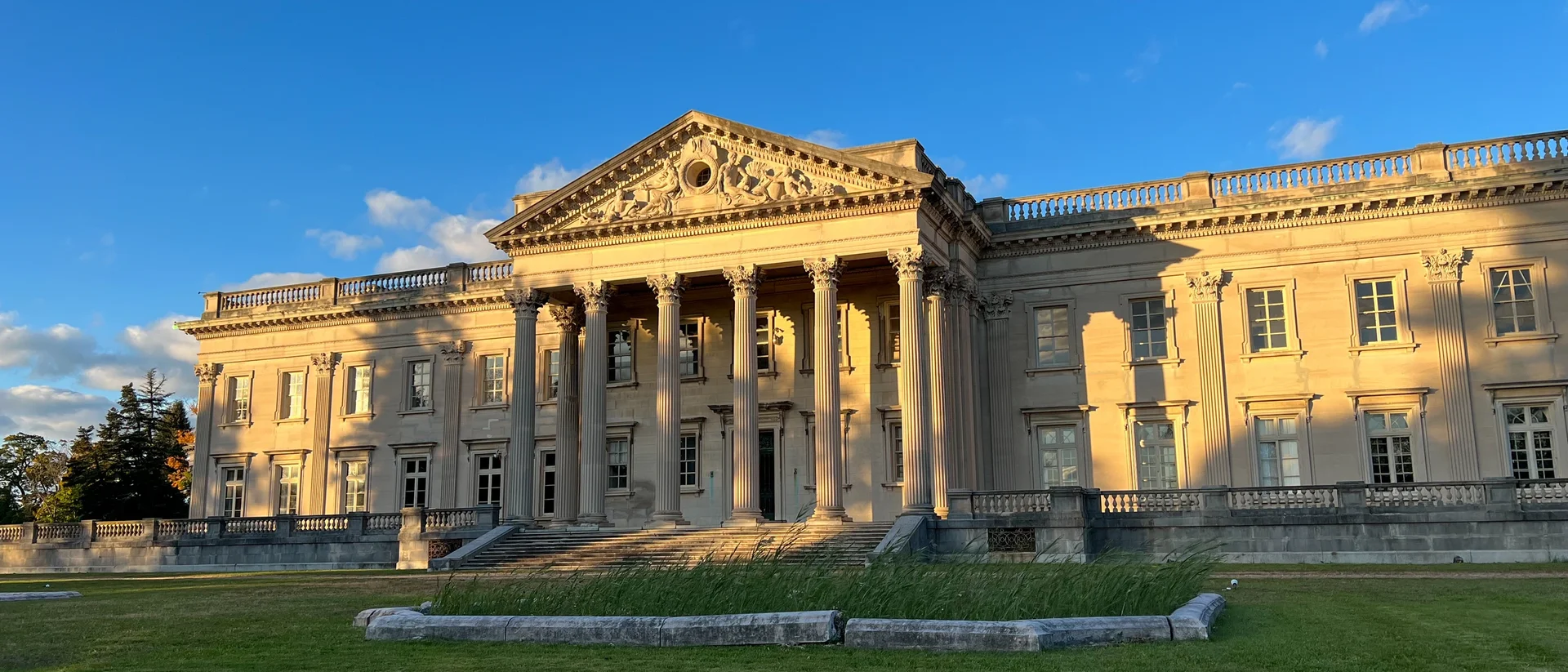
Lynnewood Hall is a 110-room palace outside Philadelphia, closed to the public for more than 80 years. It was built for the Widener family. A father and son, George and Harry, boarded the Titanic in 1912 and never came home. Inside were more than 2,000 artworks that later helped found the National Gallery of Art. This fall, for the first time in generations, the doors open. You can walk in.
America's 'Abandoned Versailles' Opens After 80 Years
For more than 80 years, one of America's grandest private homes has been closed to the public outside Philadelphia. This fall, for the first time in generations, the public will be allowed back inside.
A Palace Built for a Streetcar Fortune
Peter A.B. Widener made his fortune in Philadelphia streetcar lines before turning to art collecting on a grand scale.
Between 1897 and 1899, he hired architect Horace Trumbauer to design Lynnewood Hall, a 110-room limestone mansion outside the city, styled after the great European palaces.
The finished house stretched more than 250 feet across and became one of the largest private residences ever built in the United States.
The Family the Titanic Took
Widener's eldest son, George Dunton Widener, ran much of the family's business empire. In the spring of 1912, he traveled to Europe with his wife, Eleanor, and their son Harry, an avid book collector.
The family booked passage home on the Titanic's maiden voyage. When the ship struck an iceberg and went down in the North Atlantic, George and Harry never made it off. Eleanor survived.
In her son's memory, Eleanor Widener later funded a new library at Harvard University. The Harry Elkins Widener Memorial Library, dedicated in 1915, still bears his name.
One of America's Great Art Collections
Peter Widener and his surviving son, Joseph, spent decades filling Lynnewood Hall with paintings, sculpture and decorative art, including works by Rembrandt, Raphael and Donatello.
By the 1910s, it was considered one of the finest private art collections in the country, and visitors could tour it by appointment each summer.
When Joseph Widener died in the 1940s, the collection of more than 2,000 objects passed to the National Gallery of Art in Washington, D.C., becoming one of the museum's founding gifts.
A Slow Return
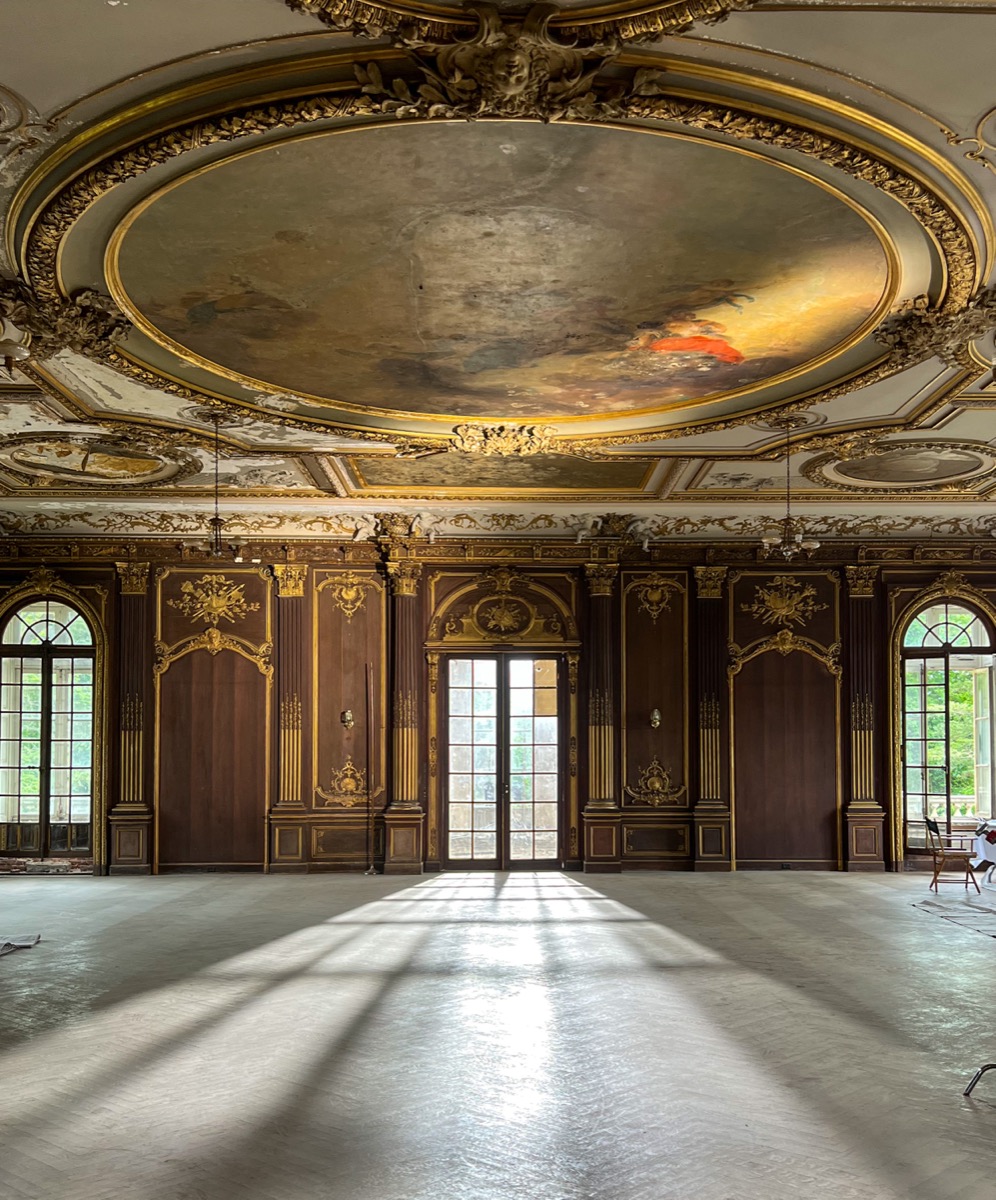
After the Widener era, Lynnewood Hall changed hands several times and remained closed to the public for decades, its grand rooms rarely seen outside old photographs.
In 2023, the nonprofit Lynnewood Hall Preservation Foundation acquired the estate and began the long process of restoring it.
The Doors Open This Fall
From September 25 to October 4, 2026, Lynnewood Hall will host its first public exhibition in more than 80 years, a floral showcase called Fleurs de Villes inspired by HBO's The Gilded Age.
For visitors, it's a rare chance to walk through rooms that once held one of America's great art collections, and to stand where a family shaped by the Titanic once lived.
Frequently Asked Questions
Where is Lynnewood Hall located?
How is Lynnewood Hall connected to the Titanic?
What happened to the Widener family's art collection?
When does Lynnewood Hall open to the public?
Who owns Lynnewood Hall today?
Verified Fact
Verified Aug 23, 2026 · 4 sources checked
Source: Fleurs de Villes (Lynnewood Hall Preservation Foundation)Show verification details
Claims checked
- 110-room mansion built 1897-1899
- Closed to the public for more than 80 years
- Father and son died on the Titanic in 1912
- More than 2,000 artworks helped found the National Gallery of Art
- Doors open Sept 25-Oct 4, 2026
Sources: Lynnewood Hall Preservation Foundation, Wikipedia
Related Topics
More from Places & Culture
View all Places & Culture →