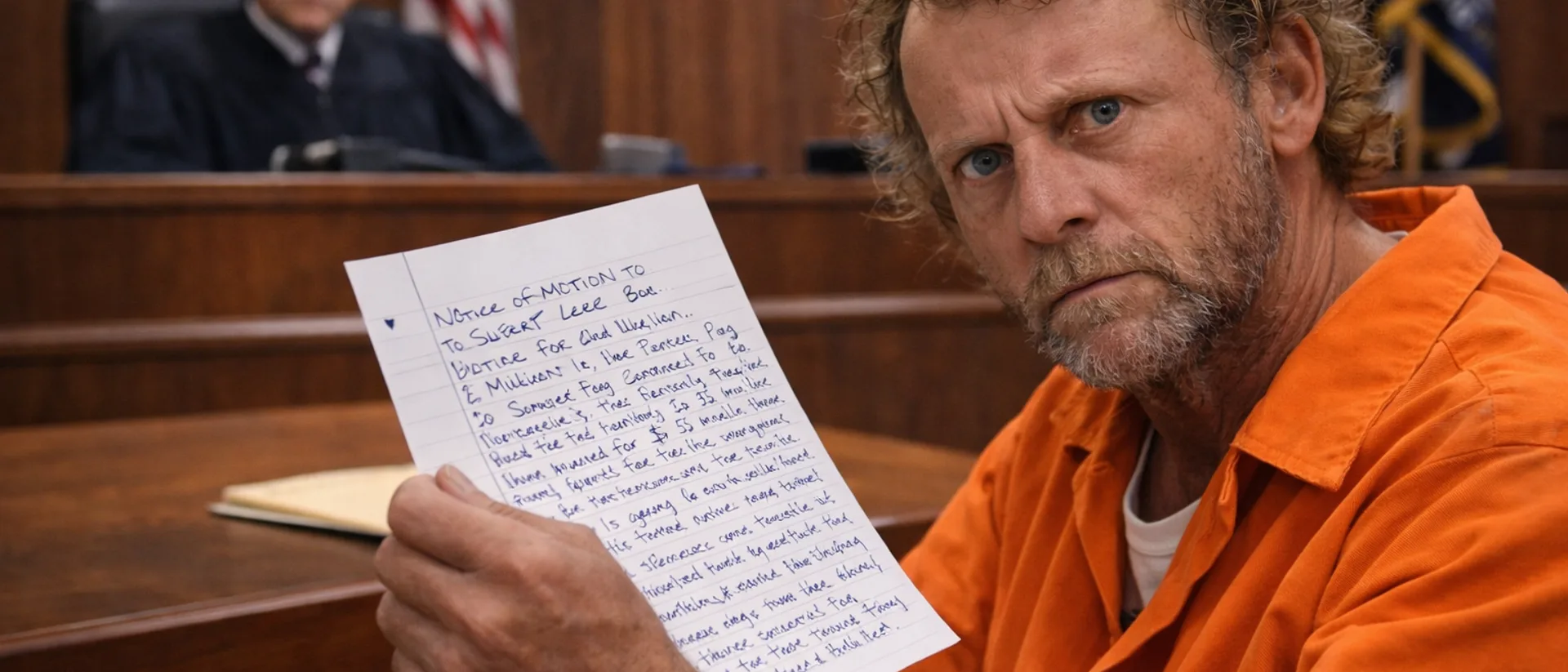
Virginia inmate Robert Lee Brock sued himself for $5 million. His argument: getting drunk violated his own civil rights and caused him to commit crimes. Since he could not work in prison, he asked the state to pay the judgment on his behalf. The judge praised the innovative approach, then dismissed the case as totally ludicrous. He sued the one person responsible for his problems and lost.
A Prisoner Sued Himself for $5 Million and Asked the State to Pay
In 1995, Robert Lee Brock was serving time in a Virginia prison. He had a lot of time to think. What he thought about was suing.
The defendant he chose was unusual: himself.
The Case
Brock filed a civil rights lawsuit in the United States District Court for the Eastern District of Virginia. The plaintiff was Robert Lee Brock. The defendant was Robert Lee Brock.
His argument was creative, if nothing else: by getting drunk, he had violated his own civil and religious rights. This self-inflicted violation had caused him to commit the crimes that landed him in prison. Therefore, he had suffered damages at his own hands to the tune of $5 million.
The twist: since he was incarcerated and unable to earn money, he argued that the state of Virginia should pay the $5 million judgment on his behalf. He promised, generously, to pay the state back upon his release.
The Ruling
Federal Judge Rebecca Beach Smith reviewed the filing. Her response has become one of the most quoted judicial opinions in American frivolous lawsuit history.
She praised Brock's "innovative approach to civil-rights litigation." Then she dismissed the case, ruling that his claim was "totally ludicrous."
He sued the person responsible for all his problems. He lost.
Enjoyed this? Get a new fact every morning.
A fascinating fact in your inbox every morning. Free. Unsubscribe anytime.
Frequently Asked Questions
Did a prisoner really sue himself?
What was his argument?
Who did he expect to pay?
What did the judge say?
Verified Fact
Verified via TIME, Deseret News, Virginia-Pilot
Source: TIMEShow verification details
Case filed in U.S. District Court, Eastern District of Virginia. Judge Rebecca Beach Smith. "Innovative approach to civil-rights litigation" and "totally ludicrous" are actual quotes from the ruling.