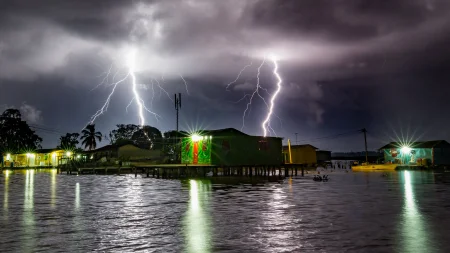
In 1859, the largest recorded geomagnetic storm struck Earth, causing auroras visible as far south as the Caribbean and enabling telegraph systems to operate even after being disconnected from their power supplies.
The 1859 Solar Storm That Made Telegraphs Go Rogue
On September 1, 1859, British astronomer Richard Carrington was sketching sunspots when he witnessed something unprecedented—a massive solar flare erupting from the sun's surface. He had no idea he was watching the birth of the most powerful geomagnetic storm in recorded history.
The flare launched a coronal mass ejection directly at Earth. It arrived in just 17.6 hours—a trip that normally takes three to four days.
The Sky Caught Fire
When the storm hit, the results were spectacular and terrifying. Auroras—normally confined to polar regions—blazed across skies worldwide. People in Cuba, Jamaica, and Hawaii watched curtains of red and green light dance overhead. In the Rocky Mountains, the glow was so bright that gold miners woke up and started making breakfast, convinced it was dawn.
Newspapers reported people reading by aurora light at midnight. In some areas, the sky appeared to be on fire, sending panicked citizens into the streets.
Phantom Messages
The telegraph system—the internet of its day—went haywire. Operators received electric shocks. Paper caught fire. Machines sparked and sputtered.
Then something stranger happened.
Telegraph operators discovered they could disconnect their batteries entirely and continue sending messages. The geomagnetic storm was inducing so much electrical current in the wires that the system powered itself. Two operators between Boston and Portland famously exchanged messages for two hours using nothing but storm-induced current.
What Would Happen Today?
A Carrington-level event today would be catastrophic. Our world runs on electronics that didn't exist in 1859:
- Power grids would overload and potentially collapse for months
- Satellites could be damaged or destroyed
- GPS and communications would fail
- Damage estimates range from $1-2 trillion in the first year alone
In 2012, a Carrington-class storm missed Earth by approximately one week's orbital distance. We got lucky.
The Warning Signs
Scientists now monitor the sun constantly. NASA and NOAA operate early warning systems that can give us roughly 15-60 minutes notice before a major solar storm hits. That's enough time to protect some infrastructure—but not all.
The Carrington Event remains a reminder that our star, for all its life-giving warmth, occasionally throws tantrums. And in our wired world, those tantrums could send us back to the 1850s—minus the charming telegraphs that run on pure cosmic energy.
Frequently Asked Questions
What was the Carrington Event?
How did telegraphs work without power in 1859?
Could a solar storm like 1859 happen again?
How far south were auroras visible during the Carrington Event?
How much warning would we have for a major solar storm?
Verified Fact
This fact has been reviewed and verified against original sources.
Show verification details
Corrected location - the Carrington Event was global, not Caribbean-specific. Also clarified the telegraph detail.
Related Topics
More from Science & Space
View all Science & Space →