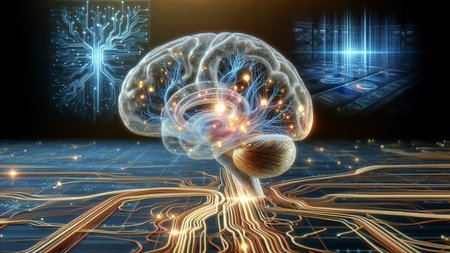
Neanderthals had an average brain size up to 100cc larger than modern humans, yet this didn't translate to greater intelligence.
Neanderthals Had Bigger Brains Than Us
Here's a fact that should make you uncomfortable: those "primitive" Neanderthals we've been mocking in insurance commercials? They had bigger brains than we do.
The average Neanderthal cranial capacity was around 1,500-1,600 cubic centimeters. Modern humans average about 1,400cc. That's roughly the difference between a large grapefruit and a slightly larger grapefruit—but still, they win.
Size Isn't Everything
Before you start questioning your evolutionary superiority, there's a catch. Brain size alone doesn't determine intelligence. If it did, elephants and sperm whales would be running the planet.
What matters is brain structure, the ratio of brain to body size, and how different regions are organized. Neanderthal brains were shaped differently—elongated rather than globular like ours. Their visual cortex was larger, possibly because they evolved in Europe's dim, high-latitude environments and needed better eyesight.
Our brains, meanwhile, developed larger parietal regions associated with:
- Complex tool use and manipulation
- Abstract thinking and symbolism
- Social cognition and theory of mind
- Language processing
The Social Brain Hypothesis
Here's where it gets interesting. Homo sapiens lived in larger, more complex social groups. Our ancestors weren't necessarily smarter in raw processing power—we were better networked.
Imagine two computers: one with a faster processor running alone, another slightly slower but connected to millions of others. Which one accomplishes more? That's essentially the Neanderthal versus Sapiens story.
Our social structures allowed for better information sharing, cultural accumulation, and collective problem-solving. We didn't outthink Neanderthals—we out-collaborated them.
Not So Different After All
Recent discoveries have dramatically rehabilitated the Neanderthal reputation. They made jewelry, created cave art, buried their dead with flowers, and cared for injured members of their groups. They weren't the dim brutes of old textbooks.
And here's the kicker: most non-African humans carry 1-4% Neanderthal DNA. We didn't just compete with them—we interbred with them. Some of their genetic legacy actually helped our ancestors survive, contributing genes for immune function and cold adaptation.
So the next time someone calls you a Neanderthal, consider it a compliment. You're honoring ancestors who survived ice ages, hunted mammoths, and had brains bigger than Einstein's.
They're not gone. They're us.
Frequently Asked Questions
Did Neanderthals have bigger brains than humans?
Were Neanderthals smarter than Homo sapiens?
Why did Neanderthals go extinct if they had bigger brains?
Do modern humans have Neanderthal DNA?
What was special about Neanderthal brains?
Verified Fact
This fact has been reviewed and verified against original sources.
Show verification details
Corrected '100cc larger' to 'up to 100cc larger on average' - the exact difference varied, and modern humans have a wide range. Also clarified this refers to cranial capacity, not intelligence.
Related Topics
More from Science & Space
View all Science & Space →