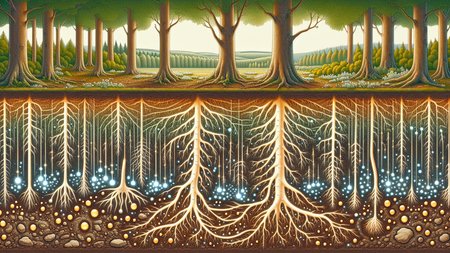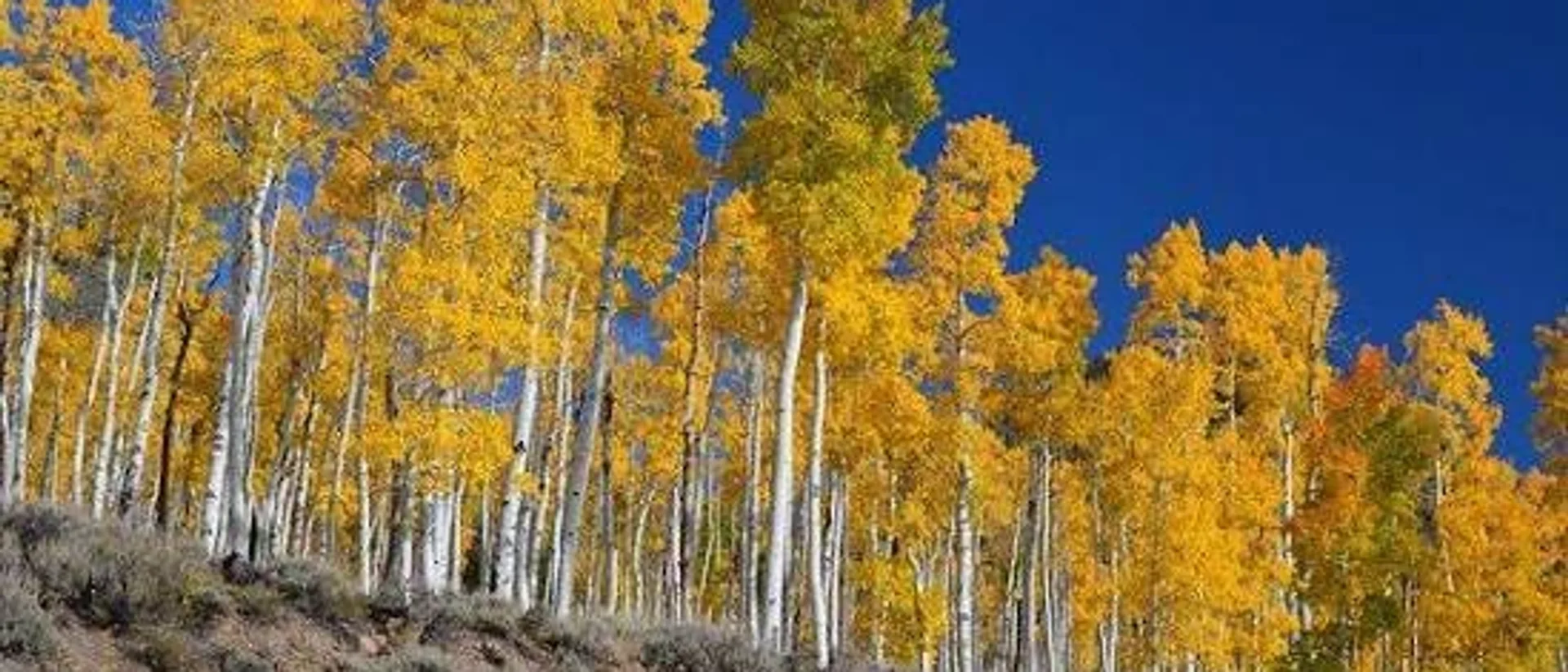
A forest of 47,000 aspen trees in Utah is actually one single organism. Every trunk connects underground to the same root system. The colony is called Pando, and it covers 106 acres. It weighs an estimated 6,000 metric tons - one of the heaviest living things ever found. That root system may be up to 16,000 years old. One tree. 80 football fields.

This "Forest" Is One Single Tree

1 viewsPosted 3 days agoUpdated 1 minute ago

In Fishlake National Forest in central Utah, there is a grove of quaking aspen trees that has fooled the human eye for thousands of years. What appears to be tens of thousands of separate trees is, in scientific fact, a single living organism - one of the most remarkable things on Earth.

One Root, 47,000 Trunks

The grove is called Pando - Latin for "I spread." Every one of its 47,000 individual trunks, or stems, is genetically identical and physically connected underground to a single, vast root system. The colony spreads across 106 acres and weighs an estimated 6,000 metric tons (roughly 13 million pounds) - placing it among the heaviest known organisms on the planet. Botanist Jerry Kemperman and biologist Burton V. Barnes first identified the colony in 1976. Michael Grant formally named it Pando in 1992. A genetic study in 2008 confirmed beyond doubt that every stem shares the same DNA.

How Old Is It?

This is where scientists tread carefully. The individual trunks above ground live for roughly 100-150 years and then die, but the root system keeps regenerating new ones. Scientists estimate the root system is between 9,000 and 16,000 years old - a range constrained by the last Ice Age, when glaciers covered this region. Some older claims put the age as high as 80,000 years, but most researchers now consider the post-glacial window the realistic upper limit. A 2024 DNA study using somatic mutations, published as a peer-reviewed preprint via eLife Sciences, estimated a wider range of 12,000 to 37,000 years; that figure remains under active scientific discussion. The honest answer: Pando is almost certainly thousands of years old; exactly how many thousands remains an open question.

A Single Organism Under Threat

Pando is a male clone - it cannot reproduce sexually. Every new stem it produces is a genetic copy, not a seedling. The colony is currently in decline, with deer and elk overbrowsing the young shoots faster than Pando can regenerate them. Land managers have fenced roughly 80% of the grove to protect new growth, and early results show recovery inside the fenced areas. Cattle grazing inside the colony ended in 2024.

The Question Everyone Asks

Scientists who study Pando note that visitors often struggle to pick the more mind-bending fact. Is it that what looks like a forest of 47,000 trees is legally, genetically, and biologically a single individual? Or is it that this one individual may have been quietly regenerating since before the Egyptian pyramids, before writing, before the wheel - perhaps for 16,000 years or more? The answer depends entirely on what you find hardest to believe about the natural world.

Frequently Asked Questions

What is Pando and where is it located?
Pando is a clonal colony of quaking aspen trees in Fishlake National Forest in central Utah. Despite looking like a forest of roughly 47,000 individual trees, the entire colony shares a single root system and is genetically identical throughout, making it one single living organism. It covers about 106 acres near Fish Lake.
How much does Pando weigh?
Scientists estimate Pando weighs approximately 6,000 metric tons, or about 13 million pounds. This makes it one of the heaviest known organisms on Earth. The weight includes the massive underground root system, though measuring it precisely is difficult.
How old is the Pando aspen clone?
The age of Pando is uncertain. Current scientific estimates, constrained by the last Ice Age when glaciers covered the region, place its age at roughly 9,000 to 16,000 years. Older popular claims cited 80,000 years, but most researchers now consider that unlikely. A 2024 DNA study published as a peer-reviewed preprint via eLife Sciences estimated a wider range of 12,000 to 37,000 years, though that figure remains under active scientific discussion.
Is Pando really one organism or many trees?
Pando is genuinely one organism in both a genetic and biological sense. All 47,000 stems share identical DNA and are physically connected underground by a single root system. The colony was identified in 1976 and its single-organism status was confirmed by genetic testing in 2008.
Is Pando under threat?
Yes. Pando is currently in decline, mainly because deer and elk overbrowse the young shoots before they can grow into mature stems. Land managers have fenced roughly 80% of the grove to protect new growth, and recovery has been observed inside those areas. Cattle grazing inside the colony ended in 2024.

Verified Fact

Verified 2026-06-17. 4 sources checked (Wikipedia/Pando, Live Science, American Forests, Friends of Pando, eLife/Pineau 2024 reviewed preprint). Gemini comparison run. Primary sources: en.wikipedia.org elifesciences.org friendsofpando.org Claims checked: - 47,000 stems: CONFIRMED (Wikipedia, Live Science, American Forests) - 106 acres: CONFIRMED (42.89 hectares = 106 acres, all sources) - 6,000 metric tons / ~13 million lbs: CONFIRMED (Wikipedia: 13.2 million lbs; article rounds to 13 million - acceptable) - "One of the heaviest living things": CONFIRMED as defensible hedging. Wikipedia calls it "world's single largest organism by weight" but also notes a larger colony could exist undiscovered. "One of the heaviest" is accurate and conservative. - Age "up to 16,000 years old": CORRECTED from "up to 14,000" - scientific consensus per 2024 research is 9,000-16,000 years (Wikipedia, eLife preprint). "Up to 14,000" cut the upper bound by 2,000 years. Fixed in text, social_text, social_caption, social_engagement_comment. - 9,000-16,000 range in article: CONFIRMED (Wikipedia states this range based on 2024 research) - 80,000-year claim discredited: CONFIRMED (derives from removed NPS page; glacial constraint makes it unlikely) - 2024 DNA study peer-review status: CORRECTED. The Pineau et al. paper (eLife reviewed preprint v1, March 2026, PMC11526904) DID undergo peer review. Characterization "has not yet been peer reviewed" was incorrect. Fixed in article and FAQs to "published as a peer-reviewed preprint via eLife Sciences." - 2024 study age range: CONFIRMED (12,000-37,000 years fine-scale; 16,000-80,000 phylogenetic). Article now reflects this accurately. - Kemperman and Barnes 1976 discovery: CONFIRMED (Wikipedia) - Michael Grant named it Pando 1992: CONFIRMED (Wikipedia) - 2008 DeWoody et al. genetic confirmation: CONFIRMED (Wikipedia) - "cannot reproduce sexually" / male clone: CONFIRMED (Friends of Pando: "Pando is male, and so, only produces pollen") - "Cannot reproduce from seeds" (link comment): CONFIRMED (male clone, pollen only, no seeds) - ~80% of grove fenced: CONFIRMED (Wikipedia: ~80% under protective fencing by 2025) - Cattle grazing ended 2024: CONFIRMED (Wikipedia) - Trunk lifespan 100-150 years: CONFIRMED (Friends of Pando: 110-150 years; Space Daily: 130-year cycle) - 80 football fields: CONFIRMED (106 acres / 1.32 acres per field = ~80.3) - Closing paragraph 16,000 years: CORRECTED from 14,000 in article closing para to match stated range above it. - Engine=0 classification: CONFIRMED (named entity but not a recognizable person; not Engine-1 or Engine-2 eligible for prime) - source_url (Wikipedia/Pando): CONFIRMED as adequate primary reference for this well-established scientific fact Corrections made: text, social_text, social_caption, social_engagement_comment (14,000→16,000 years); article (peer-review characterization of 2024 study corrected; closing para 14,000→16,000); faqs (age FAQ peer-review characterization corrected). No scheduled_posts existed. No image fields affected. No FB post existed.

Wikipedia - Pando

Related Topics

Enjoyed this? Get a fun fact daily.

One fascinating fact, every morning. No spam, unsubscribe anytime.

More from Science & Space