
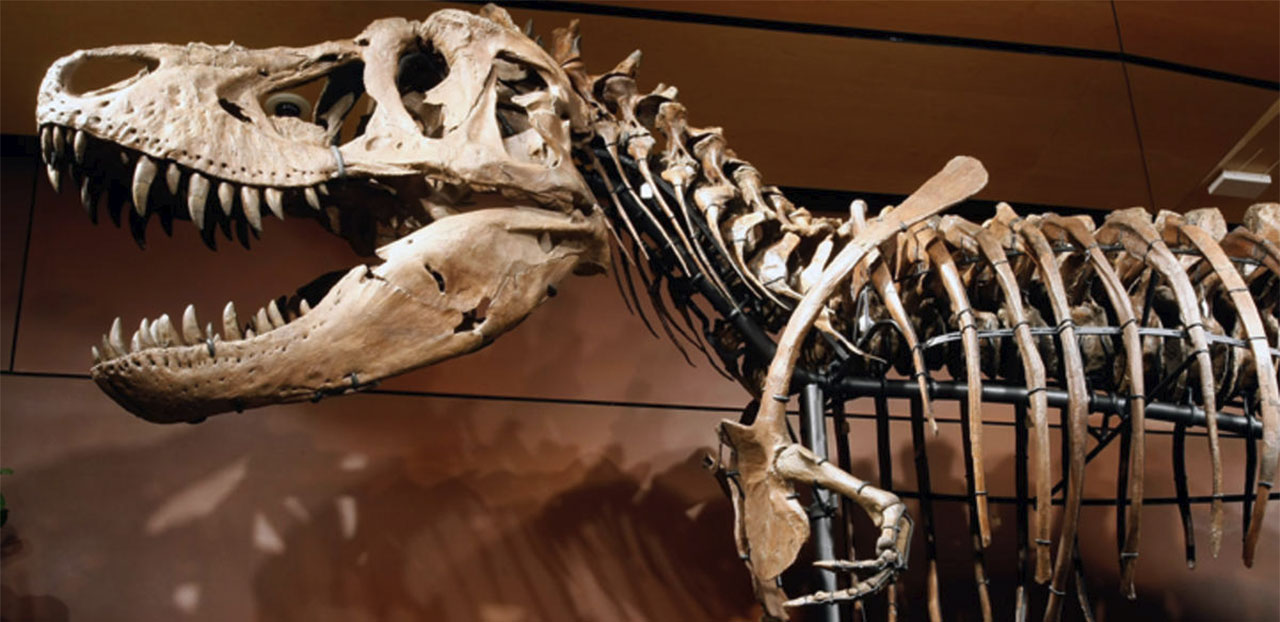
In 2005, paleontologist Mary Schweitzer dissolved a T. rex bone in acid and discovered preserved soft tissue, including blood vessels and collagen proteins—a finding that revolutionized our understanding of fossil preservation.
Scientists Found Soft Tissue Inside a 68-Million-Year-Old T. Rex Bone
In 2005, paleontologist Mary Schweitzer made a discovery that sent shockwaves through the scientific community. After dissolving the minerite surrounding a Tyrannosaurus rex leg bone in weak acid, she found something nobody expected to see: soft, stretchy tissue that had somehow survived for 68 million years.
A Discovery That Shouldn't Have Been Possible
The bone came from a T. rex specimen called MOR 1125, excavated from the Hell Creek Formation in Montana. When Schweitzer's team dissolved away the hard mineral matrix, they didn't find the expected pile of powder. Instead, they discovered transparent, flexible blood vessels—still hollow inside—and what appeared to be red blood cells.
The scientific establishment was skeptical, to put it mildly. Everything we knew about fossilization suggested that soft tissue couldn't possibly survive millions of years. Proteins break down. Cells decay. That's just chemistry.
What They Actually Found
- Blood vessels that were still flexible and transparent
- Collagen proteins confirmed through multiple testing methods
- Structures resembling red blood cells
- Fibrous tissue with the texture of soft tissue, not stone
Schweitzer's team went on to analyze the chemical composition and confirmed the presence of collagen—a structural protein found in bones, skin, and connective tissue. This was the first time proteins had ever been recovered from a dinosaur fossil.
The DNA Question
Early reports suggested the discovery might include DNA, which sparked intense excitement—and Jurassic Park comparisons. However, DNA degrades much faster than proteins. While some researchers have claimed to detect DNA-like material in ancient specimens, the scientific consensus remains cautious. No confirmed dinosaur DNA has been recovered, and most experts believe it degrades beyond recognition within a million years at most.
What has been confirmed is remarkable enough: collagen proteins that provide molecular evidence of the evolutionary link between dinosaurs and modern birds. The T. rex collagen most closely resembles that of chickens and ostriches.
How Did It Survive?
The preservation mechanism remained a mystery until Schweitzer proposed an explanation: iron. When the dinosaur died, iron from its hemoglobin may have acted as a preservative, essentially "pickling" the soft tissue through a process similar to the Fenton reaction. This iron-mediated preservation could explain how delicate structures survived geological time scales.
The discovery has since been replicated in other dinosaur specimens, including hadrosaurs and other tyrannosaurs. What once seemed like an impossible fluke appears to be more common than anyone imagined—we just weren't looking for it.
Why It Matters
Beyond the sheer wonder of touching tissue from a creature that lived alongside the last dinosaurs, this discovery opened new frontiers in paleontology. Scientists can now study dinosaurs at the molecular level, comparing their proteins to modern animals and gaining insights that bones alone could never provide.
Mary Schweitzer's acid bath didn't just dissolve rock. It dissolved decades of assumptions about what fossils could tell us—and proved that the past isn't always as dead as it looks.
Frequently Asked Questions
Did scientists really find soft tissue in a T. rex bone?
Has dinosaur DNA been found?
How did T. rex soft tissue survive for millions of years?
Who discovered soft tissue in dinosaur bones?
Can we clone dinosaurs from soft tissue?
Verified Fact
This fact has been reviewed and verified against original sources.
Show verification details
Clarified that soft tissue and collagen were found, but the 'possible DNA' claim is speculative. The original discoverer (Mary Schweitzer) found proteins and blood vessels, but DNA has not been confirmed.