Woodpeckers forced NASA to roll Space Shuttle Discovery off its launch pad in 1995. Northern flickers pecked about 200 holes and marks into its giant fuel tank, some about 4 inches across. Repairs at the pad failed, so the stack went back to the Vehicle Assembly Building and a launch set for as early as June 8 slipped to July 13.
Woodpeckers vs. the Space Shuttle
In the spring of 1995, a flock of northern flicker woodpeckers did something no rocket engineer had planned for. They drilled into the giant orange external fuel tank of Space Shuttle Discovery while it sat on Launch Pad 39B at Kennedy Space Center, and NASA had to roll the whole shuttle off the pad.
Birds on the Launch Pad
Discovery rolled out to Pad 39B on May 11, 1995, to get ready for mission STS-70. After the Memorial Day weekend, the foam insulation on the external tank was found pocked with damage.
NASA's mission page says the birds poked about 200 holes in the foam. They ranged from single pecks and claw marks up to large excavations about four inches (10 centimeters) across.
The count depends on who is counting. An early inspection found 71 deep excavations plus many beak and claw marks. NASA's mission page says about 200 holes, and astronaut Don Thomas later recalled some 205 that needed attention.
Air Horns and a Failed Repair
Technicians blew air horns to scare off further attacks during the working week, and workers were issued pale blue "Pecker Patrol" T-shirts. The air horns did not fix the damage already done.
NASA says attempts to repair the damage at the pad were unsuccessful. By June 2 the damage was too serious to fix there, and some holes went through the foam to the metal of the tank.
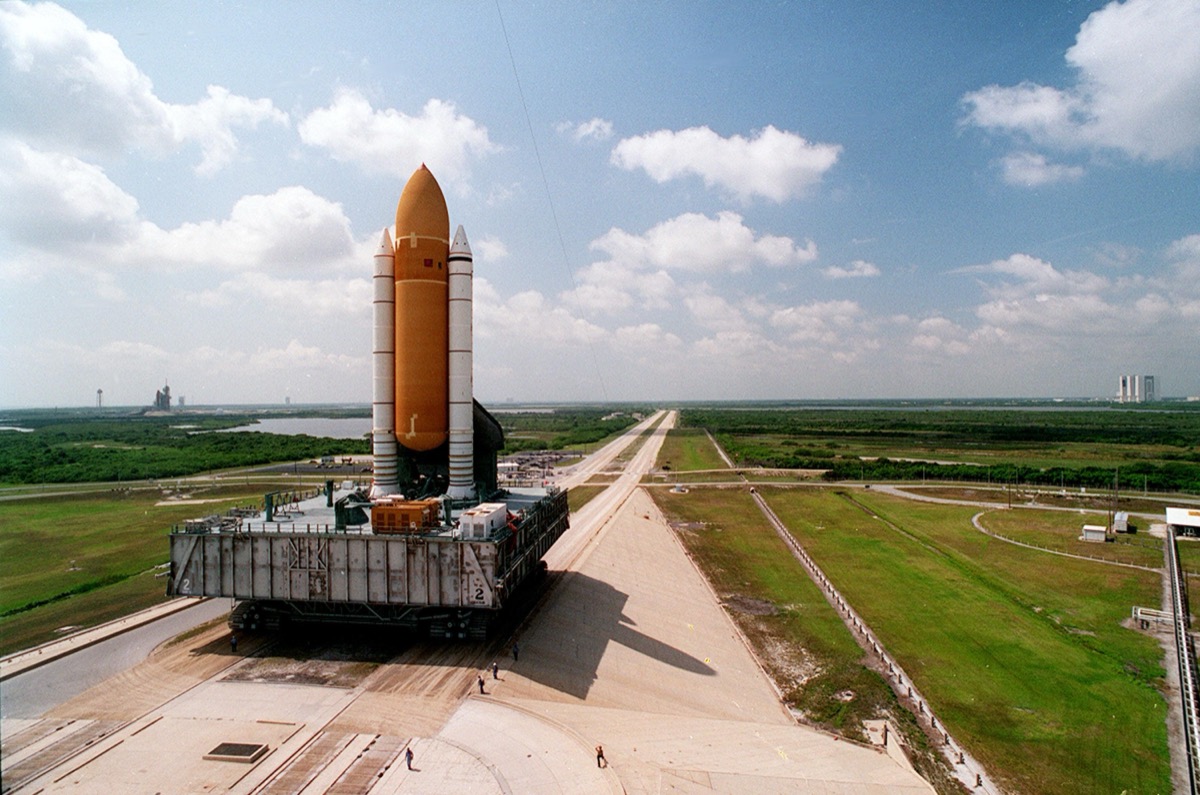
On June 2, managers decided to delay the launch. On June 8, the shuttle stack was rolled back to the Vehicle Assembly Building, the huge hangar-like building where shuttles were stacked.
A Launch Five Weeks Late
The mission had originally been first targeted for June 22. Managers swapped it with STS-71, the Shuttle-Mir docking flight, and accelerated Discovery's processing so it could fly no earlier than June 8. The woodpeckers wrecked that plan.
After repairs, the stack went back out to the pad about a week later. Predator Eye balloons were among the fixes added at the pad in June 1995 to scare the birds away. One suggestion was to repaint the tank blue; there is no record that it was done.
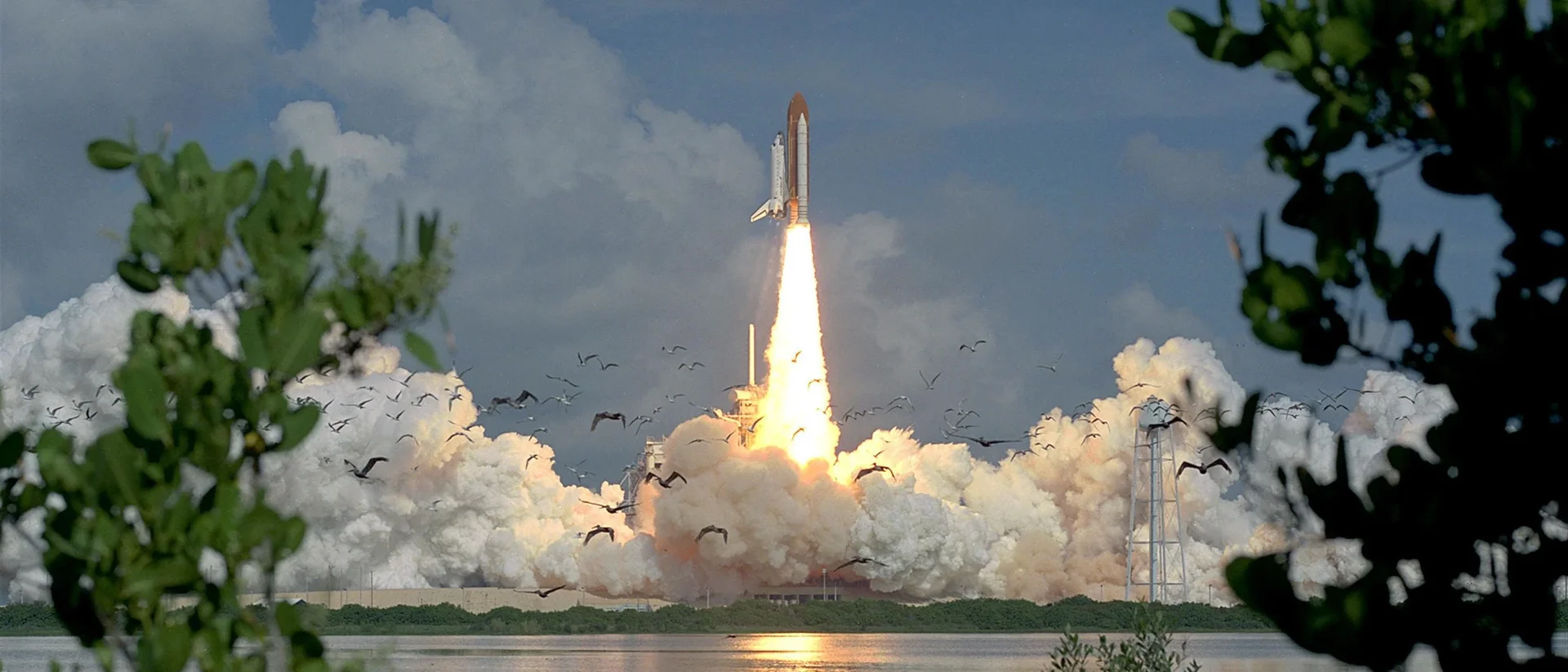
Discovery lifted off on July 13, 1995, at 9:41 a.m. EDT, five weeks after the rollback. NASA's own caption for a launch photo says startled birds scattered as the stillness of the summer morning was broken by a giant's roar.
What Changed Afterward
Noisemakers and other deterrents were installed at the shuttle launch pads.
Source:NASA
Enjoyed this fact?
Be the first to love this
Get a new fact every morning.
A fascinating fact in your inbox every morning. Free. Unsubscribe anytime.
Frequently Asked Questions
Did woodpeckers really delay a Space Shuttle launch?
How many holes did the woodpeckers peck in the shuttle tank?
Why was Space Shuttle Discovery rolled back from the launch pad in 1995?
How did NASA keep woodpeckers away from the shuttle?
Verified Fact
Verified Oct 15, 2026 · 5 sources checked
Source: NASAShow verification details
Claims checked
- Woodpeckers (northern flickers) pecked about 200 holes in Discovery's external tank foam, up to about 4 inches across
- An early inspection counted 71 deep excavations; the 200 figure is NASA's later total
- Repairs at the pad failed and the shuttle returned to the Vehicle Assembly Building on June 8, 1995
- Launch was set for as early as June 8 and flew July 13, 1995
- Air horns, Predator Eye balloons and Pecker Patrol T-shirts
Sources: NASA, Wikipedia, AmericaSpace, AMSAT
Related Topics
More from Science & Space
View all Science & Space →