The Jaws of Life, the hydraulic tool that pries a wrecked car open, came out of a drag racing parts shop. George Hurst, who made the shifters in America's muscle cars, watched a crash crew take over an hour to free a driver in the 1960s and built a rescue tool of his own. His first weighed 350 pounds; the version that followed weighed 65. Fire crews still cut people out of cars with it every day.
The Jaws of Life Started in a Drag Racing Parts Shop
The phrase is so ordinary that almost nobody asks where it came from. The tool that firefighters use to peel a crushed car open was born in a shop that built parts to make cars go faster, and the man behind it has his name stamped on the shifter of a generation of American muscle cars.
The Shifter Man
George Hurst founded Hurst Performance in Pennsylvania. If you drove anything quick in the 1960s, you knew the name.
Hurst shifters were the aftermarket part to have, fitted by drag racers and factory muscle cars alike. The company lived at the track.
An Hour to Reach One Driver
Hurst spent his weekends at racetracks, and somewhere in the 1960s he stood watching a crash crew work on a wrecked car with a driver still inside it.
The driver was alive and stuck. The crew needed over an hour to get him out.
The equipment of the day was the problem. Circular saws threw sparks near spilled fuel, were slow and were deafening for a trapped and injured person.
Crowbars and pry bars were quieter but could shift the car and hurt the person inside. Hurst went back to the shop thinking about hydraulics.
The retellings do not agree on the day. Hurst's own company history now puts the moment at a racetrack in 1971 and credits its engineer Jim Dobbins alongside him. The Smithsonian keeps it simple and says Hurst designed the tool in the 1960s to pull race drivers out of wrecks.
350 Pounds Down to 65
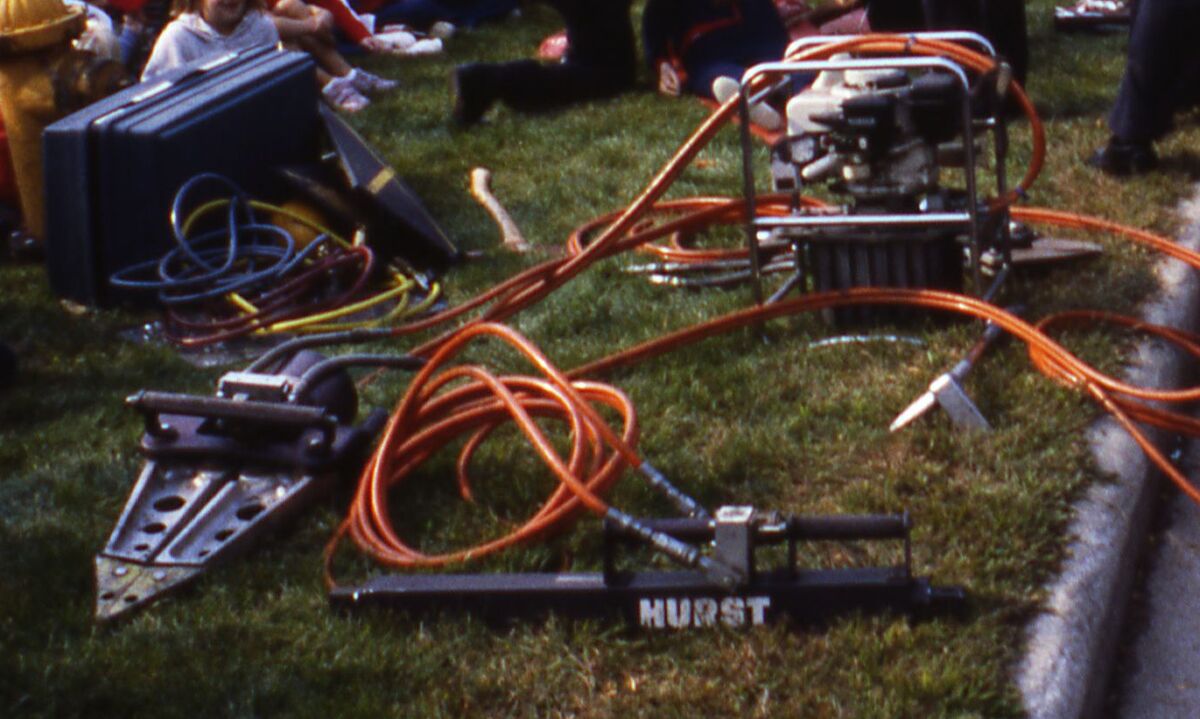
What Hurst built was a hydraulic spreader that could force a car apart along its own seams. It worked, and it was a monster: the first one weighed 350 pounds and travelled to races on the back of a pickup truck.
Hurst hired a man named Mike Brick to take the tool to market nationwide. Brick did something better than sell it.
He shrank it. Brick got the tool down to 65 pounds, light enough for a crew to carry to a wreck, and pitched it to fire departments in the early 1970s.
It had its first public showing at the 1971 SEMA trade show in California, where it was still called the Hurst Power Tool. That December the company delivered its first one to the Parkland fire department in Pennsylvania.
Where the Name Came From
Nobody sat down and invented the phrase. The Smithsonian's record of its own tool says it acquired the nickname "The Jaws of Life" because of a line in a promotional film.
The film was a short called Collision Rescue, and the line, kept in the papers of Dick Otte, the safety man who took the tool into the fire service, was that it saved people from the jaws of death. Some accounts credit the salesman Mike Brick with the phrase instead. Either way it stuck before anyone had a plan for it.
Prime Time
Fire companies were still hard to sell to. The tool cost real money and nobody could picture what it did, so Otte put it on television.
He arranged for the Los Angeles County Fire Department to be given one, which cleared the way for the show Emergency! to use it on screen. On 14 October 1972 an episode called Peace Pipe showed the Jaws freeing a girl from a wrecked car in front of a national audience.
In the close-up shots, the hands working the tool were not the actors'. They were Otte's.
Still on the Rig
Jaws of Life is a Hurst trademark, though firefighters now use it loosely for any hydraulic spreader, cutter or ram, whoever made it.
The tools got lighter again. The current generation runs on batteries instead of a gas motor and a hose reel, so a single firefighter can carry one to the door of a car.
One of the old ones ended up in a museum. A Hurst Power Rescue Tool that the Carlsbad fire department in New Mexico bought in 1977 and used until 2012 went into the Smithsonian's National Museum of American History collections.
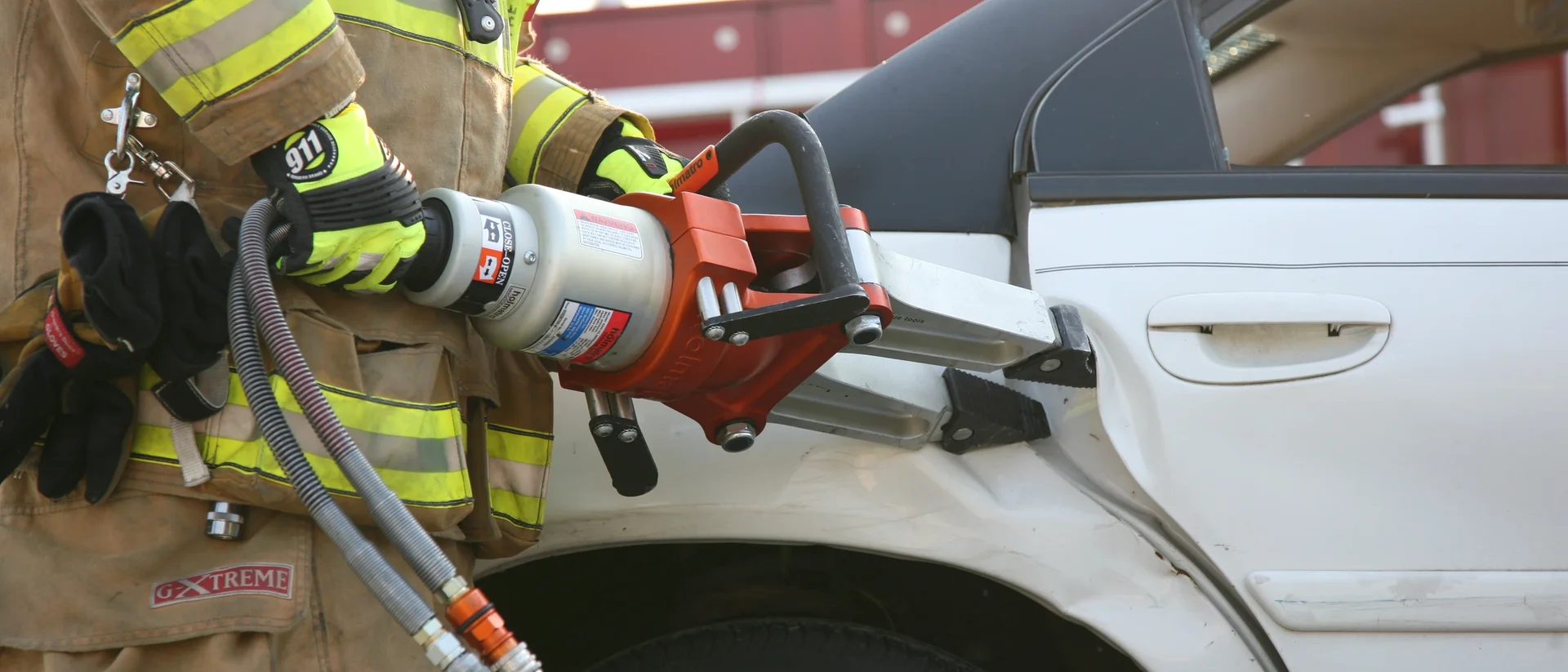
The rest are still working. Every day, somewhere, a crew in turnout gear drives a spreader into a door frame and takes a person out of a car that will not open.
Hero photo: a firefighter works a hydraulic spreader into a car door at a 2008 extrication exercise. Daniel Schwen, CC BY-SA 4.0, via Wikimedia Commons. Inline photo: David E. Lucas, Columbus Metropolitan Library via DPLA, public domain, 1981.
Enjoyed this? Get a new fact every morning.
A fascinating fact in your inbox every morning. Free. Unsubscribe anytime.
Frequently Asked Questions
Who invented the Jaws of Life?
Why is it called the Jaws of Life?
How much does the Jaws of Life weigh?
Do firefighters still use the Jaws of Life?
Which fire department bought the first Jaws of Life?
Verified Fact
Verified Sep 12, 2026 · 3 sources checked
Source: Smithsonian National Museum of American HistoryShow verification details
Claims checked
- The Jaws of Life came out of George Hurst's racing parts company
- His first hydraulic rescue tool weighed 350 pounds
- Hurst hired Mike Brick to market it and Brick cut it to 65 pounds
- First shown at the 1971 SEMA show, first tool delivered that December in Parkland, Pennsylvania
Sources: Smithsonian National Museum of American History, Richard Otte family archive, Wikipedia