
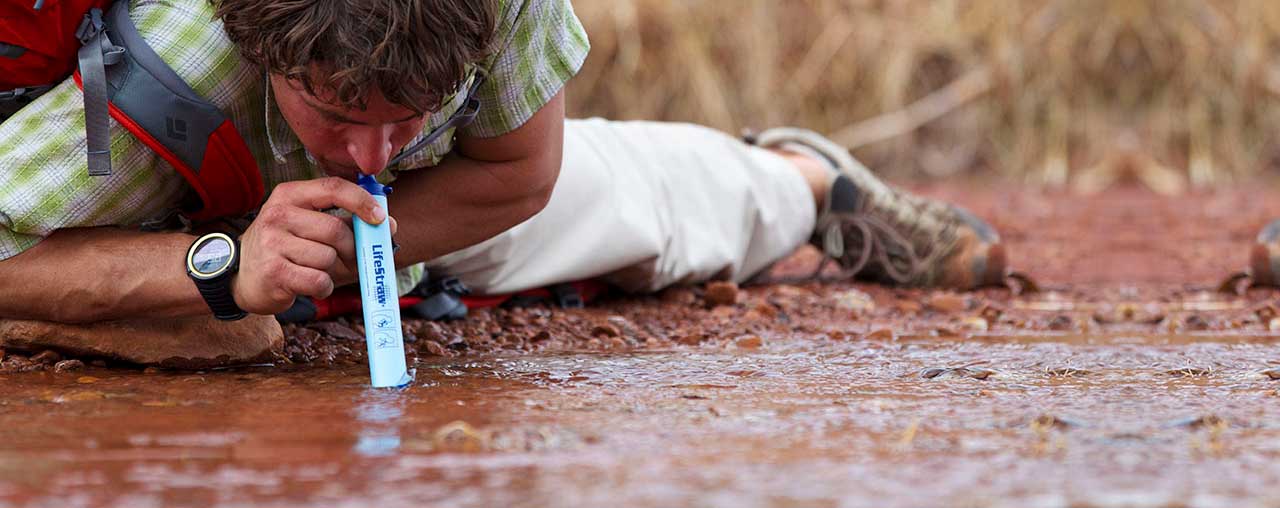
The LifeStraw is a portable water filtration device that allows users to drink directly from contaminated water sources, filtering out 99.9999% of bacteria and 99.9% of parasites without electricity, batteries, or moving parts.
LifeStraw: Drink Safely From Almost Any Water Source
Imagine kneeling beside a murky pond, putting your lips to what looks like a large plastic straw, and drinking safely. That's the LifeStraw—a deceptively simple device that has changed how we think about water purification.
How It Works
The LifeStraw uses hollow fiber membrane technology. As you suck water through the device, it passes through microscopic pores just 0.2 microns wide—far too small for bacteria or parasites to squeeze through.
No batteries. No electricity. No pumping. Just drink.
The filtration stats are staggering:
- 99.9999% of bacteria removed (including E. coli and salmonella)
- 99.9% of parasites eliminated (giardia, cryptosporidium)
- 1,000+ gallons of water filtered per device
Born From Crisis
The LifeStraw wasn't originally designed for hikers and preppers. Vestergaard, the Danish company behind it, created the technology in the 1990s to combat Guinea worm disease in Africa. The parasitic infection, spread through contaminated water, was devastating communities across the continent.
Their filter worked. Guinea worm cases dropped from 3.5 million in 1986 to just 13 cases worldwide in 2022.
The Limitations Nobody Talks About
Here's what the marketing doesn't emphasize: LifeStraw doesn't filter viruses or chemicals. In developed countries where viral contamination and industrial pollutants are concerns, it's not a complete solution. It also can't desalinate water—so don't try drinking from the ocean.
And there's the practical issue: you have to be at the water source. You can't fill a bottle and filter it later with the original LifeStraw design (though newer models address this).
Impact Beyond Survival
Vestergaard's "Follow the Liters" program donates water purification to developing communities for every retail LifeStraw sold. The company has provided safe drinking water to millions of schoolchildren across Kenya and other nations.
For outdoor enthusiasts, the LifeStraw weighs just 2 ounces and costs around $20—cheaper than a single case of bottled water for the amount it can filter. Backpackers have traded heavy pump filters and chemical tablets for this plastic tube that fits in a pocket.
It's not the solution to the global water crisis—that would require infrastructure, policy, and resources beyond any single product. But for individuals caught in disasters, refugees crossing borders, or hikers deep in the backcountry, it's genuinely life-saving technology disguised as a drinking straw.
Frequently Asked Questions
What does LifeStraw filter out?
Does LifeStraw filter viruses?
How long does a LifeStraw last?
Can you use LifeStraw for salt water?
Who invented the LifeStraw?
Verified Fact
This fact has been reviewed and verified against original sources.
Show verification details
Corrected hyperbolic claim that LifeStraw is 'the solution' to world water crisis. It's an important tool but not a singular solution.