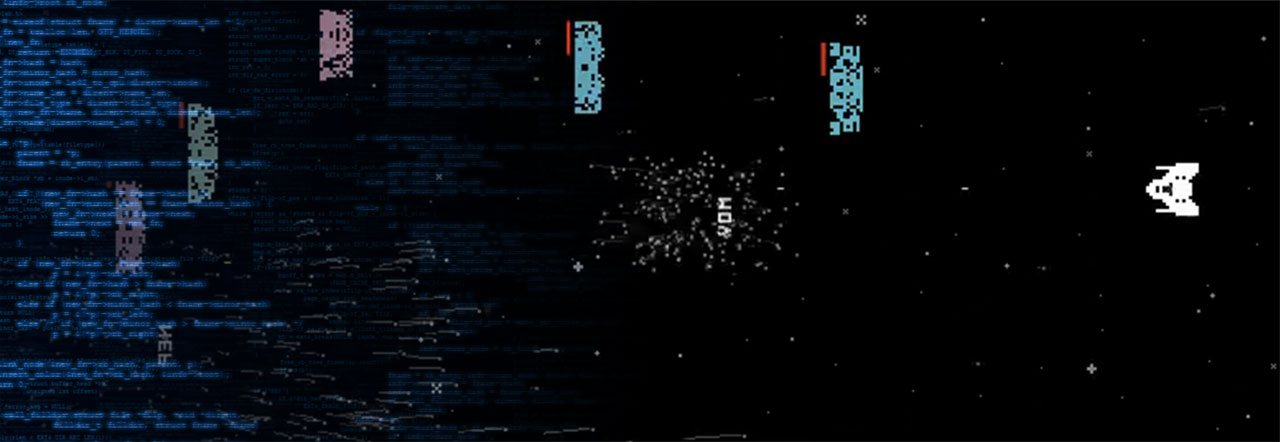
There's a video game called "Lose/Lose" that deletes a random file on your computer every time you kill an enemy.
The Video Game That Permanently Deletes Your Files
In 2009, artist and game developer Zach Gage created something that sounds like an urban legend but is terrifyingly real: a video game called Lose/Lose that permanently deletes files from your hard drive every time you shoot an enemy. Not to the recycle bin. Not to a backup folder. Gone forever.
The game looks like a simple Space Invaders clone—colorful aliens descending from the top of the screen while you control a little ship at the bottom. But here's the twist: each alien represents an actual file on your computer. When you shoot one down, that file is immediately and irreversibly deleted from your system.
The Rules of Digital Russian Roulette
The game doesn't hide its danger. Before you start, Lose/Lose explicitly warns players that killing aliens will permanently delete files. If you collide with an alien, the game deletes itself. The aliens never fire at you, which creates an unsettling dynamic—you're the aggressor, and they're just floating there, representing your photos, documents, or that novel you've been working on.
Someone once achieved a high score of 412, meaning they intentionally deleted 412 files from their own computer while playing. That's commitment to the bit.
Art Disguised as Malware
Gage presented Lose/Lose as his Master of Fine Arts thesis at Parsons The New School for Design. It wasn't meant to be fun—it was conceptual art exploring how we value digital property differently than physical possessions. Would you play a game that destroyed your belongings in real life? Probably not. But files feel somehow less real, even though they might be irreplaceable.
Antivirus software had an identity crisis. Symantec classified it as a Trojan, though Gage argued it's not technically malware since it explicitly tells you what it does and requires your permission. He preferred the term "dangerous software." The game became so notorious that multiple antivirus programs still flag it today.
Why Would Anyone Play This?
The genius of Lose/Lose is that it makes you think about consequences in virtual spaces. Online anonymity often disconnects us from the impact of our actions. Gage wanted to create a game where digital actions had permanent, tangible consequences—no save states, no undo button, no second chances.
Players did engage with it, posting scores and discussing the experience. Some set up virtual machines or sacrificed computers specifically to play. Others created dummy files just to shoot. The game sparked exactly the kind of philosophical debate Gage intended: What does it mean to destroy something that only exists as data?
Lose/Lose is still available online, though downloading it requires acknowledging multiple warnings. It remains a fascinating artifact of experimental game design—a reminder that video games can be more than entertainment. They can be art, commentary, and cautionary tales all rolled into one very dangerous package.
Frequently Asked Questions
Is Lose/Lose a real video game?
Who created the Lose/Lose game?
Is Lose/Lose considered malware?
Can you still download Lose/Lose?
What happens if you collide with an alien in Lose/Lose?
Verified Fact
This fact has been reviewed and verified against original sources.
Show verification details
Lose/Lose is a real video game created by Zach Gage in 2009 as an MFA thesis project. The game does permanently delete random files from your computer every time you kill an enemy.
Related Topics
More from Technology & Innovation
View all Technology & Innovation →