The microwave was invented after a researcher walked by a radar tube and a chocolate bar melted in his pocket.
How a Melted Candy Bar Accidentally Invented the Microwave
Picture this: It's 1945, and a mild-mannered engineer is walking past a radar machine when suddenly, his pocket gets warm and gooey. That's not science fiction—that's how Percy Spencer accidentally invented the microwave oven.
Spencer was a self-taught engineer working at Raytheon, tinkering with magnetrons—the powerful vacuum tubes that made military radar systems work during World War II. These things pumped out serious microwave radiation, but nobody had thought much about what else they could do.
The Pocket That Changed Kitchen History
One day, Spencer was standing near an active magnetron when he noticed something odd. The peanut cluster bar in his pocket had turned into a melted mess. Most people would've cursed their ruined snack and moved on. Spencer saw an opportunity.
He wasn't immediately sure what had happened, but his engineer brain kicked in. The next day, he brought popcorn kernels to work. He held them near the magnetron, and they popped. Then he tried an egg—which promptly exploded in a colleague's face. (Science can be messy.)
Why Microwaves Melt Chocolate But Not Metal
Microwaves work by making water molecules vibrate like crazy. Your chocolate bar? Full of moisture. That packet of sugar? Dry as a bone, barely gets warm. This is why:
- Foods with high water content heat fast (your leftover pasta sauce)
- Dry foods barely react (that stale piece of bread stays cool)
- Uneven water distribution creates hot spots (the molten center, frozen edges phenomenon)
Metal reflects microwaves instead of absorbing them, which is why you can't nuke your fork without fireworks.
From Radar to Radarange
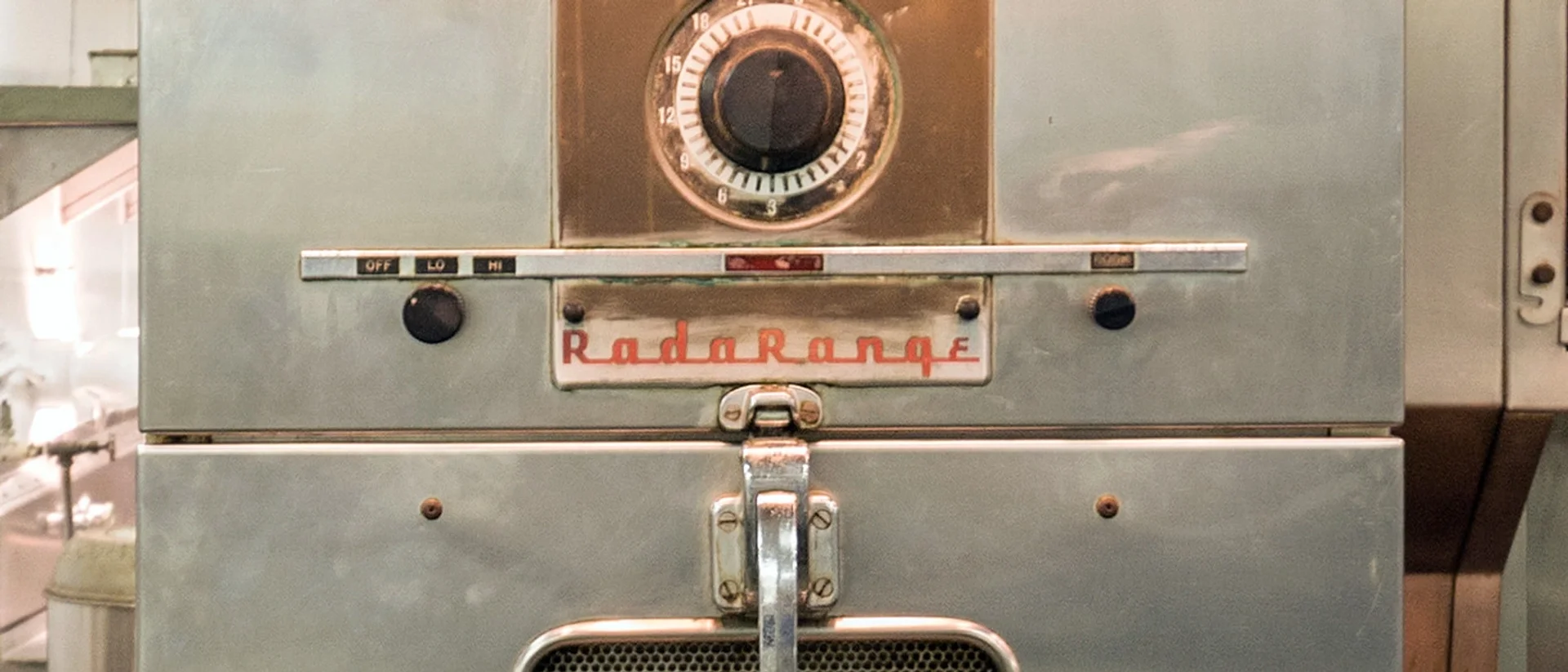
Raytheon filed a patent in 1945, and by 1947 they'd built the first commercial microwave oven. It was called the "Radarange," stood nearly six feet tall, weighed 750 pounds, and cost about $5,000—roughly $70,000 in today's money. Only restaurants and cruise ships could justify that expense.
The home microwave didn't arrive until 1967, when Amana (a Raytheon subsidiary) introduced a countertop version for $495. Still pricey, but manageable. By the 1980s, microwaves were in most American kitchens.
The Man Behind the Melt
Spencer never went to high school. He learned about electricity as a teenager installing wiring for a paper mill. By the time World War II rolled around, he'd become one of the world's leading experts on radar tube design. He held 300 patents by the end of his career.
Raytheon gave him a $2 bonus for the microwave invention. That's it. No royalties, no percentage of billions in sales. Just two bucks and a handshake. Different era.
The Chocolate Bar Detail Everyone Gets Wrong
Here's where the story usually goes sideways: Most retellings say it was just a chocolate bar. Actually, it was a peanut cluster bar—chocolate mixed with peanuts. A small detail, but if we're celebrating accidental genius, we might as well get the candy right.
Today, over 90% of American homes have a microwave. We use them to reheat coffee, make popcorn, and occasionally attempt to cook actual meals. All because one engineer paid attention when his snack melted in his pocket.
Enjoyed this? Get a new fact every morning.
A fascinating fact in your inbox every morning. Free. Unsubscribe anytime.
Frequently Asked Questions
How was the microwave oven accidentally invented?
Who invented the microwave and when?
Is it true the microwave was discovered by accident?
Why did the chocolate bar melt near the radar tube?
What was the first commercial microwave called?
Verified Fact
This fact has been reviewed and verified against original sources.
Show verification details
The core story is accurate. Percy Spencer, a Raytheon engineer, discovered microwave heating in 1945 when a candy bar (specifically a peanut cluster bar, though often misreported as just a chocolate bar) melted in his pocket while he stood...