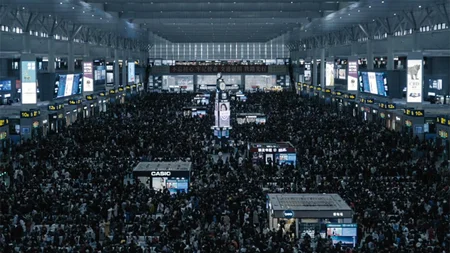
The number of text messages sent and received in a given day is greater than the world's population.
Daily Texts Sent Outnumber Earth's Entire Population
Imagine every person on Earth sending a text message. Now imagine them doing it again. And then one more time. That's roughly how many text messages fly through the digital ether every single day—approximately 23 billion traditional SMS messages, compared to a world population of around 8.2 billion people.
But here's where it gets truly mind-bending: that's just counting old-school SMS. When you factor in messaging apps like WhatsApp, which alone handles 150 billion messages daily, the gap becomes astronomical. We're sending nearly 20 times more messages than there are humans on the planet.
The Numbers Behind the Notification Avalanche
Every second, roughly 270,000 text messages are sent around the globe. That's faster than you can say "delivered."
Breaking it down by platform reveals the true scale:
- Traditional SMS: 23-27 billion messages per day
- WhatsApp: 150 billion messages per day
- WeChat: 45 billion messages per day
- Combined total: Well over 200 billion messages daily
To put that in perspective, if each message were a grain of rice, we'd be producing enough daily to fill over 30 Olympic-sized swimming pools.
Who's Doing All This Texting?
About 5 billion people worldwide send and receive SMS messages—roughly 65% of the global population. That number is projected to hit 5.9 billion by the end of 2025.
But texting habits vary wildly by age. Young adults aged 18-24 average a staggering 128 texts per day. That's one text every 7.5 minutes during waking hours. The 25-34 crowd sends around 75 daily, while the 45-54 age group drops to 33.
Even with these generational differences, the math is clear: some people are really pulling their weight to push that global average up.
Why So Many Messages?
The explosion in messaging goes beyond personal chatter. Businesses have discovered that SMS has a 98% open rate—compared to email's measly 20%. That means your phone buzzes with appointment reminders, delivery notifications, two-factor authentication codes, and marketing messages alongside texts from actual humans.
Then there's the global nature of modern communication. Someone in New York can instantly message a friend in Tokyo, a colleague in London, and a family member in Sydney—all before breakfast. Time zones don't matter when everyone's always connected.
The sheer convenience factor can't be overlooked either. Texting doesn't require the commitment of a phone call or the formality of an email. It's the Goldilocks of communication: just right for quick questions, confirmations, memes, and the occasional "k."
The Future of Messaging
The SMS market is projected to grow at a compound annual growth rate of 20.3% through 2025, with the U.S. market alone expected to reach $12.6 billion. As nearly 6 billion people gain access to SMS technology by year's end, that daily message count will only climb higher.
So the next time your phone buzzes, remember: you're participating in a daily global phenomenon that produces more interactions than there are people on the planet. We're not just connected anymore—we're hyperconnected, firing off billions of tiny digital missives that collectively dwarf our own numbers.
Frequently Asked Questions
How many text messages are sent per day worldwide?
How many texts does the average person send per day?
Are text messages more popular than emails?
What is the most popular messaging app in the world?
How many people use text messaging globally?
Verified Fact
This fact has been reviewed and verified against original sources.
Show verification details
As of 2025, approximately 23-27 billion traditional SMS text messages are sent daily worldwide, which is roughly 3x the current world population of ~8.2 billion.