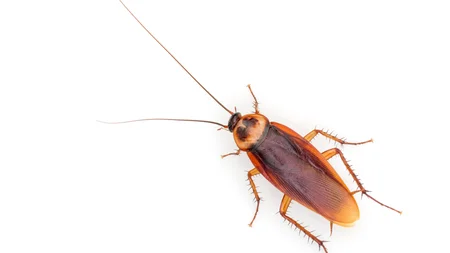
Cockroaches Can Live Nine Days Without Their Heads
If you've ever tried to squash a cockroach and thought they were hard to kill, here's something that'll make your skin crawl: cut off a roach's head, and it'll keep scuttling around for over a week before finally dying. Not from blood loss. Not from shock. From starvation.
This isn't some urban legend whispered around campfires—it's been verified in controlled laboratory experiments. Scientists have decapitated American cockroaches, sealed the neck wound with dental wax, and watched them survive for several weeks in jars. The typical survival time is about nine days, though some stubborn specimens have pushed that to several weeks.
Why Doesn't Decapitation Kill Them?
Humans lose their heads, we're done. But cockroaches play by different rules, and their bizarre biology makes headless survival not just possible, but almost routine.
First, they don't bleed out. Roaches have an open circulatory system with relatively low blood pressure. When decapitated, the wound clots quickly at the neck, preventing significant loss of hemolymph (insect blood). No dramatic bleeding means no rapid death.
Second, they don't need their heads to breathe. While we frantically gasp for air through our mouths and noses, cockroaches breathe through spiracles—tiny valve-like openings dotted along each segment of their thorax and abdomen. Each spiracle delivers oxygen directly to tissues through a network of tubes called tracheae. The head? Totally optional for respiration.
The Body Keeps Running Without Mission Control
Here's where it gets really weird. Unlike our highly centralized nervous system (brain runs everything), cockroaches have ganglia—clumps of nerve tissue distributed throughout their body segments. Each ganglion cluster can handle basic motor functions independently.
Think of it like this: your brain is a CEO micromanaging every department. A cockroach's nervous system is a franchise—each location can operate on its own when corporate goes dark.
This means a headless roach can still:
- Stand upright
- React to touch
- Move around (though without direction or purpose)
Meanwhile, the severed head can survive for hours, waving its antennae around like nothing happened. If given nutrients and kept cool, a roach head can last even longer.
What Finally Kills Them?
Not the missing head—that's just an inconvenience. The real killer is dehydration and starvation.
Cockroaches are cold-blooded, which means they need far less food than warm-blooded creatures. They can survive up to a month without food, but only about a week without water. Without a mouth to drink or eat, the headless roach is on a countdown timer.
After roughly nine days (give or take), the body finally shuts down—not from the trauma of decapitation, but simply because it ran out of fuel.
Evolutionary Overkill
Why would evolution design such a ridiculously resilient creature? Cockroaches have been around for over 300 million years, surviving multiple mass extinction events that wiped out the dinosaurs. Their decentralized biology, minimal resource needs, and ability to function with catastrophic injuries make them nearly indestructible.
So next time you see a cockroach skitter across your kitchen floor, remember: you're looking at a creature so overengineered for survival that even decapitation is just a minor setback. Sleep tight.
Frequently Asked Questions
How long can a cockroach live without its head?
Why don't cockroaches die immediately when decapitated?
Can a cockroach head survive on its own?
What kills a headless cockroach?
Do cockroaches feel pain when their head is cut off?
Verified Fact
This fact has been reviewed and verified against original sources.
Show verification details
Scientific experiments confirm cockroaches can survive 1-3 weeks without heads. The '9 days' figure is conservative; some specimens have survived several weeks. Death is from starvation/dehydration, not the decapitation itself.
Related Topics
More from Animals
View all Animals →