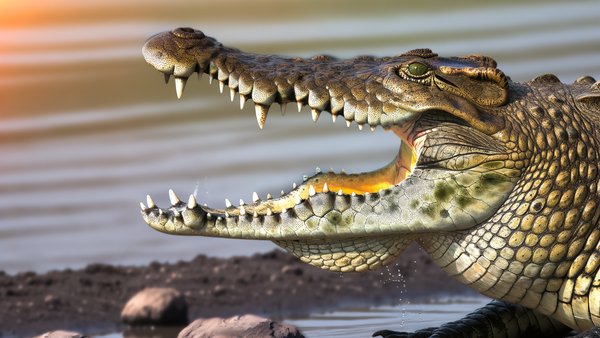
Crocodiles swallow stones to help them stay underwater longer.
Crocodiles Swallow Stones to Stay Submerged Longer
If you ever find rocks in a crocodile's stomach, don't assume it ate them by accident. Crocodilians—including alligators, crocodiles, and caimans—deliberately swallow stones, sometimes carrying several pounds of rocks in their bellies at any given time.
These stomach stones are called gastroliths, and they serve a clever purpose: helping the animal stay underwater longer.
The Ballast Effect
When researchers fed granite stones to juvenile American alligators (equivalent to just 2.5% of their body weight), the results were dramatic. Average dive duration increased by 88%, and maximum dive time shot up by 117%.
The stones add weight, which affects the animal's buoyancy. To compensate, crocodiles increase their lung volume, essentially diving with larger oxygen reserves. More oxygen means longer submersion—a significant advantage when ambushing prey or hiding from threats.
Not About Depth
For decades, scientists debated whether gastroliths helped crocodiles dive deeper. The answer is no. Research shows that stomach stones in both living crocodiles and fossil marine reptiles typically represent less than 2% of body mass—far below the 6% needed to significantly affect diving depth.
The benefit is duration, not depth. It's the difference between holding your breath for 30 seconds versus a full minute.
Double Duty
Gastroliths aren't just ballast. Crocodiles have a muscular forestomach called a gizzard (similar to birds, their archosaur relatives), where these stones help grind up food swallowed in large chunks. Think of it as a built-in food processor.
And when the stones are no longer needed? Crocodiles can vomit them up relatively easily, cycling them out as they wear down or become less useful.
So yes, crocodiles eat rocks on purpose—and it's one of nature's most practical evolutionary hacks.
Frequently Asked Questions
Why do crocodiles swallow stones?
Do crocodiles swallow rocks to help them dive deeper?
How much weight in stones do crocodiles carry?
What are gastroliths in crocodiles?
Can crocodiles remove the stones from their stomach?
Verified Fact
This fact has been reviewed and verified against original sources.
Show verification details
Corrected from 'dive deeper' to 'stay underwater longer'. Gastroliths affect dive duration (88-117% increase), not diving depth. The buoyancy effect allows them to remain submerged longer by requiring increased lung volume compensation.