Cambodia carved a giant stone statue of a rat. It honors Magawa, who spent five years sniffing out landmines there. He became the first rat ever given the PDSA Gold Medal. That medal is the animal world's version of the George Cross. Magawa found 71 landmines and 38 unexploded bombs before he retired in 2021. He cleared ground equal to roughly 20 football fields.
Cambodia Built a Stone Statue of a Landmine-Detecting Rat
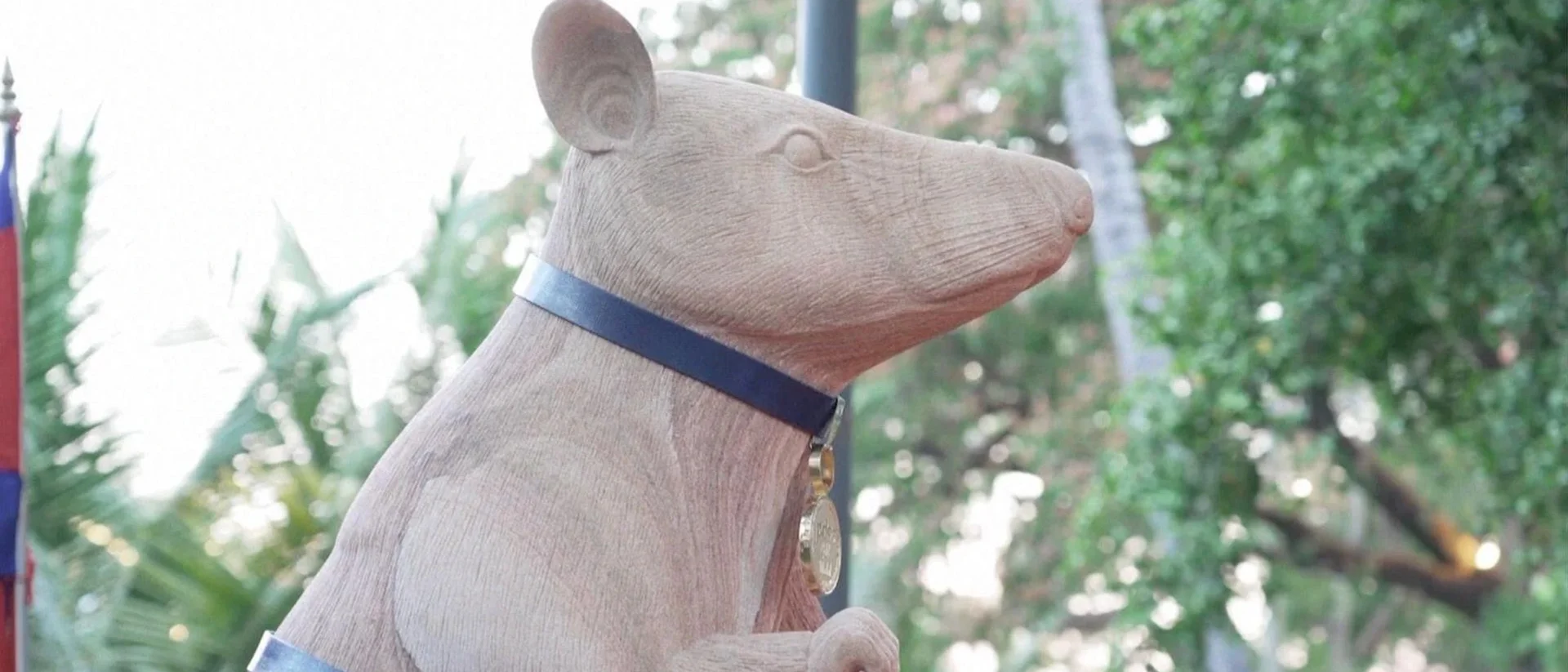
A seven-foot stone rat now stands on the riverfront in Siem Reap, Cambodia, carved by local artisans and unveiled just steps from the road to Angkor Wat. It is not a folk symbol or a warning sign. It is a monument to one specific animal: a giant pouched rat named Magawa who spent five years clearing landmines left behind by decades of conflict.
The Rat Who Cleared 20 Football Fields
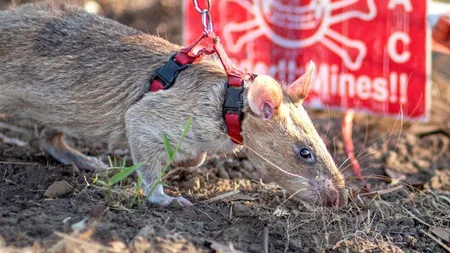
Magawa was a Southern giant pouched rat trained by the Belgian charity APOPO to sniff out buried explosives in Cambodia, one of the most heavily mined countries on Earth. Rats like Magawa are too light to trigger a landmine, but their sense of smell is sharp enough to detect the scent of TNT through soil.
Over the course of his career, Magawa found 71 landmines and 38 items of unexploded ordnance. Combined, the ground he cleared adds up to roughly 20 football fields of land made safe for farmers and children to walk on again. A trained human deminer with a metal detector can take days to search that same ground; Magawa and rats like him can clear it in a fraction of the time because they only react to explosive scent, not to scrap metal.
An Honor No Rat Had Ever Received
In September 2020, Magawa was awarded the PDSA Gold Medal, a British honor often described as the animal world's version of the George Cross. It recognizes exceptional bravery or devotion to duty in animals, and it had never before gone to a rat - every one of the roughly 20 medals awarded since 2002 had gone to a dog.
Magawa retired from active mine detection in June 2021 due to his age and died peacefully several months later. By the standards of his own species, he lived a long life. By the standards of what he left behind, he changed how an entire country thinks about who gets called a hero.
Carved Into Stone, Not Cast in Bronze
The statue unveiled in April 2026 was carved from local stone by artisans at the Satcha Handicraft Center, and it shows Magawa wearing the harness and medal he wore in life. Its base is shaped like a landmine and contains fragments of decommissioned explosives, a detail that ties the monument directly to the ground Magawa worked to clear.
The timing was deliberate. The statue went up just ahead of International Mine Awareness Day, a reminder that Cambodia still lives with the legacy of landmines decades after the conflicts that buried them ended.
A Country Chose to Remember Him in Stone
Statues are usually reserved for kings, generals, and revolutionaries. Cambodia gave one to a rat. It is a strange kind of tribute, and also a fitting one: a small animal, working quietly and without complaint, made a small piece of a war-torn country safe again, one sniff at a time.
Frequently Asked Questions
Who was Magawa the rat?
Why did Cambodia build a statue of a rat?
What award did Magawa win?
How do rats detect landmines?
What is the statue made of and where is it located?
Verified Fact
Verified Jul 5, 2026 · 8 sources checked
Source: APOPOShow verification details
Claims checked
- Statue of Magawa is carved from stone and stands by the Siem Reap riverfront
- Magawa found 71 landmines and 38 unexploded bombs before retiring in 2021
- He cleared ground equal to about 20 football fields
- First rat to receive the PDSA Gold Medal, which had only ever gone to dogs before him
Sources: APOPO, Wikipedia, NPR, Fox News, VnExpress, Washington Times, PDSA.org.uk, NBC News
Related Topics
More from Animals
View all Animals →