Two whales got stranded on a sandbar at Mahia Beach in New Zealand. A mother and her calf kept beaching themselves for over an hour. Rescuers were close to giving up. Then a wild dolphin named Moko showed up. The whales seemed to answer his calls. They followed Moko through a narrow channel and swam free.
The Dolphin Who Talked Two Whales Back to Sea
A pod of one had just done what a team of trained rescuers could not. On a New Zealand sandbar in March 2008, a wild dolphin named Moko swam in from open water, and two exhausted whales that had refused to budge for over an hour suddenly followed him straight out to sea.
The Dolphin Everyone at Mahia Beach Knew
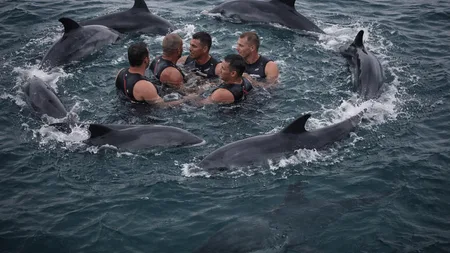
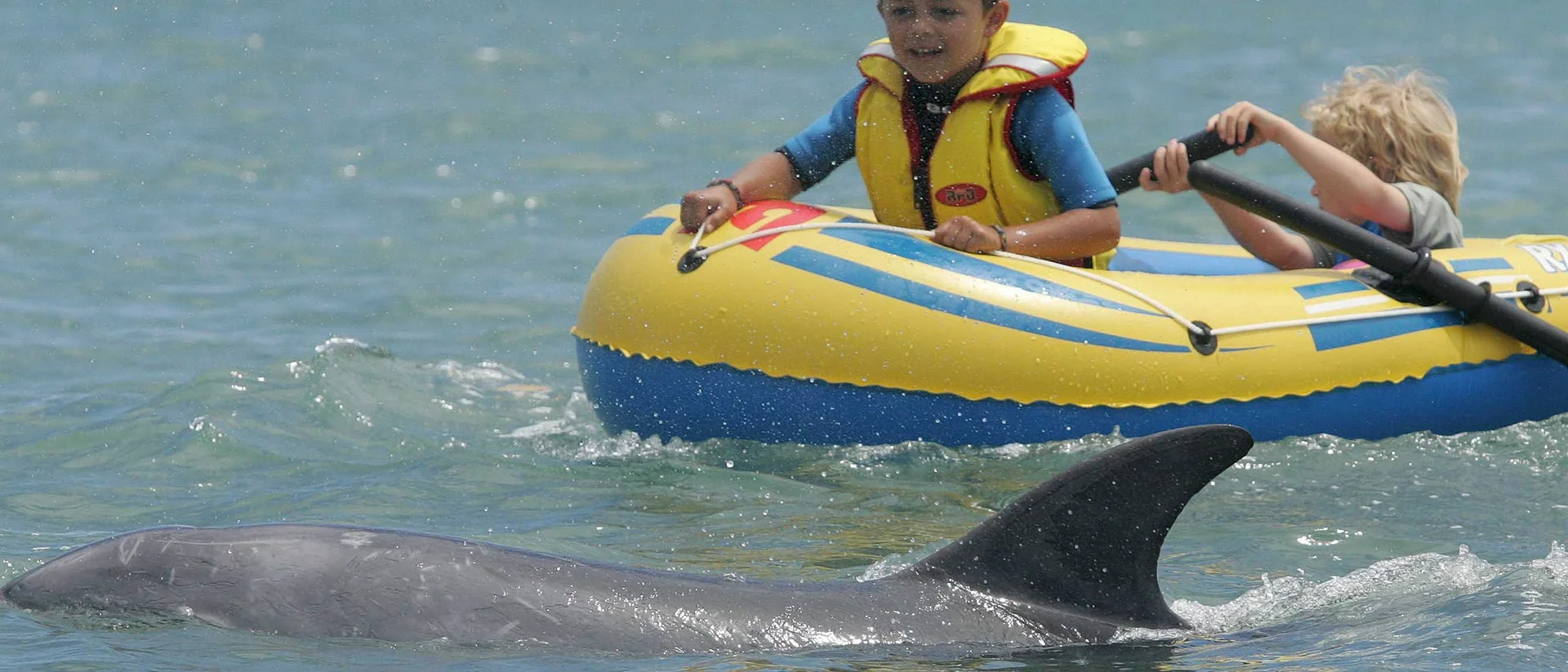
Moko was a young male bottlenose dolphin who had been showing up along the coast near Mahia Beach, on New Zealand's North Island, since 2007. He was not part of any aquarium or research program. He simply lived wild in the bay and had become known locally for swimming up to bathers and surfers to play.
Two Whales, One Sandbar, No Way Out
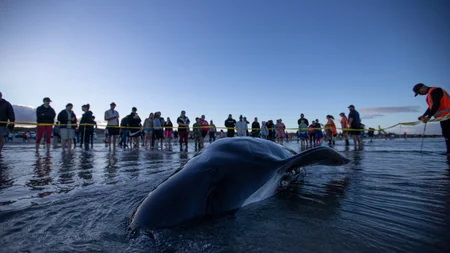
On the morning of March 10, 2008, a mother pygmy sperm whale and her calf were spotted stuck behind a sandbar at the southern end of Mahia Beach. Department of Conservation officer Malcolm Smith and a group of volunteers waded in to try to guide the pair back toward open water.
It did not work. The whales re-stranded on the same sandbar about four times in just over an hour. Each attempt left the animals and the rescuers more exhausted. Smith later said the whales were arched and calling out to each other, clearly distressed.
The Rescuers Were Running Out of Options
With the whales showing no sign of finding the channel on their own, the rescue team started to fear the worst. Continuing to fail meant the whales could be stuck fighting the tide much longer, and officials began discussing whether the kindest option left was to end their suffering.
Then Moko Showed Up
As the rescuers were close to calling it off, Moko appeared and swam straight toward the two whales. Smith described what happened next to the BBC: the whales seemed to make contact with the dolphin, and their whole manner changed. Moko led the pair about 200 meters parallel to the beach, then made a sharp turn through a narrow channel in the sandbar and escorted them out into open water.
The whales did not re-strand again. Once they reached deep water, they swam off and were not seen in trouble on that coast again.
A Story No One Has Fully Explained
Marine scientists still are not sure exactly what passed between the dolphin and the whales that day. Smith put it simply afterward.
"I don't speak whale and I don't speak dolphin, but there was obviously something that went on, because the two whales changed their attitude from being quite distressed to following the dolphin quite willingly and directly along the beach and straight out to sea."
Moko went back to playing with swimmers at Mahia Beach, just another day at the office.
Enjoyed this? Get a new fact every morning.
A fascinating fact in your inbox every morning. Free. Unsubscribe anytime.
Frequently Asked Questions
What did Moko the dolphin do in 2008?
Why couldn't rescuers save the whales without Moko?
What kind of whales were rescued at Mahia Beach?
Was Moko a trained dolphin?
How do scientists explain what Moko did?
Verified Fact
Verified Jul 2, 2026 · 6 sources checked
Source: NZ HeraldShow verification details
Claims checked
- Two pygmy sperm whales, mother and calf, stranded at Mahia Beach, NZ, on March 10, 2008
- Rescuers spent over an hour with about four re-strandings before euthanasia seemed likely
- Wild dolphin Moko led the whales through a narrow channel and out to sea, with no re-stranding after
- Moko's sex corrected to male (earlier reports used she/her)
Sources: NZ Herald, Department of Conservation (NZ), Wikipedia, ScienceBlogs, Bajan Reporter, TIME
Related Topics
More from Animals
View all Animals →