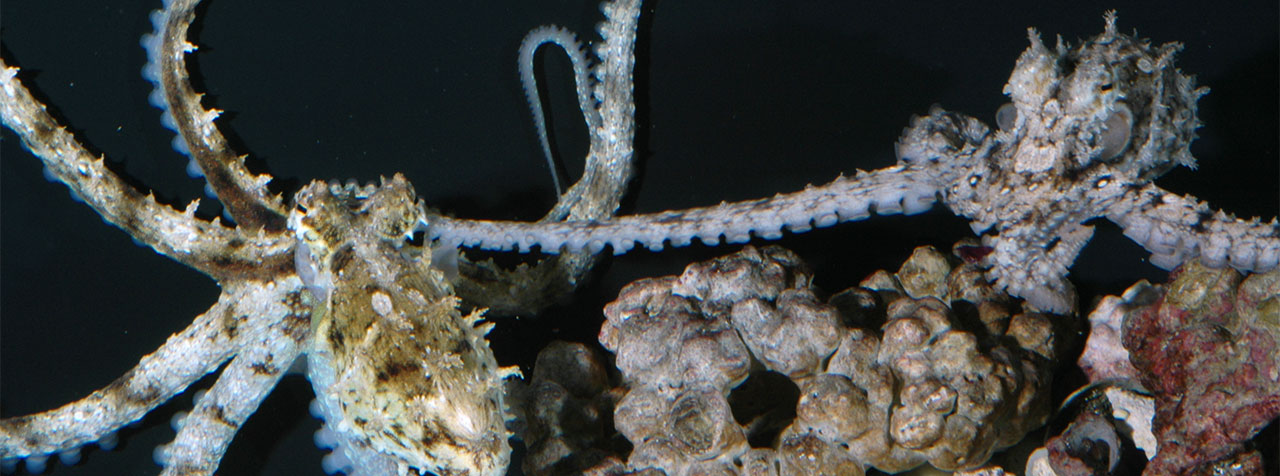
After octopuses breed, they develop dementia. They then live the rest of their lives in this confused, seemingly lost state, with apparently no knowledge of previous events.
Octopuses Develop Dementia After Breeding, Then Die
One of nature's most intelligent creatures meets one of its cruelest ends. After octopuses breed, they undergo a dramatic mental and physical decline that scientists compare to dementia in humans. They become disoriented, lose coordination, and appear to have no memory of their previous behavior. Within weeks, they're dead.
This isn't a disease. It's genetically programmed self-destruction.
The Death Spiral Begins
Male octopuses start deteriorating immediately after mating. Females hold on a bit longer, staying alert enough to guard their eggs, but once those eggs are laid, the decline accelerates. Research published in 2022 documented the behavioral changes: octopuses that were once graceful hunters become clumsy and uncoordinated. They stop eating. Some develop repetitive, purposeless movements. Others engage in self-mutilation, tearing off their own skin or eating their own arms.
The changes aren't just behavioral. Brain tissue analysis reveals actual neural degeneration, with significant loss of nerve cells and deterioration of sensory responses. Their eyes sink into their heads. Their skin loses its famous color-changing ability and becomes pale and damaged.
The Optic Gland: Nature's Kill Switch
Scientists tracked the cause to a small organ called the optic gland, roughly equivalent to the pituitary gland in mammals. After reproduction, this gland goes haywire, flooding the octopus's body with a cocktail of hormones.
Researchers at the University of Chicago identified three specific biochemical pathways involved:
- Pregnenolone and progesterone (pregnancy-associated steroids) surge dramatically
- Maternal cholestanoids accumulate, disrupting normal metabolism
- 7-dehydrocholesterol (7-DHC) spikes to toxic levels
That last one is particularly fascinating. In humans, elevated 7-DHC causes Smith-Lemli-Opitz Syndrome, a genetic disorder characterized by developmental problems and repetitive self-injury. The parallel to octopus end-of-life behavior is striking.
Why Evolution Would Program Death
It seems bizarre that evolution would wire such intelligent animals for mandatory dementia and death. But octopuses are semelparous, meaning they reproduce once and die. This strategy actually makes evolutionary sense in their ecological niche.
Octopuses live fast and die young, typically surviving only 1-2 years. Pouring all their energy into one massive reproductive effort, then dying, prevents them from competing with their own offspring for food. It's a harsh strategy, but it works. The species has survived for millions of years this way.
Female octopuses demonstrate this trade-off most dramatically. After laying up to 100,000 eggs, a mother stops eating entirely and devotes herself to guarding the clutch. She blows oxygenated water over them, protects them from predators, and keeps the den clean. By the time the eggs hatch months later, she's a shell of herself, barely alive. She typically dies just as her babies emerge.
A Confused, Lost State
The "dementia" comparison is more than metaphorical. Octopuses in senescence show genuine cognitive decline. They fail to recognize familiar objects or situations. Their problem-solving abilities, normally impressive, disappear. They seem genuinely confused, swimming in circles or pressing against aquarium walls repeatedly.
One particularly heartbreaking observation: octopuses that spent their lives solving puzzles and opening jars will, in senescence, struggle with the simplest tasks they once performed effortlessly. The intelligence that made them so remarkable vanishes, leaving what researchers describe as a "lost" creature operating on failing autopilot until death comes as a mercy.
Frequently Asked Questions
Why do octopuses get dementia after breeding?
Do all octopuses die after mating?
How long do octopuses live after breeding?
Can octopus senescence be prevented?
What is the optic gland in octopuses?
Verified Fact
This fact has been reviewed and verified against original sources.
Show verification details
This fact is scientifically accurate. Research from 2018-2022 has documented dementia-like behaviors in octopuses after breeding, including memory loss, disorientation, and neural degeneration.
Related Topics
More from Animals
View all Animals →