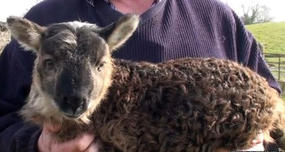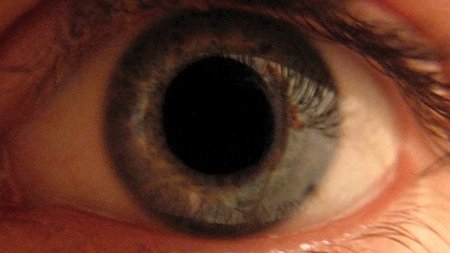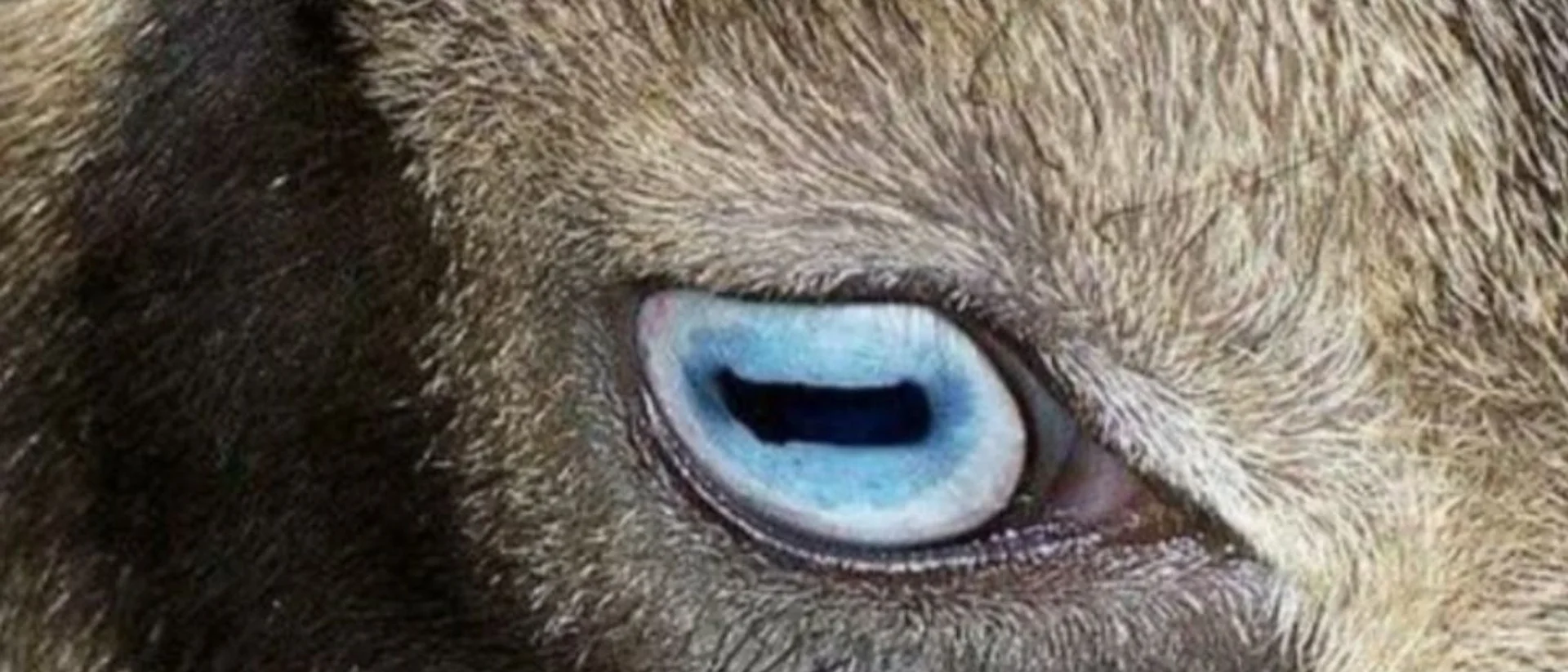
Sheep, goats, octopuses, and toads have horizontal, rectangular-shaped pupils that give them a nearly 360-degree field of vision.
Why Goats and Octopuses Have Such Strange Eyes
Look into a goat's eyes and you'll notice something unsettling: those pupils aren't round like yours. They're wide, horizontal slits that look almost alien. And goats aren't alone—sheep, octopuses, and toads share this distinctive feature.
But there's nothing random about it. Those strange-looking eyes are precision survival tools, millions of years in the making.
Built for Panoramic Vision
Horizontal pupils give prey animals an enormous advantage: a visual field that spans nearly 340 degrees. For comparison, humans see about 180 degrees. This means a grazing sheep can watch for predators approaching from almost any direction without lifting its head from the grass.
The shape also controls light intake across a wide horizon, keeping the animal's vision sharp across the landscape while reducing glare from the sky above.
The Head-Tilt Mystery
Here's something remarkable: when goats and sheep lower their heads to graze, their eyeballs actually rotate in their sockets—up to 50 degrees—to keep those horizontal pupils parallel with the ground. This happens automatically, ensuring their panoramic surveillance system stays perfectly calibrated whether they're eating, running, or climbing a mountainside.
Researchers at UC Berkeley confirmed this by filming grazing animals and tracking their eye movements. The rotation is so precise it maintains near-constant alignment with the horizon.
Octopuses: A Different Evolutionary Path
Octopuses developed rectangular pupils independently from land animals, a striking example of convergent evolution. Their horizontal pupils serve a different purpose: hunting in the dim, murky ocean.
The wide pupil shape helps octopuses:
- Detect the polarization of light, which helps them spot transparent prey
- Gauge distances accurately for ambush attacks
- See clearly across a range of depths and light conditions
Like goats, octopuses can rotate their eyes to keep the pupil horizontal regardless of their body position—essential for a creature that can orient itself in any direction.
Toads and the Ground-Level View
Toads spend their lives close to the earth, where predators approach from the sides rather than above. Their horizontal pupils maximize sensitivity to movement along the ground plane—exactly where threats and prey are most likely to appear.
Combined with eyes positioned on top of their heads, toads achieve impressive situational awareness from their low vantage point.
Why Don't Predators Have These Eyes?
Cats, owls, and other hunters typically have vertical slit pupils or large round ones. Vertical slits excel at judging precise distances for pouncing and work well for animals whose eyes face forward. Round pupils let in maximum light for nocturnal hunting.
The rectangular horizontal pupil, it turns out, is specialized for the opposite survival strategy: watching everything at once while staying alive long enough to escape.
Next time you lock eyes with a goat at a petting zoo, remember—you're looking at one of nature's most sophisticated surveillance systems, wrapped in a package that just happens to look profoundly weird.
Frequently Asked Questions
Why do goats have rectangular pupils?
What animals have rectangular shaped pupils?
Can goats see behind them?
Why do octopus eyes look so weird?
Do goat eyes rotate in their head?
Verified Fact
This fact has been reviewed and verified against original sources.
Show verification details
Slightly refined to clarify these animals have pupils that are horizontal/rectangular rather than strictly rectangular like a door frame.