
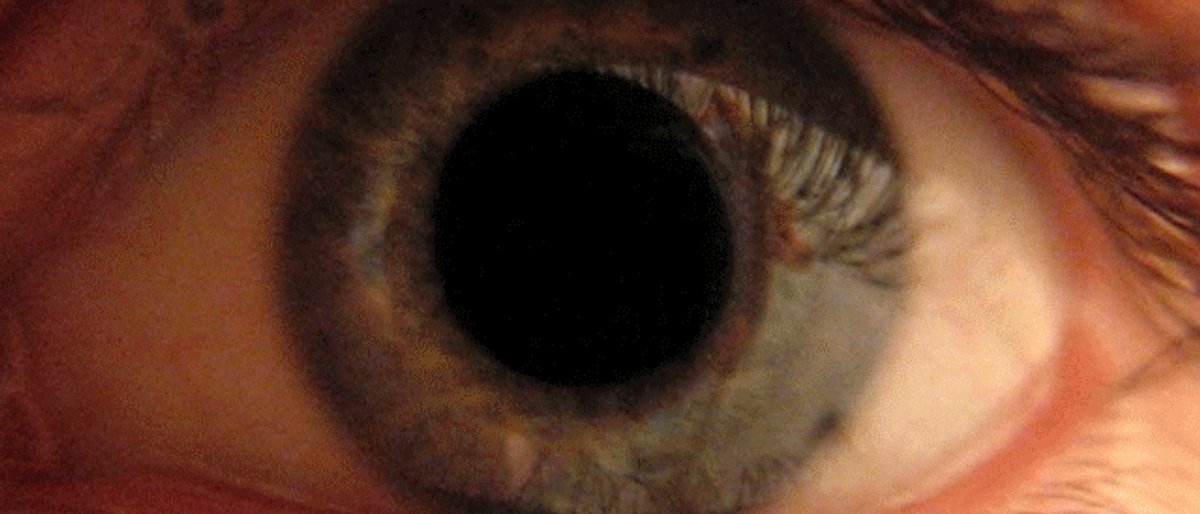
When you look at someone you love, your pupils dilate. Surprisingly, they also dilate when you look at someone you hate — both emotions trigger the same arousal response.
Your Pupils React the Same to Love and Hate
Your eyes are terrible liars. When you gaze at someone you're deeply in love with, your pupils expand — a response so well-documented that it's been used in studies since the 1960s. But here's where it gets strange: your pupils do the exact same thing when you look at someone you despise.
Love and hate, it turns out, look identical in the eyes.
The Science of Arousal
The culprit is your autonomic nervous system, specifically the sympathetic branch — the same system responsible for your fight-or-flight response. When you experience any intense emotion, this system kicks into gear, releasing norepinephrine and triggering a cascade of physical changes.
Pupil dilation is one of them. Your body doesn't distinguish between "I want to kiss this person" and "I want to punch this person." It just registers: this matters.
What Else Dilates Your Pupils?
Emotional arousal isn't picky. Your pupils will expand in response to:
- Sexual attraction
- Fear and anxiety
- Excitement and surprise
- Cognitive effort (like solving a hard math problem)
- Even just looking at something interesting
Researchers call this task-evoked pupillary response, and it's been measured in everything from marketing studies to criminal interrogations.
The Love Connection
The romantic implications of pupil dilation have fascinated humans for centuries. Renaissance women used belladonna (which literally means "beautiful woman" in Italian) to artificially dilate their pupils, believing it made them more attractive. They weren't entirely wrong — studies show we tend to find dilated pupils more appealing, possibly because we unconsciously interpret them as a sign of interest.
In one famous 1965 study by psychologist Eckhard Hess, men were shown two photos of the same woman — identical except one had been retouched to enlarge her pupils. Men consistently rated the dilated-pupil version as more attractive, though they couldn't explain why.
Reading Eyes in the Real World
So can you use pupil dilation to tell if someone loves you or hates you? Not really. The dilation itself is identical — you'd need other context clues like facial expression, body language, and whether they're reaching for a weapon.
What pupil dilation does reliably indicate is emotional intensity. Neutral feelings produce neutral pupils. It's only when something genuinely moves us — for better or worse — that our eyes give us away.
Next time you're gazing into someone's eyes, remember: those dilated pupils might mean they're falling in love with you. Or plotting your demise. Your guess is as good as theirs.
Frequently Asked Questions
Why do pupils dilate when you see someone you love?
Can you tell if someone loves you by their pupils?
Do pupils dilate when you're attracted to someone?
What emotions cause pupil dilation?
Verified Fact
This fact has been reviewed and verified against original sources.
Show verification details
Core claim is accurate. Pupil dilation occurs with both love and hate due to emotional arousal activating the sympathetic nervous system.