

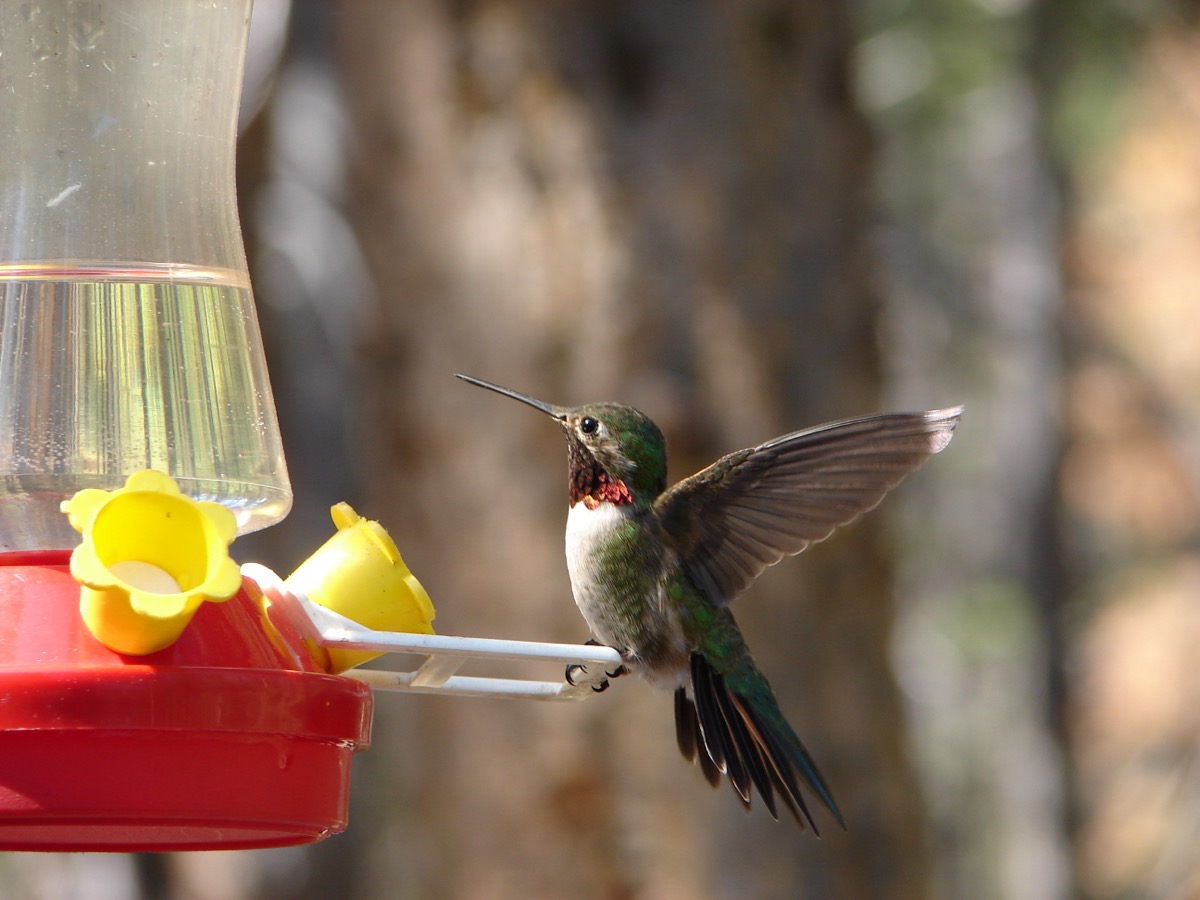
The ruby-throated hummingbird weighs less than a nickel. Every fall it flies about 500 miles nonstop across the Gulf of Mexico. The crossing takes 18 to 20 straight hours, no rest, no food. For decades, people doubted something so small could cross alone. Folklore said they hitched rides on migrating geese. They don't. They fly it solo, on fat they'd doubled. Every September, it happens again.
The Tiny Bird That Flies 500 Miles Without Stopping
Every fall, a bird that weighs less than a nickel launches out over open water and does not stop for the better part of a day. The ruby-throated hummingbird's crossing of the Gulf of Mexico is one of the most extreme journeys in the animal kingdom, and for a long time people simply refused to believe a bird that small could do it alone.
A Body Built From Almost Nothing
An adult ruby-throated hummingbird weighs about 3 grams. A nickel weighs about 5 grams.
That means one of North America's most familiar backyard birds is lighter than the coin most people carry in a pocket, yet it manages one of the longest nonstop flights of any migratory songbird its size.
18 to 20 Hours Over Open Water
According to the Smithsonian's National Zoo, migratory ruby-throated hummingbirds have no problem flying 18 to 20 straight hours to cross the Gulf of Mexico, powered by their fat stores and helped along by favorable winds.
The crossing covers roughly 500 miles of open ocean, though the exact distance shifts with the bird's starting point and how the winds are blowing that season. There is nowhere to land, no food, and no water for the entire trip.
Why People Thought They Rode on Geese
Before scientists could band and track individual birds, nobody could explain how something so small crossed so much open water.
One folk explanation spread for decades: that hummingbirds hitched a ride by clinging to the backs of larger migrating birds, especially geese, for the crossing.
It never happened. Once researchers began studying the migration directly, the evidence was clear. Ruby-throated hummingbirds make the entire Gulf crossing on their own power, wingbeats included.
Doubling Their Body Weight to Fuel the Trip
Before they leave, ruby-throated hummingbirds feed heavily on nectar and small insects, building up fat reserves that can nearly double their body weight.
That stored fat becomes the only fuel for the crossing. Every wingbeat over open water burns straight into the reserve they built up on land.
It Happens Again Every September
September marks the peak of the ruby-throated hummingbird's southbound migration, as birds across the eastern United States and Canada fatten up and head for the Gulf coast.
Somewhere over the water right now, one of the smallest birds in North America is proving, one more time, that it never needed a ride.
Enjoyed this? Get a new fact every morning.
A fascinating fact in your inbox every morning. Free. Unsubscribe anytime.
Frequently Asked Questions
How far do ruby-throated hummingbirds fly across the Gulf of Mexico?
How long does the nonstop flight take?
Do hummingbirds really hitch rides on geese during migration?
How much does a ruby-throated hummingbird weigh?
When is peak hummingbird migration season?
Verified Fact
Verified Aug 23, 2026 · 3 sources checked
Source: Smithsonian's National Zoo & Conservation Biology InstituteShow verification details
Claims checked
- Flies 18-20 hours nonstop across the Gulf of Mexico
- Weighs less than a nickel (about 3-3.8g vs 5g)
- About 500-mile crossing, no rest or food
- Hitchhiking on geese is folklore, not fact
- Nearly doubles body weight in fat before crossing
Sources: Smithsonian's National Zoo & Conservation Biology Institute, Wikipedia, BirdNote