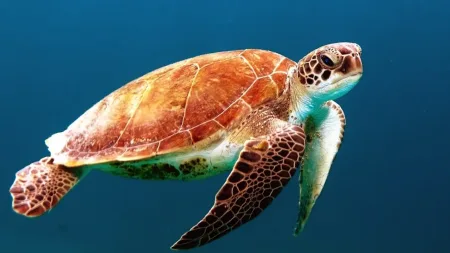
There's a species of soft-shelled turtle in China that 'pees' in puddles through its mouth.
This Turtle Literally Pees Through Its Mouth
Most animals have a pretty straightforward bathroom routine: waste goes in one end, exits the other. The Chinese soft-shelled turtle looked at this system and said, "What if I just gargled instead?"
This aquatic oddball, scientifically known as Pelodiscus sinensis, excretes a whopping 94% of its urine through its mouth rather than through its kidneys and cloaca like practically every other vertebrate on the planet. When scientists at the National University of Singapore first documented this behavior in 2012, they were watching turtles in their lab do something bizarre: repeatedly dunking their heads underwater and moving their mouths like they were gargling mouthwash.
Turns out, that's exactly what they were doing—pee mouthwash.
The Mechanics of Mouth Urination
The secret lies in specialized structures inside the turtle's mouth called buccopharyngeal villiform processes—basically gill-like studs lining the throat. These structures are packed with urea transporters, proteins that actively flush urea (the main component of urine) out of the turtle's bloodstream and into its saliva.
The concentration is staggering: the turtle's saliva contains urea levels 250 times higher than its blood. When the turtle submerges its head and performs rhythmic throat movements, it rinses this urea-loaded saliva into the surrounding water. The excretion rate through the mouth is about 50 times higher than through the traditional kidney route.
Why Would Evolution Do This?
This isn't just nature being weird for the sake of it—it's an adaptation to brackish and saltwater environments. Turtles that urinate the normal way need to drink lots of fresh water to flush out waste and prevent dehydration. But if you're living in salty or brackish water, drinking more means ingesting more salt, which creates a vicious cycle.
By peeing through the mouth, the Chinese soft-shelled turtle can simply rinse with whatever water it's swimming in—no need to drink it. This gives them a huge advantage in coastal areas and estuaries where freshwater is scarce. It's the same reason some marine animals like sharks excrete urea through their gills: water conservation in salty environments.
The Chinese soft-shelled turtle is the first non-fish vertebrate ever discovered with this ability, making it a genuine evolutionary pioneer in the "creative bodily functions" department.
Puddle Behavior
Here's where the fact gets even weirder. These turtles don't just rinse in deep water—observers have watched them seek out shallow puddles specifically to urinate. When water levels are low or during dry seasons, the turtles will stick their heads into small pools of water and go through their gargling routine.
Scientists believe this behavior serves two purposes: it conserves the precious little water they have access to (no need to fully submerge), and it might help them avoid fouling their immediate living area if they're stuck in a confined space.
So yes, if you see a Chinese soft-shelled turtle dunking its head in a puddle and making chewing motions, you're watching it take a leak. Through its mouth. Into the puddle. You're welcome for that mental image.
Frequently Asked Questions
Do Chinese soft-shelled turtles really pee through their mouths?
Why do Chinese soft-shelled turtles urinate through their mouths?
Are Chinese soft-shelled turtles the only animals that pee through their mouths?
How much urine do Chinese soft-shelled turtles excrete through their mouths?
What are buccopharyngeal villiform processes in turtles?
Verified Fact
This fact has been reviewed and verified against original sources.
Show verification details
Scientifically accurate. The Chinese soft-shelled turtle (Pelodiscus sinensis) does excrete urea through its mouth via specialized gill-like structures.