Music therapy can help people with brain injuries recover speech, motor skills, and access memories that seemed lost, with some stroke and dementia patients able to sing songs they can no longer speak.
How Music Unlocks Lost Memories in Damaged Brains
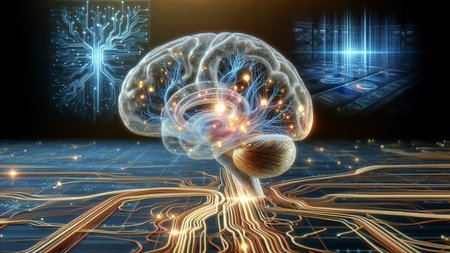
There's a reason that hearing an old song can instantly transport you back decades. Music is processed across multiple brain regions simultaneously, creating redundant memory pathways that prove remarkably resilient to damage.
This neurological quirk has profound implications for medicine.
When Words Fail, Melody Remains
Stroke patients who lose the ability to speak often retain the ability to sing. This phenomenon, studied extensively in melodic intonation therapy, occurs because singing and speaking use different neural circuits. Patients who can't say "I want water" might be able to sing it perfectly.
The technique has helped thousands of stroke survivors gradually recover speech by essentially "singing" their way back to language, then slowly removing the melodic elements until normal speech returns.
Dementia's Musical Lifeline
Perhaps the most striking evidence of music's power appears in Alzheimer's patients. People in advanced stages of dementia—who may not recognize family members or remember their own names—can often:
- Sing complete songs from their youth with accurate lyrics
- Play instruments they learned decades ago
- Become temporarily more lucid and communicative after listening to personally meaningful music
- Access emotional memories that seemed permanently lost
Neuroimaging studies reveal why: musical memory is stored differently than other types of memory. The brain regions that process familiar music are among the last to deteriorate in Alzheimer's disease.
The Science of Musical Memory
When you hear a song, your brain doesn't store it in one place. Instead, the melody, rhythm, lyrics, emotional associations, and contextual memories are distributed across multiple regions. This distributed storage means damage to one area doesn't erase the entire memory.
It's like having the same file saved on five different hard drives. Even if three fail, you can still access the data.
Researchers at UC Davis's Center for Mind and Brain found that music activates the medial prefrontal cortex—a region that acts as a hub connecting music to autobiographical memories. This area shows remarkable preservation in Alzheimer's patients, explaining why songs can unlock memories that nothing else can reach.
Beyond Memory: Physical Recovery
Music therapy isn't limited to memory. Parkinson's patients walk more smoothly with rhythmic auditory stimulation. Traumatic brain injury survivors show improved attention and processing speed after music-based rehabilitation. Even coma patients have shown increased brain activity in response to familiar songs.
The rhythm acts as an external timekeeper, helping damaged motor circuits find their beat again.
While music can't literally regenerate neurons or reverse structural brain damage, it can help the brain rewire around the damage—finding alternative pathways to functions that seemed permanently lost. In neuroscience terms, it promotes neuroplasticity.
So the next time you hear a song that takes you back, remember: you're not just experiencing nostalgia. You're witnessing your brain's remarkable backup system in action.
Frequently Asked Questions
Can music help stroke patients speak again?
Why can Alzheimer's patients remember songs but not family members?
Does music therapy actually repair brain damage?
What part of the brain connects music to memories?
Can music help people in comas?
Verified Fact
This fact has been reviewed and verified against original sources.
Show verification details
Refined the claim to be more precise - music therapy can help with brain injury recovery and memory retrieval, but 'repair brain damage' was overstated