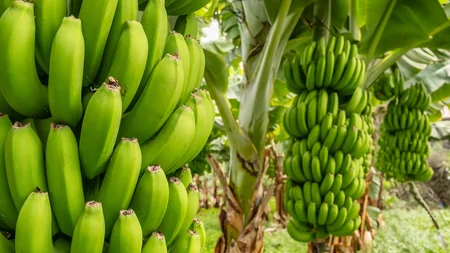
The banana plant is technically a giant herb, not a tree, making bananas the world's largest herb berry.
Bananas Grow on Giant Herbs, Not Trees
That towering banana "tree" in your local grocery store photo? Not actually a tree. The banana plant is classified as an herbaceous perennial, making it the world's largest herb. Yes, the same category as basil and mint.
The confusion is understandable. Banana plants can reach 25 feet tall with trunk-like structures called pseudostems. But unlike true trees with woody tissue, these pseudostems are made of tightly packed leaf sheaths—basically rolled-up leaves. Slice through one and you'll find soft, water-filled layers, not wood.
Berry Strange Classification
Here's where it gets weirder: botanically speaking, bananas are berries. A true berry develops from a single ovary and contains seeds embedded in fleshy fruit. Bananas qualify, while strawberries and raspberries don't (those are aggregate fruits).
The banana plant grows from an underground rhizome, produces one massive flower stalk, and dies after fruiting—then new shoots sprout from the rhizome to continue the cycle. It's technically a perennial herb with commitment issues.
Why It Matters
This isn't just botanical pedantry. Understanding banana plants as herbs explains their vulnerability:
- No woody structure means wind damage is a major threat
- Soft stems are susceptible to disease and pests
- The entire commercial banana industry relies on clones of a single variety (Cavendish), making them genetically identical and vulnerable to extinction from disease
The previous dominant variety, Gros Michel, was wiped out by Panama disease in the 1950s. A new strain now threatens Cavendish bananas, and because they're all clones propagated from rhizomes rather than seeds, they can't evolve resistance.
So next time you peel a banana, remember: you're eating a berry from a giant herb that's part of a genetically identical clone army. Nature's weird.
Enjoyed this? Get a new fact every morning.
A fascinating fact in your inbox every morning. Free. Unsubscribe anytime.
Frequently Asked Questions
Are bananas really herbs?
Why are bananas berries?
Is a banana plant a tree?
Why don't bananas have seeds?
What is a banana pseudostem?
Verified Fact
This fact has been reviewed and verified against original sources.
Show verification details
Technically true but misleading wording. Bananas ARE fruit botanically, but the banana plant is classified as an herbaceous plant (herb), not a tree. Reworded for accuracy.
Related Topics
More from Food & Cuisine
View all Food & Cuisine →