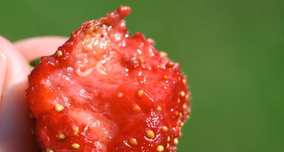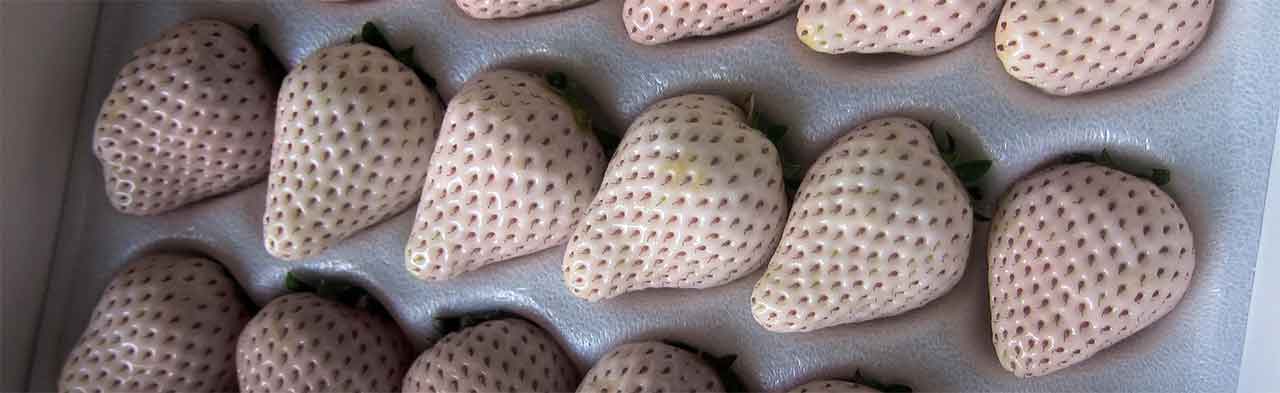
There's a type of strawberry in Japan that is completely white, inside and out, with red seeds.
Japan's White Strawberries Are Real (And Cost $10 Each)
If you've ever seen a photo of a ghostly white strawberry with bright red seeds and assumed it was Photoshopped, think again. Japan's Shiroi Houseki strawberries—literally "White Jewel"—are completely real, and they're one of the country's most prized luxury fruits.
These strawberries are white both inside and out, with a pale, almost translucent flesh and vibrant red seeds that create a striking visual contrast. Unlike albino fruits or unripe berries, white strawberries are a carefully cultivated variety that's been bred to produce minimal anthocyanins, the pigments responsible for the red color in conventional strawberries.
The Whiter, the Better
Here's where it gets counterintuitive: with Shiroi Houseki strawberries, the whiter the berry, the riper it is. These aren't picked early or bleached—they're naturally white when fully mature and at peak sweetness.
The flavor profile differs from typical strawberries. They're sweet with a pineapple-like aroma and a more delicate taste than their red cousins. Some describe them as having subtle notes of pineapple and even a hint of coconut.
Born in Saga Prefecture
The Shiroi Houseki variety originated at Teshima Farm in Karatsu City, Saga Prefecture. After extensive cross-breeding and testing, the farm released these white strawberries to the market in 2012. The process wasn't quick—it took years of careful cultivation to achieve the perfect white berry.
What makes them truly rare is this: only about 10% of Shiroi Houseki strawberries stay perfectly white even after being picked and exposed to direct sunlight. The rest develop a slight pink blush. Those flawless white specimens? They're the real jewels that command premium prices.
Why They Cost a Fortune
A single white strawberry can sell for up to $10. A standard pack? Easily $100 or more. The price reflects several factors:
- Labor-intensive cultivation requiring precise climate control
- Extreme rarity of perfectly white specimens
- Cultural value as a luxury gift in Japan
- Limited growing season and production volume
In Japanese culture, luxury fruits are often given as prestigious gifts, similar to fine wine or jewelry in Western cultures. The visual uniqueness of white strawberries makes them especially desirable for special occasions.
White strawberry varieties have since been developed in other countries, including the United States (Florida Pearl) and parts of Europe, but Japanese Shiroi Houseki remains the gold standard—or should we say, the white standard—of this unusual fruit.
Frequently Asked Questions
Are white strawberries genetically modified?
Do white strawberries taste like regular strawberries?
Why are white strawberries so expensive?
Where can I buy white strawberries?
How do you know when a white strawberry is ripe?
Verified Fact
This fact has been reviewed and verified against original sources.
Show verification details
The fact is accurate. White strawberries, particularly the Shiroi Houseki (White Jewel) variety from Japan, are indeed white both inside and out with red seeds. This is a real cultivated variety, not a myth.
Related Topics
More from Food & Cuisine
View all Food & Cuisine →