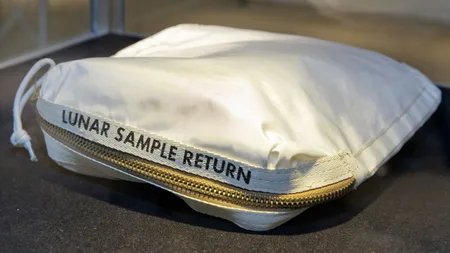
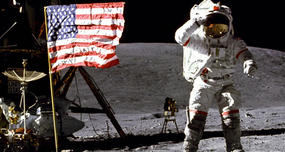
Neil Armstrong, the first man to step foot on the moon, carried with him a piece of cloth and wood from the original 1903 Wright Flyer.
Neil Armstrong Took the Wright Flyer to the Moon
When Neil Armstrong stepped onto the lunar surface on July 20, 1969, he wasn't just making one giant leap for mankind—he was completing a journey that began 66 years earlier in a windy field in North Carolina. Tucked away in his personal preference kit was a small piece of muslin fabric from the left wing of the 1903 Wright Flyer, along with a sliver of wood from its left propeller.
Think about that timeline for a second. In 1903, Orville and Wilbur Wright managed to keep a fragile contraption airborne for 12 seconds, traveling 120 feet. Just 66 years later, we were walking on the moon. That's less than a human lifetime separating those two achievements.
The Ultimate Full-Circle Moment
Armstrong's decision to bring these artifacts wasn't random sentimentality. It was a deliberate acknowledgment of how far and how fast humanity had traveled—literally. The Wright Brothers had solved the problem of controlled, powered flight through meticulous observation, testing, and innovation. The Apollo program applied those same principles on an almost incomprehensible scale.
The muslin fabric Armstrong carried was from the original wing covering of the Wright Flyer, the same material that caught the air during those first tentative flights at Kitty Hawk. The wood came from the propeller that pulled the aircraft through the air using principles the Wrights had to discover from scratch, since no one had ever built a functional airplane propeller before.
Not the First Space Rodeo for the Wright Flyer
Here's something even fewer people know: this wasn't the first time pieces of the Wright Flyer went to space. Fragments of the aircraft had previously flown aboard Apollo 8, which orbited the moon in December 1968. But Armstrong's Apollo 11 mission in 1969 made history by actually landing on the lunar surface with these artifacts.
The pieces were small—we're talking about fragments you could easily fit in your pocket. But their symbolic weight was enormous. They represented the entirety of human aviation history, compressed into a few grams of wood and fabric.
From 12 Seconds to 8 Days
The contrasts are staggering:
- The Wright Flyer's first flight: 12 seconds, 120 feet
- Apollo 11's journey: 8 days, 477,000 miles round trip
- The Wright Flyer's power: 12 horsepower
- Saturn V rocket's power: 160 million horsepower
- The Wright Flyer's cost: about $1,000
- Apollo program's cost: $25.4 billion (1973 dollars)
What makes this even more remarkable is that some people who witnessed the Wright Brothers' first flight in 1903 lived to see the moon landing on television in 1969. Imagine being able to tell your grandchildren you saw both events in a single lifetime.
After the mission, Armstrong donated these fragments back to the Wright Brothers National Memorial, where they're preserved alongside the restored 1903 Wright Flyer at the National Air and Space Museum. They're small pieces of fabric and wood, but they've traveled further than almost any other museum artifacts in existence—from the beaches of North Carolina to the surface of the moon and back again.
Frequently Asked Questions
Did Neil Armstrong really take pieces of the Wright Flyer to the moon?
How long was it between the first airplane flight and the moon landing?
What happened to the Wright Flyer pieces after the moon landing?
Was Apollo 11 the first time Wright Flyer pieces went to space?
Why did Neil Armstrong bring Wright Flyer pieces to the moon?
Verified Fact
This fact has been reviewed and verified against original sources.
Show verification details
This fact is accurate. Neil Armstrong did carry pieces of the Wright Flyer on Apollo 11.
Related Topics
More from History & Culture
View all History & Culture →