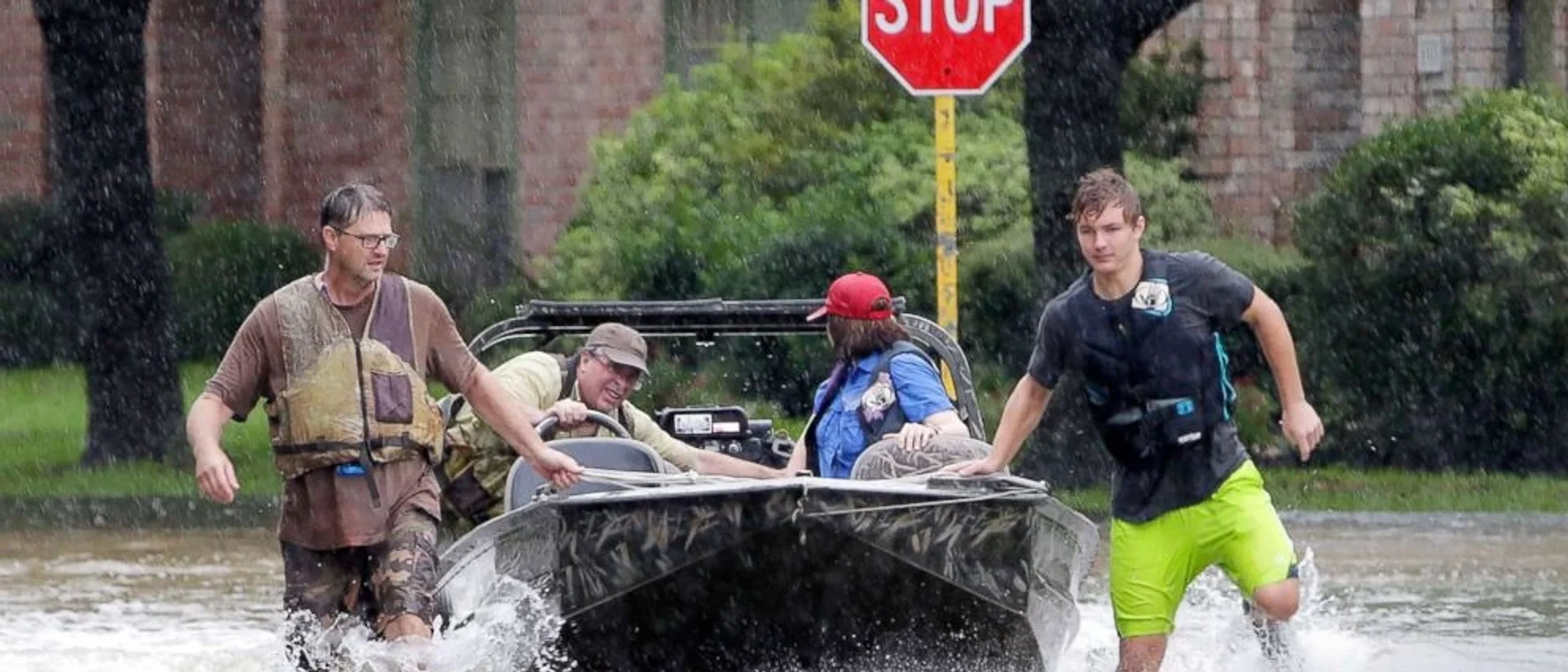
When Hurricane Harvey overwhelmed official rescuers in 2017, thousands of Louisiana civilians loaded their own fishing boats onto trailers and drove to Texas. They set up a command centre in a Costco parking lot in Baton Rouge, coordinated rescues via Facebook and a walkie-talkie app called Zello, and pulled more than 5,000 people from the floodwaters across Houston, Beaumont, Port Arthur, and Vidor. They called themselves the Cajun Navy.
The Cajun Navy Rescued 5,000 People in Harvey
The 911 lines were jammed. Rescue helicopters were maxed out. And the water in Houston was still rising. When Hurricane Harvey made landfall in August 2017 and dropped more than 60 inches of rain on Southeast Texas - the highest rainfall ever recorded from a single storm in the United States - official emergency services were pushed far beyond their limits. The government could not keep up. So Louisiana showed up.
A Fleet Born From Katrina
The Cajun Navy did not start with Harvey. Its roots go back to Hurricane Katrina in 2005, when former Louisiana state senator Nick Gautreaux went on local television and radio with a simple plea: anyone with a boat, come to the Acadiana Mall. Between 350 and 400 people answered, loading their bass boats, johnboats, and airboats onto trailers and heading to New Orleans. That makeshift flotilla - private citizens with no official authority and no government pay - rescued more than 10,000 people from flooded homes and rooftops.
The name stuck. And the instinct to show up when others could not stuck with it.
The 2016 Floods: A Dry Run
In August 2016, a slow-moving storm system with no official name dumped up to 36 inches of rain in 48 hours across south Louisiana. It was one of the worst flooding events in American history, and it barely made national news. The Cajun Navy mobilized again - by this time, volunteers had begun using smartphone apps to coordinate. Zello, a push-to-talk walkie-talkie app, and Glympse, a GPS tracking tool, replaced the informal shouting and guesswork of Katrina. Jon Bridgers Sr., who would become the recognised founder of the modern Cajun Navy, helped build the command structure that would define the Harvey response a year later. As he later put it: "Everyone trained in the year since our big flood; this year, we were tested."
Costco as Command Centre
When Harvey hit, the Cajun Navy staged its operation from an unlikely headquarters: the parking lot of a Costco in Baton Rouge. Boats, RVs, and trucks with flatbed trailers filled the lot. Shoppers leaving the store donated supplies on the spot. Every boat that departed for Texas over the next five days left fully loaded. Volunteers acted as citizen dispatchers - monitoring the Cajun Navy Facebook page for distress calls and relaying rescue coordinates to boat crews via Zello. The Zello channel for the Cajun Navy alone grew to more than 40,000 members during the crisis.
5,000 Rescues Across Southeast Texas
Over the course of Harvey's flooding, Cajun Navy volunteers performed more than 5,000 rescues across Southeast Texas - in Houston, Beaumont, Port Arthur, and Vidor. They pulled people from attics, rooftops, and cars submerged under several feet of water. All of them were unpaid. All of them used their own boats, their own fuel, and their own food. The operation ran entirely on volunteer effort and a smartphone app originally designed for push-to-talk gaming communication.
What Came After
The Harvey response transformed the Cajun Navy from a regional tradition into a nationally recognised disaster relief force. Formal nonprofits emerged - including United Cajun Navy and Cajun Navy 2016 - with trained volunteers, established protocols, and equipment stockpiles. The Houston Thanksgiving Day Parade later honoured the group for their Harvey efforts. Cajun Navy volunteers have since deployed to Hurricane Florence in North Carolina (2018) and Hurricane Helene across four states in 2024. The group that once gathered in a mall parking lot on a senator's radio plea now maintains a standing fleet ready to move within hours of a disaster declaration.
Enjoyed this? Get a new fact every morning.
A fascinating fact in your inbox every morning. Free. Unsubscribe anytime.
Frequently Asked Questions
Who are the Cajun Navy?
How did the Cajun Navy start?
How many people did the Cajun Navy rescue during Hurricane Harvey?
What is the Zello app and how did they use it?
Where did the Cajun Navy set up their command centre during Harvey?
Verified Fact
Verified Aug 26, 2026 · 4 sources checked
Source: Wikipedia - Cajun NavyShow verification details
Claims checked
- Cajun Navy pulled over 5,000 people from Harvey floodwaters
- Staging area was a Costco parking lot in Baton Rouge
- Rescues coordinated via Facebook and Zello walkie-talkie app
- Group originated from 2016 Louisiana floods and earlier Katrina efforts
Sources: Wikipedia, Southern Boating, gcaptain.com, Zello
Related Topics
More from History & Culture
View all History & Culture →