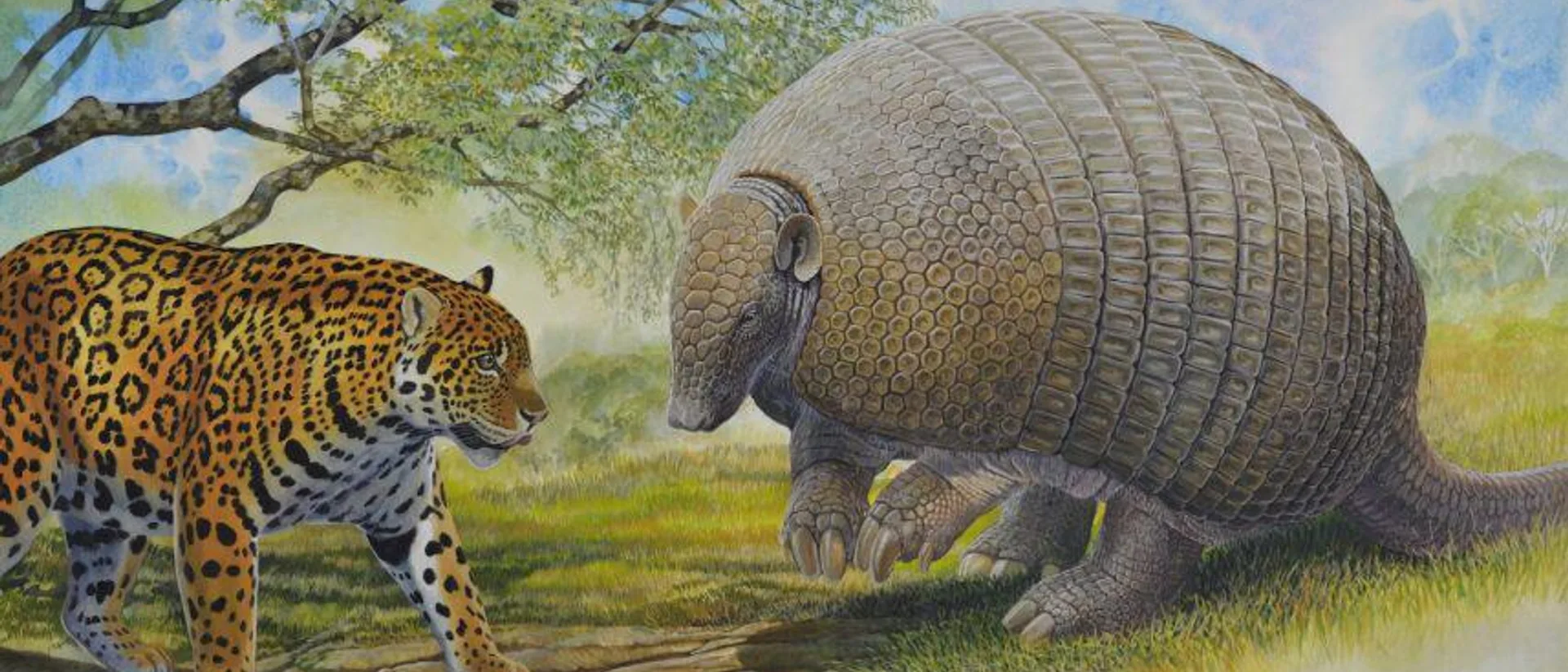
Early American humans hunted car-sized armadillos called glyptodonts and used their massive shells as shelters.
Ancient Humans Lived Inside Giant Armadillo Shells
Imagine stumbling across an animal the size of a Volkswagen Beetle, covered in bony armor, waddling across the ancient grasslands of South America. Now imagine killing it, eating it, and then moving into its shell. That's exactly what early humans did with glyptodonts, the absolute units of the armadillo family.
Nature's Prefab Housing
Glyptodonts roamed the Americas from about 5.3 million years ago until roughly 10,000 years ago, when the last Ice Age was winding down. These beasts could weigh up to 2,000 pounds and measure 10 feet from nose to tail. Their shells weren't made of overlapping bands like modern armadillos—they were solid domes of fused bony plates called osteoderms.
When early humans arrived in the Americas, they found these walking tanks to be excellent sources of meat. But the real prize came after dinner.
Shell Shocked (In a Good Way)
Archaeological evidence from Argentina and Brazil shows that humans used glyptodont shells as ready-made shelters. The shells were:
- Naturally waterproof
- Large enough to shelter several people
- Already the perfect dome shape
- Incredibly durable—built to withstand predator attacks
Some researchers believe humans would prop up shells with rocks or dig shallow pits beneath them to create more headroom. These weren't permanent homes, but they made excellent emergency shelters and windbreaks on the open pampas.
The Original Tiny Home Movement
The shells were so useful that some sites show evidence of humans dragging them considerable distances from kill sites to more desirable locations. Think about that—these early Americans saw a two-ton animal and thought, "That's nice, but I really want the container it came in."
Scientists have found burn marks inside some shells, suggesting humans lit fires within them for warmth. The thick bony armor would have retained heat well, creating surprisingly cozy conditions on cold Patagonian nights.
Why They're Gone
Glyptodonts survived multiple ice ages and millions of years of predators. What they couldn't survive was the combination of climate change and hungry humans. As the Ice Age ended, their grassland habitats shrank. Add in human hunting pressure, and these magnificent armored giants disappeared within a few thousand years of our arrival.
Their modern relatives—regular armadillos—are considerably less impressive. The largest living species, the giant armadillo, maxes out at about 120 pounds. You're not moving into that shell anytime soon.
But for a brief window in prehistory, humans in the Americas had access to something extraordinary: a ready-made shelter that came with a free meal attached. The glyptodont was the original meal kit with housing included.
Frequently Asked Questions
What is a glyptodont?
Did early humans really live in armadillo shells?
How big were glyptodonts compared to cars?
Why did glyptodonts go extinct?
Are glyptodonts related to modern armadillos?
Verified Fact
This fact has been reviewed and verified against original sources.
Show verification details
Corrected 'houses' to 'shelters' - while glyptodonts were real and hunted by early humans, and their shells were used for shelter, 'houses' overstates it.
Related Topics
More from History & Culture
View all History & Culture →