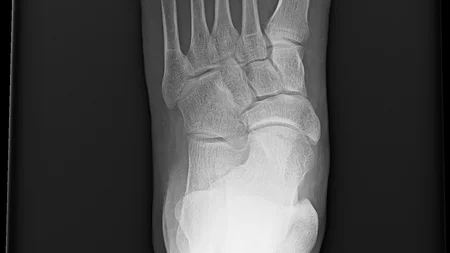
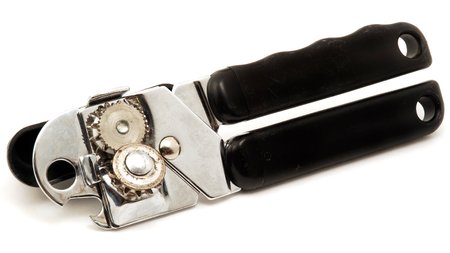
Chainsaws were derived from a tool originally intended to help deliver babies
From Birth Canal to Timber: The Chainsaw's Wild Origin
Imagine the roaring sound and raw power of a chainsaw, a tool synonymous with felling giant trees and carving through tough timber. Now, imagine its delicate, rather gruesome, origins. Believe it or not, the ancestor of this powerful logging machine was once a key player in the most intimate of human events: childbirth.
This isn't some urban legend or a twisted tale from a horror movie. The core concept behind the chainsaw, that of a continuous cutting chain, emerged from the operating rooms of the late 18th century. It’s a fact that truly redefines the meaning of 'weird' in medical history.
A Gruesome Necessity
The year was around 1783-1785. Scottish doctors John Aitken and James Jeffray were grappling with one of medicine's most dire challenges: obstructed labor. In those days, if a baby couldn't pass through the birth canal, both mother and child faced almost certain death. One desperate, last-resort procedure was symphysiotomy.
Symphysiotomy involved surgically cutting through the cartilage and sometimes bone of the mother's pelvis to widen the birth canal. It was a brutal procedure, often resulting in severe pain, infection, and long-term complications. The tools available were crude and made the delicate, yet forceful, bone-cutting incredibly difficult and prolonged.
The Flexible Saw: A Medical Innovation
To make this horrific procedure slightly more efficient, Aitken and Jeffray devised a rather ingenious, albeit unsettling, instrument. Their invention was a flexible, hand-cranked chain with small, sharp teeth – essentially, a very early form of a chainsaw. It allowed surgeons to saw through bone more quickly and with somewhat greater precision than traditional knives or scalpels.
This rudimentary 'flexible saw' was a significant, if macabre, advancement for its time. It offered a faster, less traumatic (relatively speaking) method for surgeons attempting to save lives when all other options had failed. The device was manually operated, with doctors or assistants turning a crank to move the toothed chain.
The Osteotome: Refinement and Broader Use
Fast forward to 1830, when German physician Bernhard Heine introduced a more refined version: the osteotome. This hand-cranked device bore an even closer resemblance to what we might recognize as a miniature chainsaw. Heine's osteotome was designed for more general bone surgery, not just childbirth.
- It featured a fine, toothed chain that rotated via a hand crank.
- Its primary purpose was to make precise and rapid cuts through bone.
- Surgeons used it for amputations, craniotomies (opening the skull), and other orthopedic procedures.
The osteotome was considered a breakthrough in surgical efficiency, allowing for quicker operations and theoretically reducing patient suffering—though anesthetics were still in their infancy.
From Operating Room to Forest Floor
So, how did a tool designed to cut bone during surgery end up felling mighty trees? The underlying mechanism of a continuously moving chain of cutting teeth proved highly versatile. As technology advanced, particularly with the advent of gasoline engines and electric motors, engineers saw the potential for scaling up this concept.
The late 19th and early 20th centuries saw the gradual evolution of portable, mechanized cutting tools. The first portable electric chainsaw was patented in 1926, followed shortly by gas-powered models in 1929. These industrial machines retained the fundamental chain-and-teeth design, but were built for power, durability, and the demanding work of logging.
A Legacy of Life and Lumber
The contrast is stark: a tool born from the desperate need to save lives in childbirth, transforming into a symbol of rugged forestry and construction. The brutal necessity of symphysiotomy diminished with the advent of safer and more common Cesarean sections, rendering the medical chainsaw largely obsolete in its original role.
Today, the buzz of a chainsaw in the forest or workshop rarely conjures images of an operating theatre. Yet, deep within its design lies a fascinating and somewhat unsettling truth: this powerful tool's lineage can be traced directly back to the urgent, life-or-death struggles of the birthing room. A truly mind-boggling journey for a piece of machinery.
Frequently Asked Questions
Was the chainsaw really invented for childbirth?
What kind of medical procedure was it used for?
Who invented the medical chainsaw?
When did chainsaws start being used for cutting wood?
Is this procedure still used today?
Verified Fact
This fact has been reviewed and verified against original sources.
Show verification details
The fact is historically accurate. Early versions of the chainsaw, specifically a flexible-chain osteotome, were indeed used in childbirth procedures like symphysiotomy.