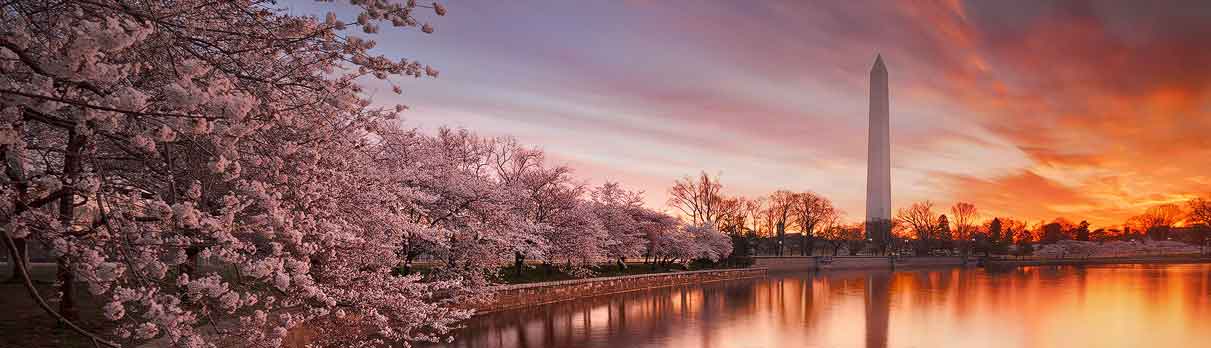
The pink cherry blossoms in Washington D.C. were a gift from Japan in 1912. Tokyo sent more than 3,000 cherry trees to be planted around the Tidal Basin as a symbol of friendship between the two nations.
Japan's 3,000 Cherry Trees That Transformed D.C.
Every spring, Washington D.C. transforms into a sea of pink and white as thousands of cherry trees burst into bloom along the Tidal Basin. What many visitors don't realize is that these iconic trees aren't American at all—they're a century-old gift from Japan that almost didn't happen.
A Friendship Rooted in Diplomacy
The story begins with Eliza Scidmore, a travel writer who fell in love with cherry blossoms during her visits to Japan in the 1880s. For over two decades, she lobbied Washington officials to plant Japanese cherry trees along the Potomac—and was repeatedly ignored.
Her persistence finally paid off in 1909 when she caught the attention of First Lady Helen Taft, who had admired cherry blossoms during her time living in Japan. Taft loved the idea, and plans were set in motion.
The First Shipment Was a Disaster
In 1910, Japan sent 2,000 trees as a gesture of goodwill. But when they arrived, USDA inspectors found them riddled with insects and disease. Every single tree had to be burned. It was a diplomatic nightmare.
The Japanese government responded with grace. Rather than taking offense, they saw it as an opportunity to do it right. Tokyo's mayor, Yukio Ozaki, personally oversaw the cultivation of a new batch of trees—this time from the best nurseries in Japan.
3,020 Trees That Changed a City
On March 27, 1912, First Lady Taft and the Viscountess Chinda, wife of the Japanese ambassador, planted the first two trees on the northern bank of the Tidal Basin. These two original trees still stand today, marked by a bronze plaque.
The shipment included twelve different varieties:
- Yoshino — The most common, with pale pink blossoms
- Kwanzan — Deep pink with double-petaled blooms
- Akebono — A pale pink American cultivar developed from the Yoshino
- Nine other heritage varieties, some now extremely rare
Surviving War and Time
The trees became a symbol of U.S.-Japan friendship—which made things complicated during World War II. After Pearl Harbor, vandals cut down four trees in protest. The government quietly stopped calling them "Japanese" cherry trees, referring to them simply as "Oriental" flowering cherries.
The trees survived the war, and so did the friendship. In 1965, Japan sent another 3,800 trees. And in a touching reversal, when many of Tokyo's original cherry trees were dying in the 1980s, the U.S. sent cuttings from the D.C. trees back to Japan to help restore the groves that had created them.
A Living Legacy
Today, roughly 3,800 cherry trees surround the Tidal Basin and nearby areas. The annual National Cherry Blossom Festival draws over 1.5 million visitors each spring, making it one of the largest celebrations of spring in the world.
Those delicate pink petals—lasting only about two weeks each year—have become as synonymous with Washington as the monuments themselves. All because a travel writer refused to give up on a beautiful idea.
Enjoyed this? Get a new fact every morning.
A fascinating fact in your inbox every morning. Free. Unsubscribe anytime.
Frequently Asked Questions
Why did Japan give cherry trees to Washington D.C.?
How many cherry trees did Japan send to Washington D.C.?
When is cherry blossom season in Washington D.C.?
Are the original cherry trees from Japan still alive in D.C.?
What happened to the D.C. cherry trees during World War II?
Verified Fact
This fact has been reviewed and verified against original sources.
Show verification details
Corrected: Japan sent trees (not seeds), and it was over 3,000 trees, not seeds. The gift was from the city of Tokyo, though Japan was indeed an empire at the time.
Related Topics
More from History & Culture
View all History & Culture →