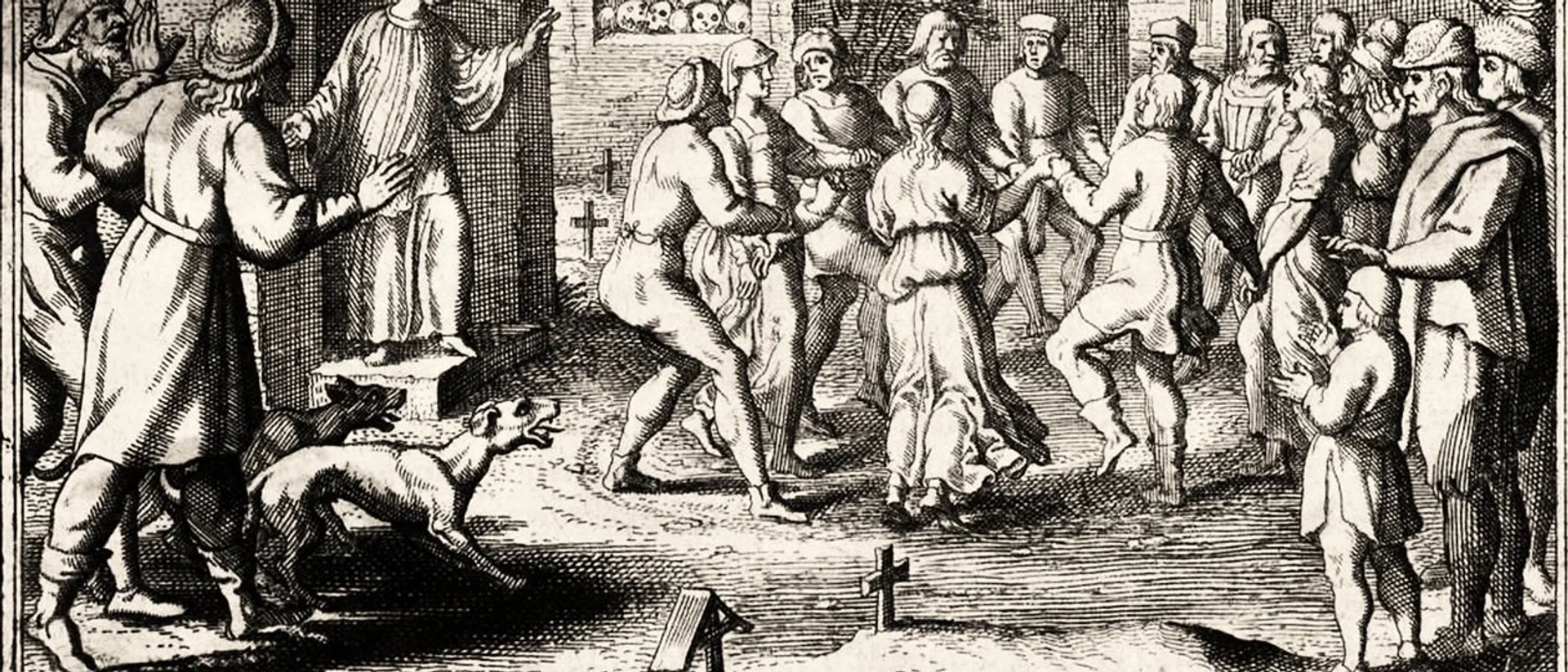
In 1518, a "dancing plague" struck Strasbourg, Alsace, where hundreds of people danced uncontrollably in the streets over the course of a month. Some dancers collapsed from exhaustion, strokes, or heart attacks, and contemporary accounts suggest several died. The cause remains unexplained to this day.
The Dancing Plague That Gripped Strasbourg in 1518
It started with one woman. In July 1518, Frau Troffea stepped into the narrow streets of Strasbourg and began to dance. There was no music. No celebration. She simply danced—twisting and gyrating in the summer heat, unable or unwilling to stop.
She danced for hours. Then days. By the end of the week, she'd been joined by thirty-four others.
A Contagion of Movement
Within a month, the dancing plague had consumed roughly 400 people. They weren't dancing for joy. Witnesses described their faces as masks of terror and exhaustion, their feet bloody and raw, their bodies pushed far beyond human limits.
The city council, utterly baffled, initially made things worse. Their solution? More dancing. They hired musicians and built a wooden stage, believing the afflicted needed to "dance it out of their systems." It didn't work. People kept collapsing.
The Body Count
Contemporary chronicles paint a grim picture:
- Dancers suffered strokes and heart attacks from the relentless exertion
- Many collapsed from exhaustion and severe dehydration
- Some reportedly died—though exact numbers are debated by historians
- The plague continued for roughly a month before gradually subsiding
Eventually, authorities changed tactics. They carted the dancers off to a mountaintop shrine, where they prayed for divine intervention. Slowly, mysteriously, the dancing stopped.
What Caused It?
This is where it gets genuinely strange. Modern researchers have proposed several theories, but none fully explain the phenomenon.
Ergot poisoning was long suspected—a fungus that grows on grain and can cause convulsions. But ergot typically causes spasms, not coordinated dancing, and usually affects whole communities eating the same bread, not isolated individuals who spread it to others.
Mass psychogenic illness is the leading modern theory. Strasbourg in 1518 was a pressure cooker of stress: recent famines, waves of smallpox, and crushing poverty. The theory suggests that extreme psychological distress, combined with superstitious beliefs about "dancing curses," created a kind of social contagion. Once people believed they could be afflicted, they became afflicted.
But this explanation feels incomplete too. Why dancing specifically? Why Strasbourg? Why did it spread so rapidly and then simply... stop?
Not Even the Only One
Perhaps most unsettling: the 1518 outbreak wasn't unique. Similar dancing plagues erupted across medieval Europe for centuries—in 1374, an outbreak spread through towns along the Rhine. In 1237, a group of children in Erfurt danced their way out of town and collapsed from exhaustion.
We like to think we understand human behavior. We have neuroscience now, psychology, centuries of medical knowledge. And yet the dancing plague of 1518 remains, as one historian put it, "one of the most bizarre and unexplained events in human history."
Sometimes the past refuses to make sense. Sometimes people just dance—and nobody knows why.
Frequently Asked Questions
What was the dancing plague of 1518?
What caused the 1518 dancing plague?
How many people died in the dancing plague?
How did the dancing plague of Strasbourg end?
Were there other dancing plagues in history?
Verified Fact
This fact has been reviewed and verified against original sources.
Show verification details
Core claim is accurate. Slightly refined wording - the exact death toll is debated by historians, so 'some died' is more accurate than implying mass casualties.