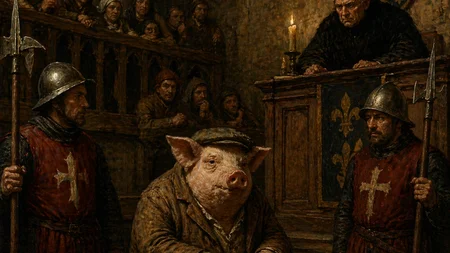
One punishment for an adulterous wife in medieval France was to make her chase a chicken through town naked.
Medieval France's Bizarre Adultery Punishment
Medieval justice had a flair for the theatrical, and few punishments were stranger than what awaited adulterous wives in certain parts of France: being forced to chase a chicken through the streets while completely naked.
The punishment wasn't random cruelty—it was calculated humiliation designed to shame the offender before the entire community.
Public Shame as Justice
In an era before prisons became standard, punishment was often a public spectacle. The community wasn't just an audience; they were participants in enforcing social norms. Making a woman chase a chicken while exposed served multiple purposes:
- Maximum humiliation through public nudity
- Physical difficulty—chickens are surprisingly hard to catch
- Lasting social consequences as everyone witnessed her disgrace
The chicken itself added an absurdist element that made the punishment memorable and talked about for years.
Why a Chicken?
The choice of a chicken wasn't arbitrary. These birds are quick, erratic, and nearly impossible to grab—especially for someone distracted by their own exposed state and the jeering crowd. The longer the chase, the longer the humiliation.
Some historians suggest the chicken symbolized the woman's "loose" behavior, though this interpretation is debated. What's certain is that the spectacle drew crowds and served as a powerful deterrent.
The Double Standard
Like most medieval laws regarding sexuality, the punishment fell almost exclusively on women. Adulterous men faced far lighter consequences, if any at all. A husband who strayed might pay a fine; a wife who did the same could be publicly degraded, banished, or worse.
This particular punishment existed alongside other humiliation rituals across Europe. England had the "ducking stool" for scolds. Germany had masks of shame. France, apparently, had naked chicken chases.
Not Unique to France
Similar punishments appeared throughout medieval Europe, though the specifics varied by region. What united them was the principle of public shaming as a form of social control. In tight-knit communities where reputation was everything, being paraded through town—chicken or not—could destroy a person's standing forever.
The punishment eventually fell out of practice as legal systems modernized, though public shaming for sexual "crimes" persisted in various forms well into the modern era.
Today, the image of a medieval woman desperately chasing a chicken through cobblestone streets seems almost darkly comedic. But for those who endured it, the experience was devastating—a reminder that medieval justice cared far more about spectacle than fairness.
Frequently Asked Questions
What was the punishment for adultery in medieval France?
Why did medieval punishments involve public humiliation?
Were men punished for adultery in medieval times?
What other strange medieval punishments existed?
Verified Fact
This fact has been reviewed and verified against original sources.
Show verification details
The practice is documented in historical sources on medieval punishments for adultery.
Related Topics
More from History & Culture
View all History & Culture →